

European Landscapes Scorch During Summer Heatwaves
Satellite imagery analyzed by BBC Verify reveals severe western European heatwave impacts since May, including shrinking glaciers, wildfires, and dropping river levels.
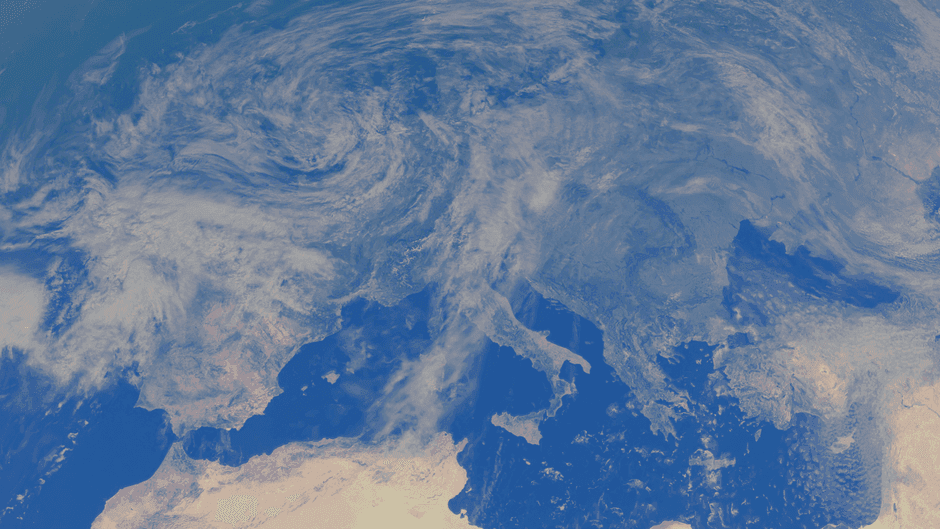
Stock photo for illustration only, not from the actual event
- Copernicus climate monitoring confirms western Europe recorded its hottest June-to-July period ever.
- The Danube River dropped to its lowest level in 30 years, exposing a WW2 warship and mammoth bones.
- France recorded over 90,000 hectares of land burned by wildfires, marking its worst year on record.
- Vegetation index NDVI shows about 70% of France experienced sparser or stressed plant health.
Satellite imagery examined by BBC Verify has captured the stark impact of extreme summer temperatures across western Europe following successive heatwaves since May. Views from space reveal shrunken glaciers, scorched burn scars from wildfires, dried-up green fields, and drastically lower river levels throughout the continent.
Notable landmarks have also fallen victim to the heat, as the Palace of Versailles south of Paris appears as an isolated cluster of trees surrounded by brown fields. The European Union's Copernicus climate monitoring service confirmed that western Europe experienced its hottest June-to-July period on record driven by persistent high-pressure weather systems and long-term climate change.
The Danube River, Europe's second-longest river, dropped to its lowest levels in 30 years across multiple nations, uncovering remarkable artifacts on its riverbed including a mammoth bone in Bulgaria and a sunken World War II warship in Serbia. Meanwhile, nuclear power plants along the river in Hungary and Romania faced reduced operational capacity due to cooling water shortages.
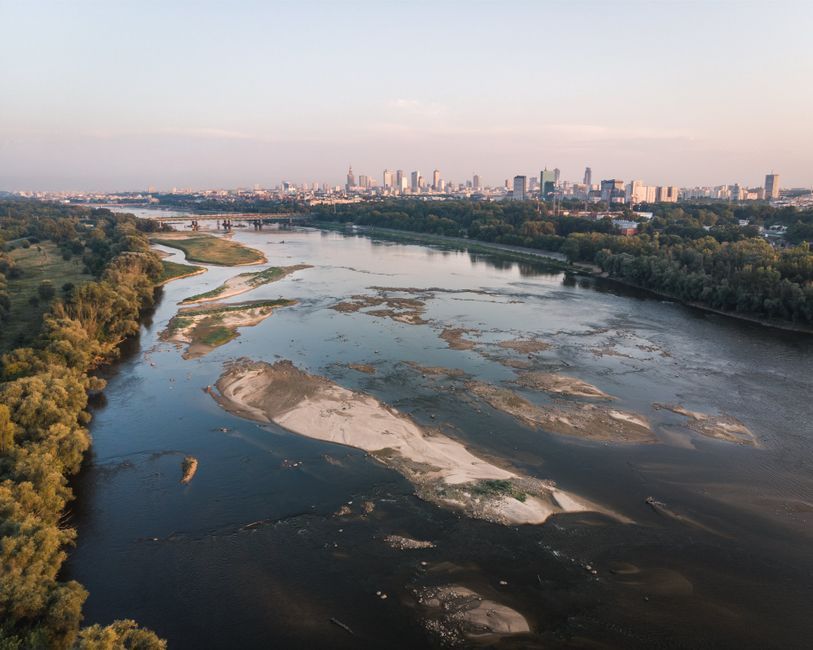
Stock photo for illustration only, not from the actual event
Wildfires have ravaged parts of western Europe, with France logging its worst year on record with over 90,000 hectares burned. The largest blaze in the Gironde region near Bordeaux destroyed roughly 42,000 hectares of land. Dr. Douglas Kelley from the UK Centre for Ecology and Hydrology noted that extreme wildfires are becoming increasingly frequent as climate change creates ideal drying conditions for vegetation and soils.
"Much less snow in winter and much, much more melt in summer."
Dr. Lander van Tricht, Glaciologist
Alpine glaciers have also suffered heavily from the exceptionally warm weather following a mild winter and early spring heatwave. Satellite data shows the Rhône Glacier in Switzerland has retreated by 50 meters or more compared to last year. Dr. Lander van Tricht warned that continued trends spell a dramatic future for the Alps as winter snowpacks diminish and summer melting accelerates.
To evaluate the unprecedented scope of dryness, researchers utilized the Normalised Difference Vegetation Index (NDVI), discovering that readings fell below the 2021-2025 benchmark across roughly 70% of France, half of the UK, and 40% of western Germany. Prof. Luis Samaniego from the Helmholtz Centre for Environmental Research warned that soil moisture in worst-hit zones sits lower than 98% of historical records, meaning agricultural damage may persist even if rainfall returns.
Source: BBC Science & Environment
Found something wrong in this article? Report an issue with this article
Comments
Leave a Comment