

Pachar Naripthaphan Urges Tax Review for Balanced Thai Investment
SET Board Member Pachar Naripthaphan calls on the Thai government to review excise taxes and balance industrial investments between legacy and new sectors.

Stock photo for illustration only, not from the actual event
- Pachar Naripthaphan states Trickle-Down Effect requires active local value transfer mechanisms
- Warns that EV and Data Center industries risk low domestic employment without proper conditions
- Advises against choosing sides between old and new industries to maximize value capture
- Proposes four key strategies for fair competition and long-term investment policy
Pachar Naripthaphan, a member of the Stock Exchange of Thailand (SET) board, expressed his views on Thailand's industrial investment strategy, discussing the Trickle-Down Effect concept behind national economic development. He noted that pouring benefits into major investors or rising industries only benefits small businesses and workers when supported by binding mechanisms like local content requirements or technology transfer.
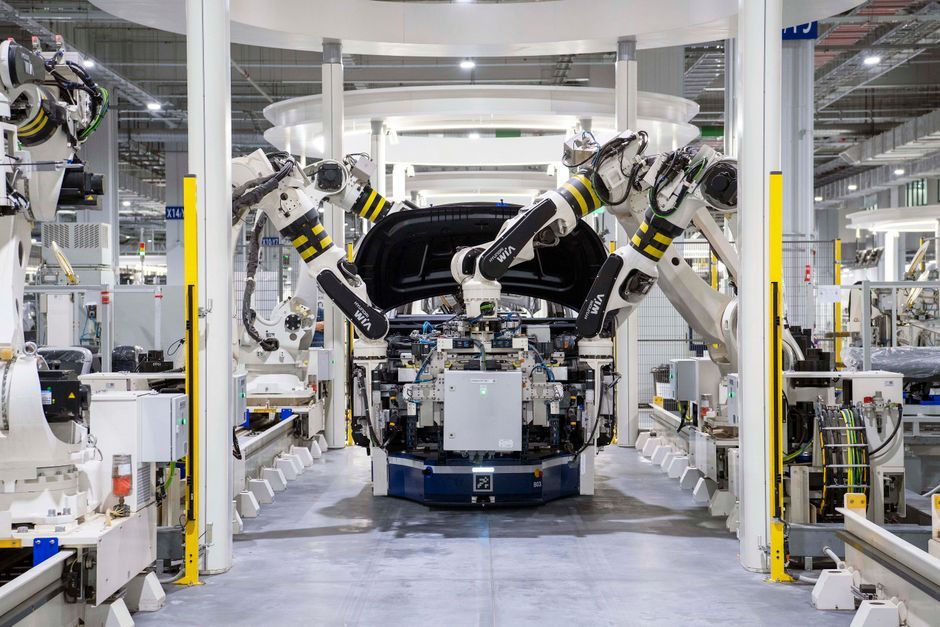
Stock photo for illustration only, not from the actual event
Pachar stated that without these mechanisms, investment capital remains concentrated among major players and imported supply chains. He warned that this is a shared risk for both the EV and Data Center industries, which require high capital investment but create relatively low domestic employment per investment unit. He emphasized that industrial development should not be viewed as a game of choosing sides between legacy industries built over 60 years and incoming global trends.
"The role of the host country is not to act as a referee deciding who survives, but to facilitate, promote, and incentivize all genuine investors to survive and grow together equally within the same system."
According to IEA data, sales of EV and plug-in hybrid vehicles in Southeast Asia surged by 62% between March and June, with Thailand emerging as one of the region's fastest-growing markets. Meanwhile, China experienced a 16% contraction in domestic sales after subsidy cuts, shifting heavily to exports with a 65% increase in the first half of the year reaching around 5 million units, making Thailand a key destination where Chinese brands capture nearly 30% of new car sales.
Regarding actual production bases in Thailand, BOI data shows over 198 EV investment projects approved with a total value exceeding 137,000 million baht. Pachar stressed that beyond factory counts, the government must ensure that production, employment, and value creation truly benefit Thai supply chains and workers, pointing to the EV3.0 compensation measures as a good starting point that requires continued strictness following its 2027 expiration, including excise tax policies.
Pachar's perspective highlights a critical challenge for Thailand in transitioning into a global manufacturing hub, emphasizing that attracting massive investment capital alone is insufficient without a robust domestic supply chain. Lessons learned from the automotive and data center sectors will prove whether government policies foster long-term sustainability or create disparities for existing market participants.
The four guidelines recommended for government consideration include:
- Do not pick industries for the market by distorting direction with tax measures
- Treat all investors equally to prevent legacy investors from being disadvantaged
- Establish conditions for real value sharing through technology and Thai workforce development
- Ensure clarity and continuity in long-term policy direction
Source: Khaosod Politics
Found something wrong in this article? Report an issue with this article
Comments
Leave a Comment