

SPACE-F Batch 7: 3 Startups Showcase Food Waste Tech
Explore 3 startups from SPACE-F Batch 7—Agrifreeze, Terra Bioindustries, and KINAVA—tackling food waste across the supply chain.

Stock photo for illustration only, not from the actual event
- UNEP reports the world generated 1.05 billion tonnes of food waste in 2022, with 60% coming from households.
- The EU updated its Waste Framework Directive, mandating members to cut food waste by 2030.
- Agrifreeze applies electromagnetic field freezing to preserve durian texture and extend shelf life.
- Terra Bioindustries upcycles spent brewery grain into protein and fiber, while KINAVA converts wet waste into biofuel using HTC.
Food waste remains a critical global challenge that demands urgent action from all sectors, especially as the 2022 Food Waste Index Report by the United Nations Environment Programme (UNEP) estimated that the world generated 1.05 billion tonnes of food waste across retail, food service, and households. This accounts for 19% of all food available to consumers, with households contributing a staggering 60% of that total volume.
Pressure to tackle this issue is shifting from voluntary targets to binding regulations with measurable outcomes. For instance, the European Union amended its Waste Framework Directive in 2025, setting mandatory targets for member states to cut food waste by 2030 by 10% in processing and manufacturing, and by 30% per capita across retail, restaurants, food service, and households compared to 2021-2023 levels.

Stock photo for illustration only, not from the actual event
Because food loss carries severe costs spanning raw materials, energy, transportation, and disposal, businesses must look beyond end-of-pipe waste management. They need to prevent waste generation at the source and maximize the value of unavoidable by-products. The SPACE-F Batch 7 accelerator program highlights three teams—Agrifreeze, Terra Bioindustries, and KINAVA—addressing these exact challenges at different stages of the food supply chain.
Modern food waste management has evolved from simple end-of-pipe disposal like composting into advanced technologies designed to recover high-value nutrients and energy. This approach aligns directly with circular economy principles, which minimize resource extraction and reduce greenhouse gas emissions associated with waste treatment.
Starting at the source prevention stage, Singapore-based startup Agrifreeze has developed electromagnetic field (EMF) freezing technology to control water molecules during the freezing process. This technique produces microscopic ice crystals, minimizing structural damage to food. Partnering with Spike Durian in Singapore, Agrifreeze applies this method to Musang King durians to preserve texture, aroma, and flavor after thawing, transforming a seasonal product into a year-round offering.
Moving to manufacturing by-products that cannot be entirely avoided, industrial beer brewing leaves behind brewers' spent grain—primarily barley from which sugars have been extracted, though rich in remaining protein and dietary fiber. Canada-based Terra Bioindustries addresses this by developing a fractionation platform that separates spent grain into multiple high-value components, including TERRA Protina protein concentrate, TERRA Fibra dietary fiber, TERRA Choc cocoa alternative ingredient, and TERRA Malt versatile malt syrup.
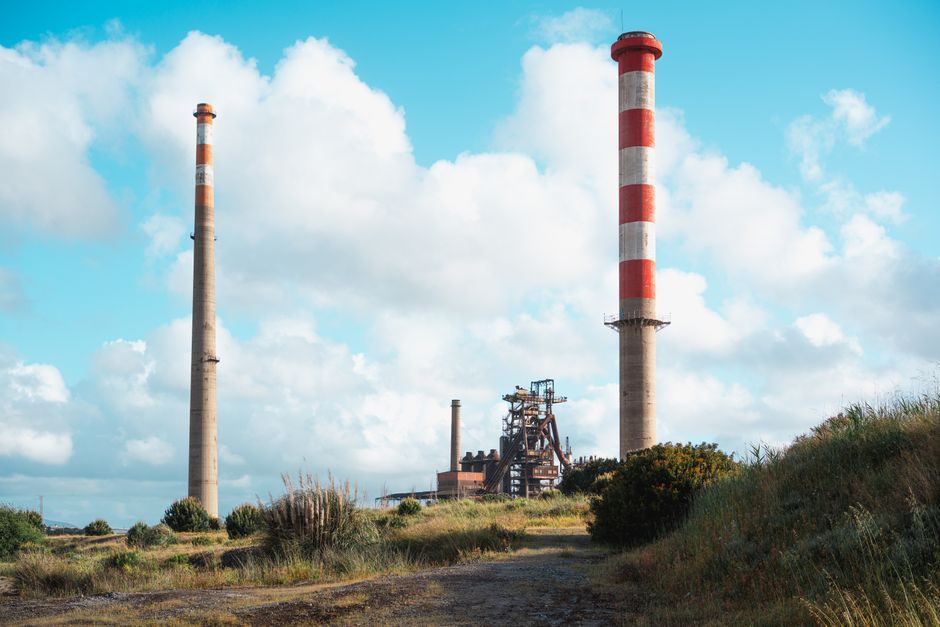
Stock photo for illustration only, not from the actual event
When waste materials are too moist, degraded, or mixed to be repurposed as food, technology steps in to recover energy and carbon materials instead. South Korea-based KINAVA utilizes hybrid hydrothermal carbonization (HTC) to convert wet organic waste into biofuels and carbon materials. By applying heat to wet biomass under pressure, the process yields a carbon-rich solid known as hydrochar. Its primary advantage is handling wet feedstocks directly without requiring complete pre-drying, while partnering with Korea East-West Power to turn sewage sludge and wood waste into solid fuel.
Source: Techsauce
Found something wrong in this article? Report an issue with this article
Comments
Leave a Comment