

Vetiver Grass: Living Wall for Soil and Water Conservation
Discover vetiver grass, featuring a root system reaching 3 meters deep, promoted by King Rama IX for soil erosion prevention and water conservation.
Stock photo for illustration only, not from the actual event
- Vetiver grass features a fibrous root system growing vertically up to 3 meters deep.
- It acts as a living wall to effectively prevent soil erosion and degradation.
- Dense clumps slow down water runoff and improve soil moisture retention.
- Recommended for planting across slopes or around fruit trees with 5-10 cm spacing.
When discussing soil and water conservation, people often think of complex technologies. In reality, nature provides a simple yet highly effective solution: vetiver grass, a resilient grass species that thrives remarkably well in Thailand and has played a vital role in environmental restoration.
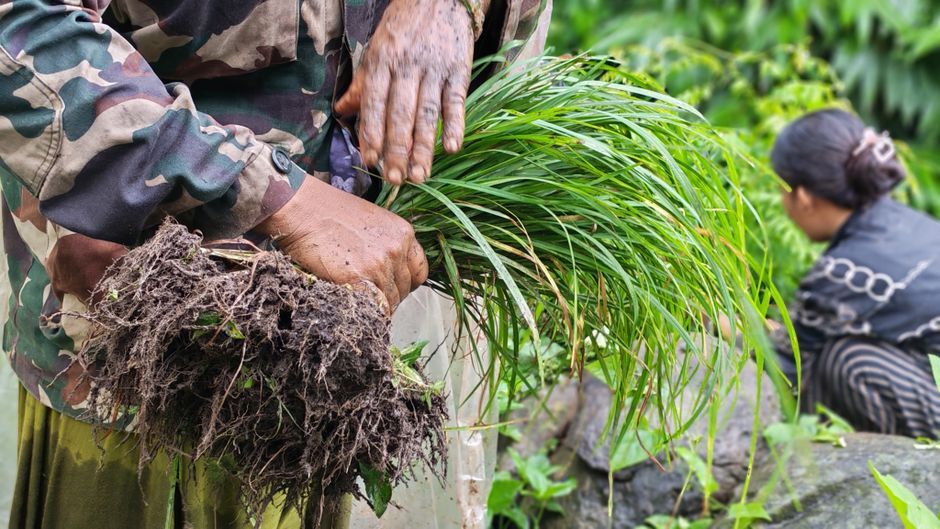
The standout feature of this plant is its fibrous root system, which extends vertically down into the soil up to 3 meters without spreading laterally, ensuring it does not compete for nutrients with nearby crops. Furthermore, its dense tillering creates tight clumps that form a natural barrier known as a living wall, a practice long promoted by the royal initiative of King Rama IX for Thai farmers.
Cultivating vetiver grass in agricultural areas or home gardens offers multiple benefits:
- Prevents soil erosion by acting like natural piles securing topsoil against heavy rain.
- Retains soil moisture by slowing down water runoff and increasing absorption.
- Rehabilitates degraded soil as trimmed leaves can be used as organic compost.
- Filters pollutants and heavy metals from entering natural water sources.
Stock photo for illustration only, not from the actual event
Utilizing vetiver grass for conservation represents a classic model of applying biological wisdom to solve environmental challenges using purely natural mechanisms without expensive concrete structures. This approach aligns closely with sustainable development principles for both small-scale farmers and large-scale environmental projects.
For those interested in applying this method to their land, planting should be done along the contour lines across slopes or surrounding fruit trees to retain moisture, maintaining a distance of about 5 to 10 centimeters between plants so they form a continuous and complete barrier wall.
Source: Thairath Lifestyle
Found something wrong in this article? Report an issue with this article
Comments
Leave a Comment