

ECRI 2026: AI Clinical Diagnosis Risks Rank Number One
ECRI's 2026 patient safety report places AI diagnosis risks at number one amid growing accountability gaps in hospital workflows.
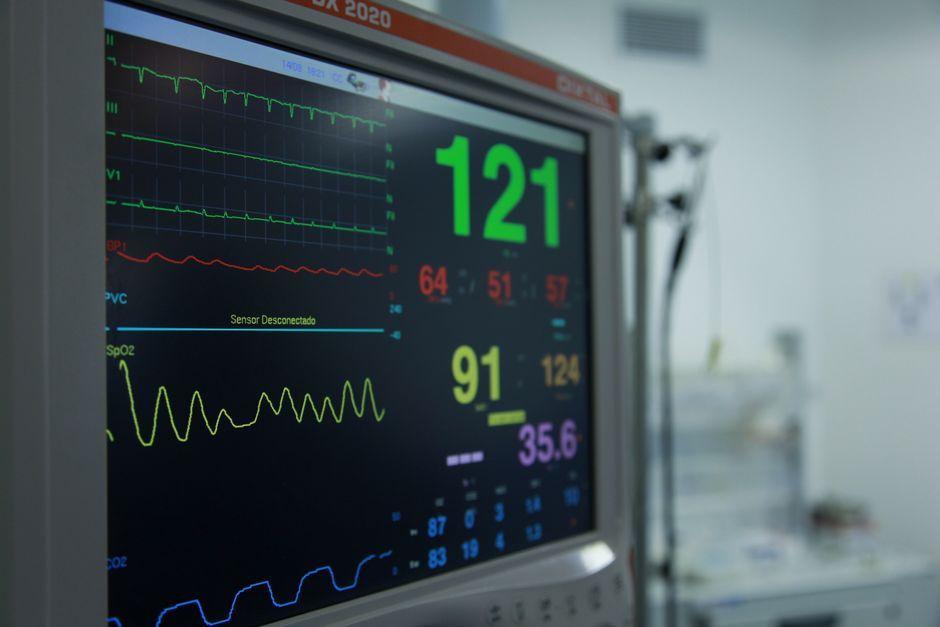
Stock photo for illustration only, not from the actual event
- ECRI released its annual 2026 patient safety report ranking healthcare hazards.
- AI clinical diagnostic systems inside hospitals were placed at number one.
- An accountability vacuum emerged as AI outpaces regulatory frameworks.
- The US FDA has authorized over 1,350 AI-enabled medical devices.
On March 9, 2026, ECRI, the Pennsylvania-based patient safety nonprofit that has been ranking healthcare hazards since the Carter administration, released a document that ought to have detonated through medicine the way the original Institute of Medicine report on medical error did twenty-five years ago. It did not. There were no congressional hearings, no rolling cable news segments, or minute-long agency statements promising action. What there was, instead, was a press release, trade-press write-ups, and the silence of an industry that heard the warning and kept moving anyway.
ECRI's annual Top 10 Patient Safety Concerns placed at number one the risk posed by artificial intelligence in clinical diagnosis. This includes diagnostic systems sitting inside hospital workflows such as algorithms that read mammograms, screen chest X-rays for nodules, flag deteriorating patients on inpatient wards, and route radiology priorities, rather than simple chatbots or administrative scribes.
Stock photo for illustration only, not from the actual event
The framing was deliberately cautious without calling for moratoria or naming vendors. ECRI noted that AI diagnostic systems deployed without rigorous oversight increase the risk of missed, delayed, or incorrect diagnoses, that training data can encode bias, and that clinicians are operating under automation bias—the human tendency to defer to a confident-sounding machine even when it is wrong.
What ECRI described points to a structural accountability vacuum. Clinical AI has arrived faster than the legal, regulatory, and institutional architecture needed to govern it, leaving ambiguity over liability when algorithmic failures occur across hospitals, vendors, and regulators.
The State of Clinical AI 2026 report, published in January by researchers from Stanford and Harvard including Peter Brodeur, Ethan Goh, Adam Rodman, and Jonathan H. Chen, emphasized that clinical AI is already embedded in care. Growth metrics highlighted in the report include:
- By early 2026, the US FDA authorized over 1,350 AI-enabled medical devices.
- This figure represents roughly double the count recorded in 2022.
- The European Union's AI Act began implementation in stages from February 2025.
- The UK MHRA has operated its AI Airlock pilot since April 2024.
The central anxiety of the Stanford-Harvard report is evaluation opacity. Traditional academic medicine evaluation standards were designed for drugs with specified mechanisms, whereas AI diagnostic tools depend heavily on training data, deployment context, and local patient populations which can cause model performance to degrade across different clinical sites.
Source: Dev.to
Found something wrong in this article? Report an issue with this article
Comments
Leave a Comment