

Millennials and Housing: Is Buying a Home Getting Easier?
An in-depth look at how UK millennials struggle with soaring property prices and large deposits, even as recent housing market growth slows down.

Stock photo for illustration only, not from the actual event
- People born in the UK in the mid-1990s face roughly a 25% chance of owning their own home.
- Raw material costs, energy spikes, and labour shortages have severely inflated construction expenses.
- Private renters typically spend a third of their income on rent, making deposit savings difficult.
- The UK government under Sir Keir Starmer is pursuing planning reforms to streamline housing supply.
Leaving education, securing employment, purchasing a home, and perhaps establishing a family: the traditional trajectory followed by earlier generations may now feel like a distant aspiration for many. Yet a central question persists regarding whether the path to entering the housing ladder is showing signs of becoming slightly more accessible for prospective first-time buyers today.
Contemporary prospective buyers might reasonably feel hard done by, remaining in a less favorable financial position than recent generations. Statistical insights indicate that individuals born in the UK during the mid-1990s hold approximately a 25% probability of homeownership, whereas individuals in their twenties during the 1990s faced nearly double that likelihood, and preceding generations enjoyed even higher rates.
Before examining current conditions, understanding long-term shifts requires looking at how property values have consistently outpaced incomes across multiple decades. Housing economist Paul Cheshire starkly illustrates this by comparing historical increases in egg prices against property values over a span of 71 years. While mortgage market fluctuations have contributed to the issue, the fundamental driver remains a persistent shortage of newly built housing.
The government previously estimated that England alone requires an additional 300,000 homes annually to match demographic shifts and the rising preference for smaller households. In contrast, only 208,000 dwellings were successfully added last year, marking at least three decades since the country last approached the 300,000 annual construction mark.
Numerous factors explain this deficit, with inflation serving as a primary culprit influencing land values, construction wages, and brick prices. Data analysis reveals that raw materials such as timber, steel, plasterboard, concrete, and insulation tracked general inflation rates from the 1990s until the COVID-19 pandemic disrupted supply chains and sourcing reliability.
"As a guide, a home that cost £150,000 to build in 2015 may cost £230,000 now - analysts say those costs could rise by another 15% in the next five years."
BBC Business
These pressures were further compounded by the conflict in Ukraine, which spiked energy costs by 15% within a single year—affecting both manufacturing and actual construction operations—while subsequent tensions involving Iran pushed expenses higher still. Even prior to the pandemic, over one in five construction firms battled acute shortages of skilled personnel, a situation exacerbated by Brexit immigration changes.
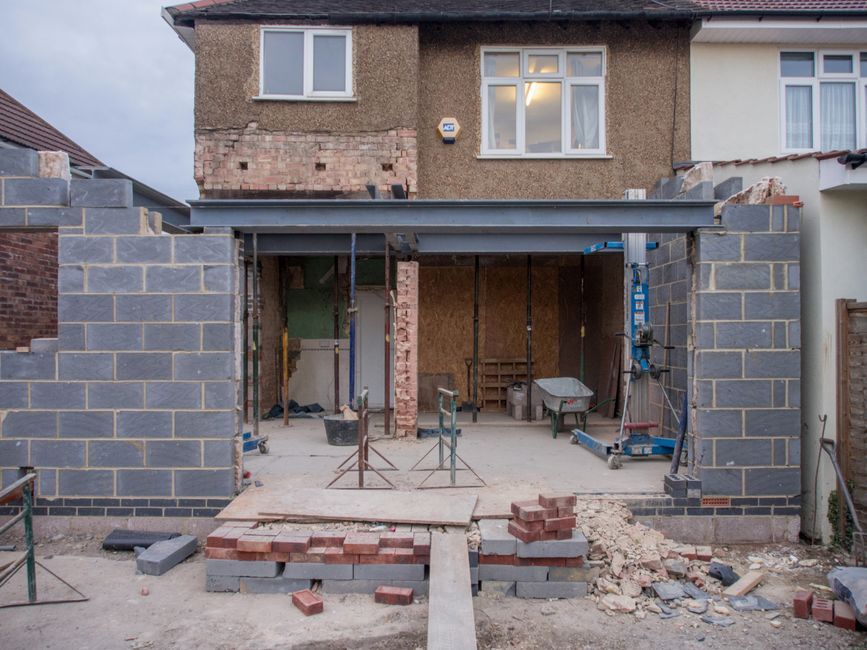
Stock photo for illustration only, not from the actual event
The convergence of escalating construction expenses and stringent planning regulations highlights the complex structural bottlenecks facing modern housing economies. Balancing environmental preservation and safety standards against the urgent need for scalable housing supply requires comprehensive policy reforms that can restore development confidence without compromising long-term community standards.
As property values have climbed over the years, the capital required for a standard deposit has reached tens of thousands of pounds, with the exact figures for a 10% down payment varying sharply across regions. Accumulating these funds becomes exceptionally difficult when prospective buyers simultaneously face steep private rental expenses, which typically consume a full third of their regular income.
It is hardly surprising that an increasing number of young adults choose to remain living with their families to minimize housing overheads and accelerate savings. In recent years, property price growth has moderated relative to wage increases, slightly improving saving conditions. Certain lenders have responded by accepting smaller down payment thresholds, offering larger loan amounts, and extending repayment horizons, helping mortgage payments move closer to long-term historical averages relative to wages.
Ultimately, restoring the ease of entering the housing market to historical levels requires a substantial increase in housing inventory. Active measures are underway, including plans introduced by Sir Keir Starmer's administration to streamline historically slow planning frameworks and reforms permitting increased construction on designated green belt land, though such measures face public debate. Whatever governmental path is pursued, tangible results will inevitably take years to materialize.
Source: BBC Business
Found something wrong in this article? Report an issue with this article
Comments
Leave a Comment