

Genki unveils Manta wireless controller with big screen
Genki launches a Kickstarter campaign for the Manta wireless controller featuring a 2.9-inch LCD screen, starting at $189.

Stock photo for illustration only, not from the actual event
- Genki Manta is the company's first self-designed wireless controller, now live on Kickstarter.
- Features a built-in 2.9-inch LCD screen for managing profiles and deeply customized settings.
- Equipped with tristage triggers, analog face buttons, and drift-resistant TMR thumbsticks.
- Early-bird backers can preorder for $189, with a planned retail price of $279.
After partnering with 8BitDo on a gamepad two years ago, Genki has officially launched the first controller designed entirely in-house. Featuring an unorthodox layout with thumbsticks and buttons positioned above a large display, the Manta sports a chunkier profile than standard competitors. However, its standout feature is a robust customizability suite managed directly through the controller's screen and hardware.
The Genki Manta is making its debut today via a Kickstarter crowdfunding campaign. Early supporters can secure a preorder at a discounted price of $189, while the full retail price is slated for $279. This marks the company's ninth crowdfunded device, and while backing campaigns carries inherent risk, Genki maintains a strong delivery track record.
While brands like Anbernic already offer controllers with integrated screens, the Manta provides a deeper layer of configuration powered by a dedicated Raspberry Pi RP2350 microcontroller. Players can easily switch between console and user profiles, adjust thumbstick response curves and dead zones, fine-tune haptic intensity, remap layouts, and record complex macro sequences.
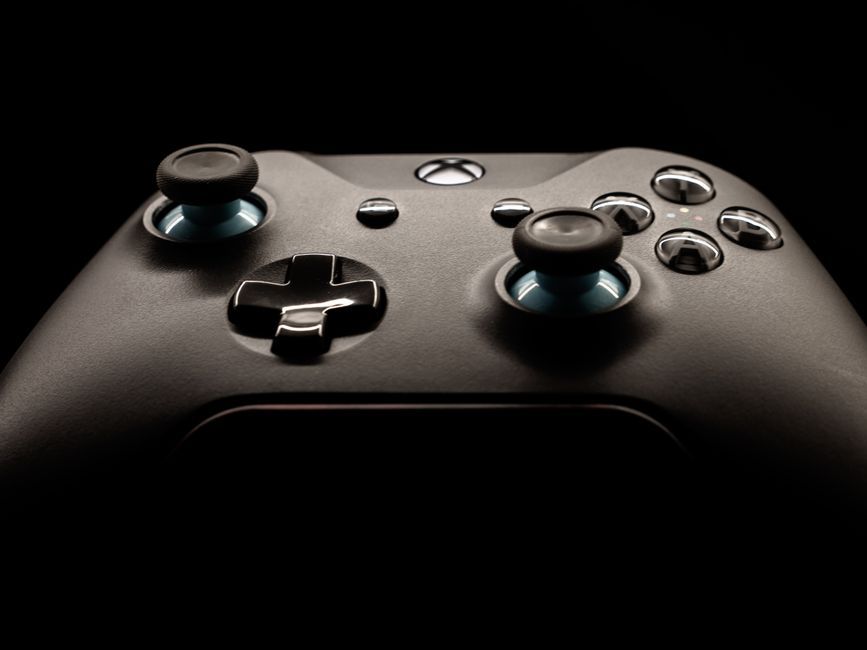
Stock photo for illustration only, not from the actual event
The Manta stands out as one of the first gamepads featuring tristage triggers, adding a third intermediate travel distance option optimized for rapid consecutive presses. Its face buttons are fully analog, allowing users to define the exact actuation depth for each input. Additional hardware highlights include linear magnetic ram haptic motors, drift-resistant tunneling magnetoresistance (TMR) thumbsticks, a user-replaceable 2,600mAh battery, and six extra remappable buttons.
Integrating a Raspberry Pi RP2350 chip directly into a gamepad highlights a growing trend of embedding microcomputer versatility into peripherals, enabling onboard processing for advanced macro creation and profile management without relying on external companion apps.
Additionally, the device includes a dedicated button to switch into a keyboard and mouse mode for effortless browser navigation. Connectivity options include Bluetooth wireless, an included 2.4GHz dongle, or a wired USB-C connection for minimal latency.
Source: The Verge
Found something wrong in this article? Report an issue with this article
Comments
Leave a Comment