

Biosphere 2: looking back at the Arizona desert enclosure
Exploring the 1991 Biosphere 2 project where eight humans lived inside a sealed Arizona desert enclosure to test closed ecosystems.

Stock photo for illustration only, not from the actual event
- The Biosphere 2 project began on September 26, 1991, with eight crew members entering a sealed structure.
- The 40-acre Arizona complex housed a rainforest, savanna, ocean, desert, and agricultural zones under one roof.
- Atmospheric oxygen dropped from 20.9% to 14.5% by January 1993 due to soil microbes and concrete reactions.
- The mission doubled as a medical study on caloric restriction and human physiological adaptation.
In 1991, eight individuals stepped inside Biosphere 2, a vast glass enclosure in the Arizona desert designed to test whether humans could survive within a materially closed ecosystem. Conceived by Space Biospheres Ventures, the project aimed to combine ecological engineering with a prototype for long-duration space habitation. The complex brought together a tropical rainforest, savanna, desert, ocean, agriculture, laboratories, and living quarters under a single roof. What unfolded inside over the following two years revealed the intricate entanglements between ecological, architectural, technological, and human systems with nowhere else to go.
The project emerged from an era characterized by optimism where ecological thinking, counterculture, systems theory, and space exploration intersected. John P. Allen, working alongside Texas businessman and philanthropist Edward P. Bass, developed the initiative based on the premise that a contained ecological system could be studied at a scale large enough to include people. The ambition was both terrestrial and extraterrestrial: to understand Earth cycles through miniature reproduction while exploring whether similar principles could eventually support human life on the Moon or Mars.
That premise turned the building itself into part of the experiment. Constructed in Oracle, Arizona, between 1987 and 1991, Biosphere 2 was housed within a steel-and-glass envelope enclosing approximately 200,000 cubic meters of atmosphere, while a stainless-steel liner prevented uncontrolled exchanges with the surrounding soil and water. Extensive piping, heat exchangers, air systems, and water-recycling infrastructure formed a hidden technosphere beneath the visible landscape.
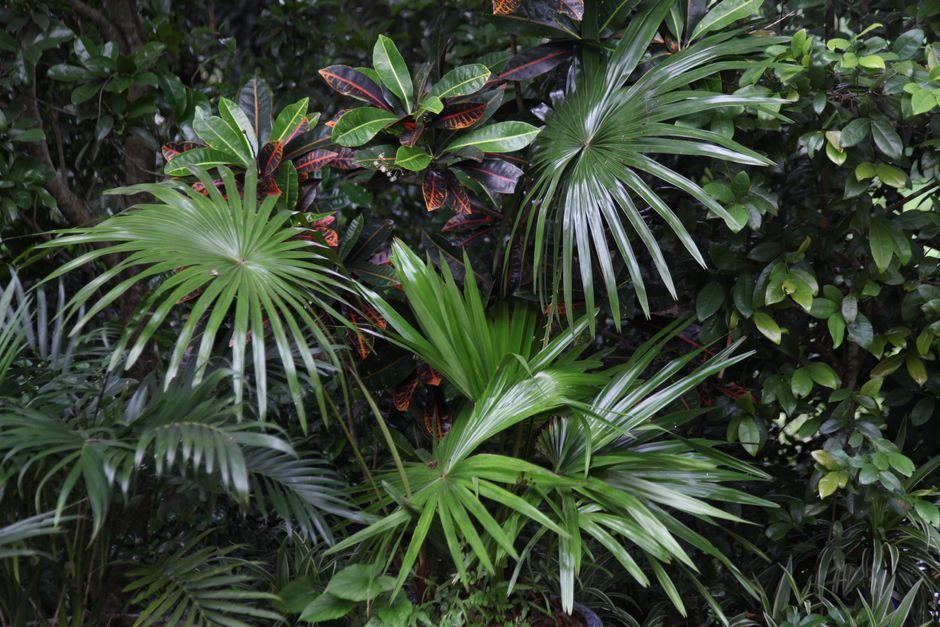
Stock photo for illustration only, not from the actual event
Because the sealed structure expanded and contracted under the Arizona sun, engineers installed two massive variable-volume chambers known as the 'lungs' to regulate internal pressure. This system underscored that Biosphere 2 functioned just as much as a machine for managing atmospheric physics as it did a miniature world.
The project attempted to compress ecological diversity into a modest footprint, integrating an agricultural zone intended to supply food alongside residential and laboratory spaces. The underlying strategy aimed to create enough biological complexity for the ecosystem to organize itself. However, the experiment quickly demonstrated that biodiversity cannot simply be assembled from a species list and expected to replicate mature ecosystem relationships.
After the first crew entered the enclosure on September 26, 1991, oxygen concentrations began to decline. By January 1993, atmospheric oxygen had dropped from roughly 20.9 percent to 14.5 percent, placing considerable physiological stress on the crew and eventually requiring external oxygen inputs. The decline stemmed not only from plant respiration rates but also from a vast reservoir of organic matter in the soils where microorganisms consumed oxygen and produced carbon dioxide.
The confinement experiment of Biosphere 2 highlights the profound fragility of interdependent biological and physical systems. Unforeseen interactions—such as concrete absorbing carbon dioxide—demonstrate the immense challenge of engineering self-sustaining closed environments, providing crucial lessons for future space exploration and earth science research.
The use of concrete in the building served as another unaccounted variable. Carbon dioxide produced by microbial respiration reacted with calcium compounds in the structure's concrete, removing part of the gas from the atmosphere and causing an imbalance where oxygen continued to disappear while corresponding carbon dioxide failed to remain in the air.
Other biological failures included the disappearance of pollinating insects and introduced vertebrates, contrasted by the flourishing of opportunistic species like ants and cockroaches. Aggressive vines spread through the rainforest while crop production faced difficulties due to unpredictable interactions among pollination, pests, disease, weather, and light availability.
Source: designboom
Found something wrong in this article? Report an issue with this article
Comments
Leave a Comment