

Tibet flood footage scarce in China as victim toll remains unclear
Dramatic footage of flash floods sweeping through the Gyirong Port on the Nepal-Tibet border spreads globally, while China censors local internet and details on casualties.
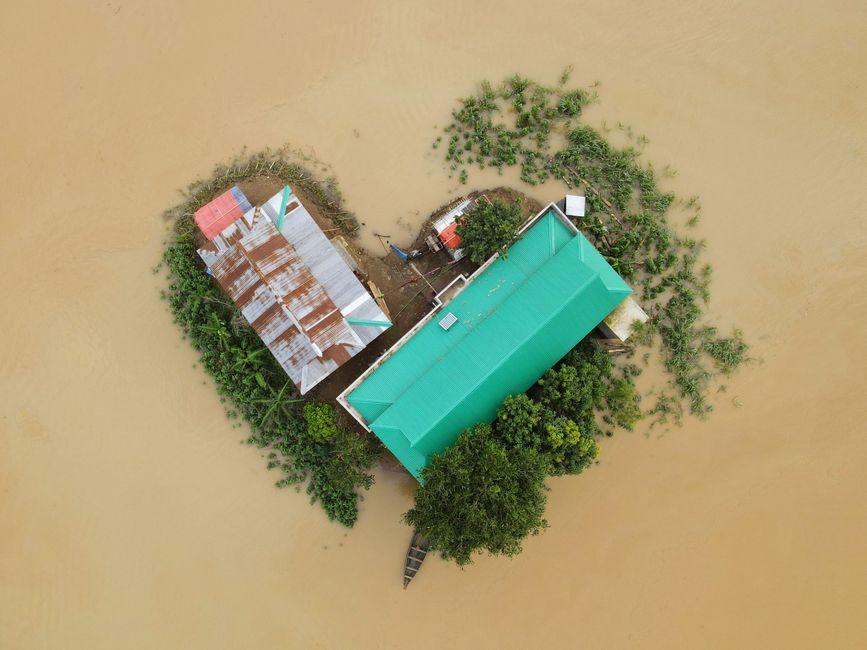
Stock photo for illustration only, not from the actual event
- Flash floods destroy the Gyirong Port area along the Nepal-Tibet border.
- State media in China limits footage and provides scarce details on casualties.
- President Xi Jinping and Premier Li Qiang mobilize emergency rescue operations.
- Strict censorship stems from fears over political stability and social discontent.
The dramatic footage was nearly impossible to miss as a powerful torrent of water tore through Gyirong Port, one of the main border crossings between Nepal and Tibet, sweeping away everything in its path while hundreds fled for their lives.
The scenes captured by CCTV cameras quickly spread across social media worldwide. However, the country's state-run flagship news bulletin has broadcast only a single still-frame shot of the disaster so far.
Finding videos or posts detailing the flash flooding on China's heavily censored internet has proven extremely difficult. Reports indicate the disaster has claimed hundreds of lives, with just as many remaining unaccounted for since Wednesday.

Stock photo for illustration only, not from the actual event
Beijing has launched a massive rescue operation involving hundreds of emergency workers, and President Xi Jinping chaired an emergency meeting with officials to coordinate relief efforts. Nevertheless, comparing domestic internet content with global coverage highlights the visibility of China's firewall.
Tibet, annexed by Beijing in the 1950s, has a long history of resisting rule by the Chinese Communist Party. China has cracked down on protests over the years and faced accusations of grave rights violations in the Buddhist region, while labelling the exiled Dalai Lama a separatist.
The stringent information control surrounding the Tibet disaster underscores Beijing's overarching priority of maintaining absolute social stability. Historically sensitive regions are closely monitored to prevent any tragedy from transforming into a catalyst for public discontent or organized opposition against government policies, making information flow extremely restricted during crises.
State media coverage has primarily focused on dramatic rescue operations, showing specialist search teams scaling mountain cliffs and crossing raging rivers. Yet details regarding the aftermath, survivors, or the anxious families of the missing remain largely absent from official reports.
Chinese Premier Li Qiang was swiftly dispatched to the region to inspect debris removal, marking a rare early visit by the nation's second-highest leader following a major disaster. Observers note that this calculated response aims to safeguard stability, as the ruling party fears disasters could fuel grievances over emergency preparedness or prevention.
Source: BBC World
Found something wrong in this article? Report an issue with this article
Comments
Leave a Comment