

Royal Irrigation Department Pushes 70B Baht Yuam Water Project
The Royal Irrigation Department is seeking Northern forest access for the 71 billion Baht Yuam water diversion project, while local sub-district administrative organizations in Chiang Mai and Tak vote against it amid ongoing court cases.

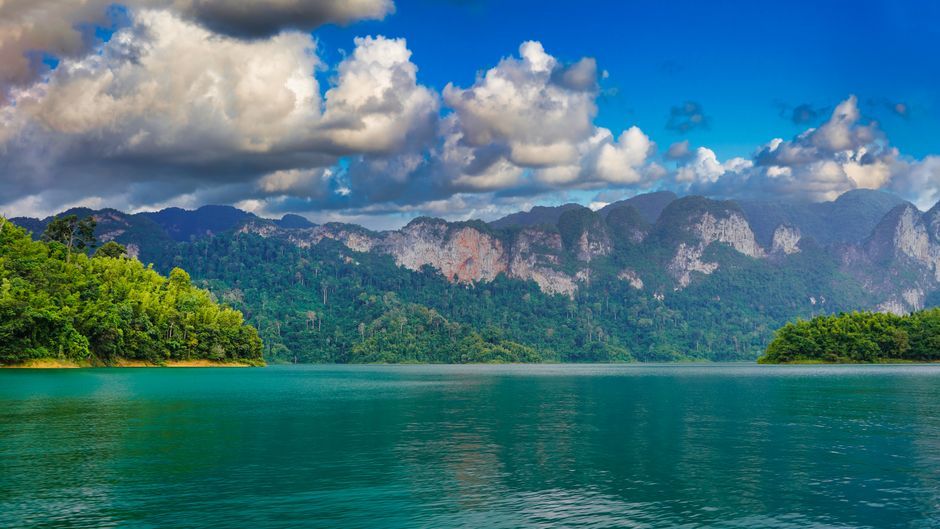
Stock photo for illustration only, not from the actual event
- The Royal Irrigation Department requested reserved forest access for a 71 billion Baht water project
- Nakhon Ruea Tambon Administrative Organization in Chiang Mai unanimously voted against the project
- Local networks noted that administrative lawsuits at the Chiang Mai Administrative Court remain ongoing
- Academic experts pointed out several unresolved environmental and engineering questions
The Royal Irrigation Department, represented by Mr. Pakkrong Sudjainak, Director of the Large Scale Irrigation Construction Office No. 1 in Chiang Mai, has issued formal letters to the chief executives of various sub-district administrative organizations (TAOs) in Tha Song Yang district of Tak province, Sop Moei district of Mae Hong Son province, and Hot and Om Koi districts of Chiang Mai province. The request seeks permission to utilize national reserved forest areas to construct the Bhumibol Dam water volume enhancement project, commonly known as the Yuam water diversion project in Mae Hong Son province.
Project documents indicate a total budget of 71 billion Baht spanning a continuous 7-year implementation period. The positive outcomes highlighted in the proposal include increasing dry-season cultivation areas for the Kamphaeng Phet and Chao Phraya Yai projects by 1,610,026 rai, boosting water demand capacity for the Provincial Waterworks Authority by 50 million cubic meters per year, and supplying an additional 250 million cubic meters per year for the Metropolitan Waterworks Authority, while claiming zero negative environmental impacts.
Stock photo for illustration only, not from the actual event
However, this sudden administrative push has surprised local leaders and community networks. Mr. Sathan Wichaipong, coordinator of the Salween-Yuam-Moei-Ngao River Basin Peoples Network, stated that local residents have already filed a lawsuit against the project at the Chiang Mai Administrative Court, with legal proceedings still underway. He criticized the department for accelerating the regional process and questioned whether small-scale water development projects were bundled alongside the major diversion plan to secure local council approval.
"This project will definitely impact local villagers, yet the attached documents claim there are no negative outcomes. To this day, many TAO members still lack detailed information regarding the project and its impacts."
Mr. Sathan Wichaipong
On the ground level, Mrs. Yupha Choae, a TAO member for Nakhon Ruea sub-district in Hot district, Chiang Mai, revealed that her council held a meeting on August 14, 2026, and unanimously resolved to reject the request to utilize the Om Koi and Chaem-Mae Tuen national reserved forests. Mr. Ekarin Mettho, Chief Executive of the Nakhon Ruea TAO, has officially mailed a written refusal back to the Irrigation Construction Office No. 1, citing strong local opposition from community residents.
Additional Context: Large-scale water resource diversion mega-projects in Thailand often encounter profound challenges regarding Environmental Impact Assessments (EIA) and community stakeholder participation. Massive tunneling systems and utilization of upstream forest zones frequently raise concerns over trans-boundary watershed ecosystems and local livelihoods, necessitating rigorous transparency and comprehensive scientific scrutiny to address public skepticism.
Assoc. Prof. Dr. Sitta Phillaula, an engineering lecturer at Kasetsart University and an expert advisor to the House Committee on Water Resources Management, shared via social media that the Yuam water diversion project still contains numerous unanswered academic questions regarding engineering, fisheries, environmental impacts, and overall economic feasibility that neither the department nor its consultants have fully resolved.
Source: Matichon Politics
Found something wrong in this article? Report an issue with this article
Comments
Leave a Comment