

Anthropic Launches Model Hardware Standard (MHS) Preview
Anthropic has released a research preview of Model Hardware Standard (MHS), cutting hardware setup times for AI agents from weeks to hours.

Stock photo for illustration only, not from the actual event
- Anthropic introduces the Model Hardware Standard (MHS) research preview for safe physical device operation by AI agents.
- MHS standardizes drivers between operating systems and hardware, cutting setup time from weeks to hours.
- Prominent institutions like Genentech, Carnegie Mellon, and the University of Washington have successfully tested the system.
Connecting various laboratory and industrial hardware instruments to software systems has traditionally required specialists to hand-write custom translators for every device pair. Even after physical connection, a standardized method for devices to report status or accept safe AI operation has been largely absent. Anthropic notes that conventional setup workflows typically span weeks or months, whereas MHS reduces this overhead to mere hours or minutes.
MHS operates by standardizing the driver layer situated between an operating system and a hardware device. It exposes a minimal primitive set—such as read operations for temperatures, write commands for adjustments, and discovery protocols—allowing devices and AI agents to locate and communicate across a network without requiring custom intermediary translators.
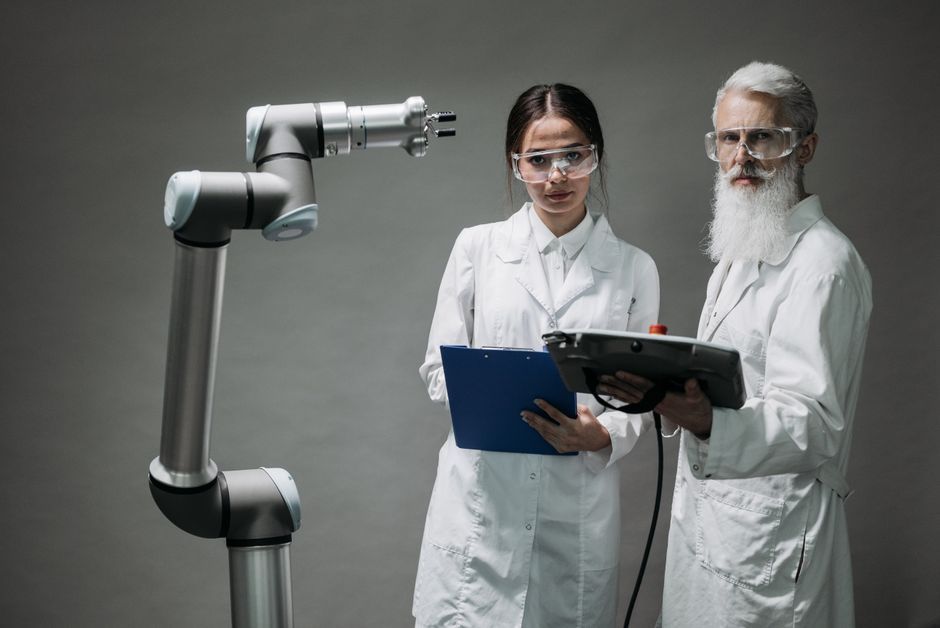
Stock photo for illustration only, not from the actual event
The framework also accommodates domain knowledge that standard code struggles to encode, such as the precise physical weight of a robotic arm. Driver tags allow users to input parameters in natural language or let an AI agent interview them during setup. The system then compiles these inputs into a reference file defining measurable metrics, adjustable parameters, and enforced safety thresholds.
Anthropic's MHS framework represents a vital shift in bridging advanced language models with physical automation systems. By allowing AI agents to interface directly with laboratory instruments without custom integration code per device, it addresses a major engineering bottleneck that has historically slowed down experimental science and hardware deployment.
Control is administered through three primary mechanisms: the Model Context Protocol, a command-line interface, and raw code files. MHS is entirely model-agnostic, meaning any agent harness can leverage it via standard protocols. Real-world testing has already demonstrated significant efficiency gains across notable institutions:
- Genentech: Automated the BCA protein assay across a liquid handler, robotic arm, and plate reader, with Claude executing trial transfers and validating performance metrics autonomously.
- Carnegie Mellon: Accelerated dose-response experiments by roughly threefold, orchestrating incompatible hardware interfaces and writing complete functional drivers within eight hours.
- University of Washington: A PhD student successfully integrated six distinct laboratory instruments in under a week, including driver development.
Readers interested in exploring the full documentation and applying for the research preview can visit the official announcement channels provided by the publication.
Source: MarkTechPost
Found something wrong in this article? Report an issue with this article
Comments
Leave a Comment