

depa, IBM and MDES Unite to Build Thailand's Quantum Ecosystem
Unpacking Thailand's readiness for the quantum era as industry leaders and researchers collaborate to shape a national policy framework.
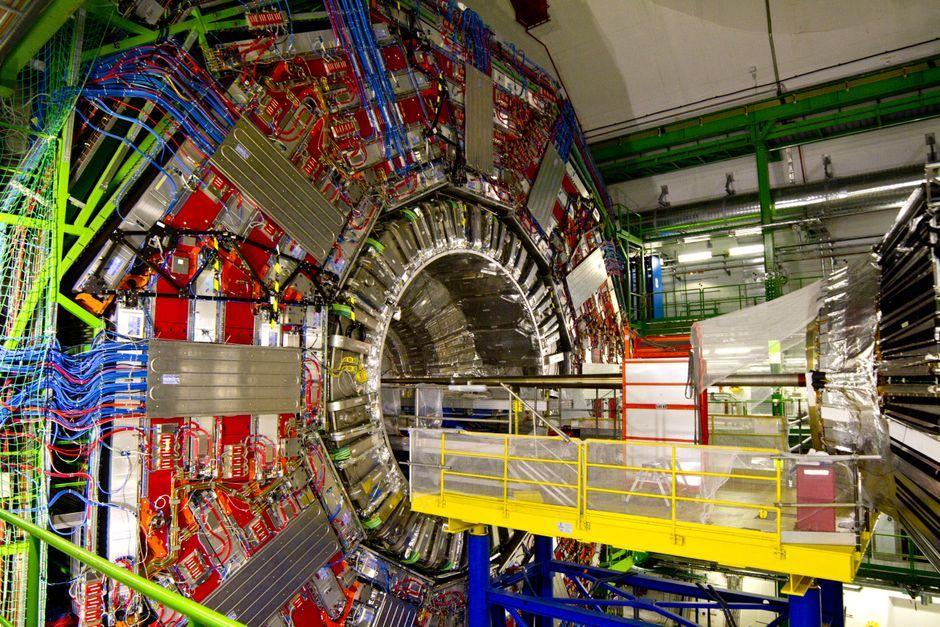
Stock photo for illustration only, not from the actual event
- RSA Encryption 2048 bit secures current mobile apps but faces decryption in just 8 hours by quantum computers.
- depa and IBM Thailand hosted the Thailand Quantum Readiness Workshop to co-create a national White Paper.
- IBM targets delivering its error-corrected 200-qubit Starling quantum system by 2029.
- WEF data shows global quantum investments have reached nearly THB 2 trillion, urging Thailand to expand its ecosystem.
Security systems in smartphones and banking apps are currently safeguarded by a mathematical challenge known as RSA Encryption 2048 bit, created by multiplying two massive prime numbers. While multiplication is fast, reversing the process with conventional computers to guess the original numbers is so complex it would take 4.7 billion years of trial and error, roughly the age of the universe. However, Julian Tan, a researcher from IBM Research, pointed out that when processed by a quantum computer, this formidable puzzle can be entirely decrypted in a mere 8 hours.
This vulnerability has sparked urgency among global banks and prompted the United States to issue an Executive Order mandating government agencies to prepare. Dr. Supakorn Siddhichai, Acting President of the Digital Economy Promotion Agency (depa), partnered with IBM Thailand to host the Thailand Quantum Readiness Workshop. The initiative brought together researchers, universities, technology developers, government agencies, and industrial sectors to co-create the Thailand Quantum Readiness White Paper as a truly inclusive policy proposal.
Stock photo for illustration only, not from the actual event
Julian Tan clarified that quantum computers are not simply faster CPUs or GPUs, but operate on an entirely different computational paradigm. He categorized first-wave quantum technology, or Quantum 1.0, as existing around us in MRIs, semiconductors, and LEDs, whereas Quantum Computing represents Quantum 2.0—a General-Purpose Technology comparable to electricity or the internet that will touch every future industry.
Comprehending quantum computing is critical today because its parallel processing capabilities driven by quantum mechanics will redefine human technological boundaries. Thailand establishing its ecosystem now serves as a vital safeguard to prevent technological disadvantage when this trend transforms the global economy.
Rizwan Hussain, IBM's General Manager of Quantum Sales for Asia Pacific and Japan, cited a World Economic Forum report noting that global investments in quantum technology have reached nearly THB 2 trillion ($56 billion) across 31 countries, with 20 having national quantum strategies. Thailand is listed among them, but its ecosystem requires massive expansion. Meanwhile, Khun Anothai Wettayakorn, Managing Director of IBM Thailand, estimated that Quantum Computing will generate up to THB 70 trillion ($2 trillion) in economic value by 2035 across four key sectors: life sciences, chemicals, financial services, and transportation.
Another pressing challenge is the talent gap. Rizwan revealed that for every 3 open quantum job roles, there is only 1 qualified candidate available, suggesting that Thailand should engage leading institutions like Chiang Mai University and Chulalongkorn University to design dedicated curriculums for the future.
Source: Techsauce
Found something wrong in this article? Report an issue with this article
Comments
Leave a Comment