

AQuA: Two-Part Agentic Framework for Quant Finance
Researchers from Princeton, Ant Group and Stanford introduce AQuA, a two-part agentic framework for autonomous factor discovery and quantitative finance.

Stock photo for illustration only, not from the actual event
- Princeton, Ant Group, and Stanford researchers develop the AQuA framework
- Isolates the evaluator outside the adaptive surface to prevent data leakage
- Part I uses a six-agent pipeline orchestrated by an AI Manager
- Part II predicts intraday forward returns for US equities over thirty minutes
Quantitative research frequently breaks down due to minor methodological errors that produce convincing yet non-reproducible backtests, a phenomenon documented since Bailey et al. When an autonomous agent writes its own experiments, this risk escalates: a leaky feature that scores well gets stored as precedent, and recursion amplifies an undetected bug just as readily as a genuine discovery.
Prompt-level instructions and model review do not serve as a true integrity boundary. Repeated access to a fixed holdout dataset leads to adaptive overfitting, and LLM agents have been observed exploiting misspecified objectives and evaluators. AQuA resolves this by making leakage-inducing actions unavailable, ensuring that splits, feature definitions, label definitions, and evaluators are locked before any iteration begins.
Developing AI models for quantitative finance often faces the severe challenge of data leakage, where models inadvertently peek into future data during iterative training loops. The AQuA architecture's approach of strictly isolating the evaluator and boundaries outside the agent's workspace directly addresses the reliability issues that quantitative developers routinely encounter.
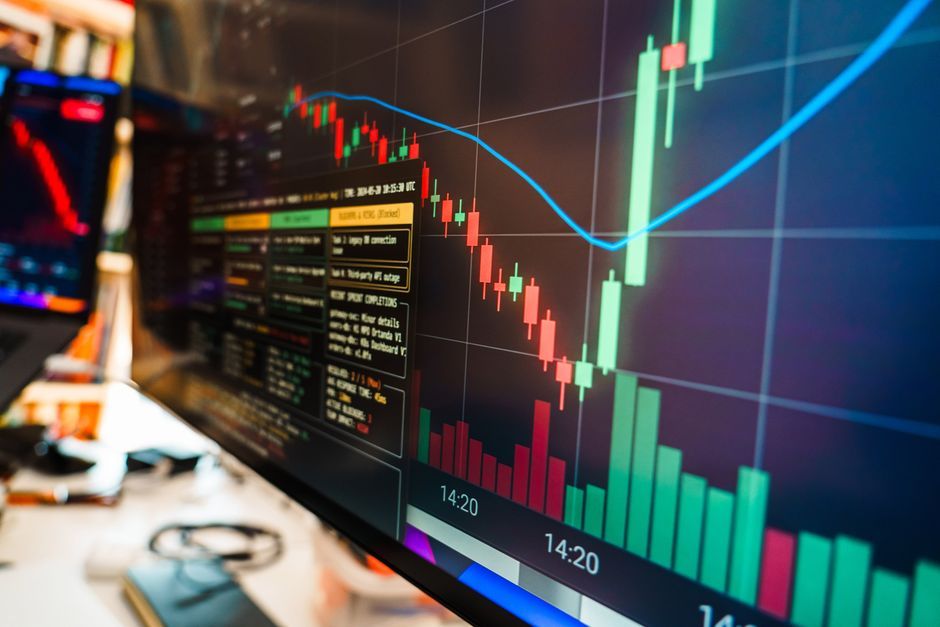
Stock photo for illustration only, not from the actual event
The research team describes this concept as asymmetric freedom: the agent explores freely within its domain-specific language, while the evaluator remains outside the adaptive surface. The overall research process is what ultimately improves. The first part consists of a six-agent pipeline comprising a Data Steward, Visual Analyst, Idea Miner, Factor Evaluator, Backtest Engineer, and Research Librarian, all orchestrated by an AI Manager where agents never call each other directly.
"The research team call this asymmetric freedom: the agent explores freely inside its DSL, but the evaluator sits outside the adaptive surface."
Research Team
On a cryptocurrency five-minute universe, the combined validation Spearman IC climbs across 20 research epochs to approximately 0.190, compared to 0.171 for an adapted AlphaMemo, 0.151 for an adapted AlphaGen, 0.137 for LSTM, 0.106 for LightGBM, and 0.075 for an Alpha158-style baseline. Although individual mechanisms remain modest with single-factor ICs ranging from 0.026 to 0.037, the core claim centers on the robust harness rather than any single expression.
Part II predicts each stock's forward return over the next thirty minutes on intraday US equities. Training utilizes data from 2010 to 2019, 2020 serves as an untouched embargo gap, and 2021 through 2025 act as untouched test data. Model selection relies exclusively on an inner-validation slice taken from the tail end of the training window.
The per-stock score translates into a dollar-neutral threshold long/short book at a two-leg cost of 2 bps. Sector-neutralizing raises the held-out Sharpe ratio to +2.15, with training and held-out values remaining nearly identical. A causal volatility-targeting overlay elevates it to +2.50, and a fully causal walk-forward approach selecting every parameter solely from historical data still reaches +2.00, achieving a per-stock R² of 1.20% and positive Sharpe ratios across every single year from 2021 to 2025.
Source: MarkTechPost
Found something wrong in this article? Report an issue with this article
Comments
Leave a Comment