

Engineering a Ultra-Thin 2.4 mm BLE Logging Card
Exploring the 2.4 mm thickness budget allocation for a sealed BLE logging card, detailing CR2016 placement, antenna clearances, and sensor thermal paths.
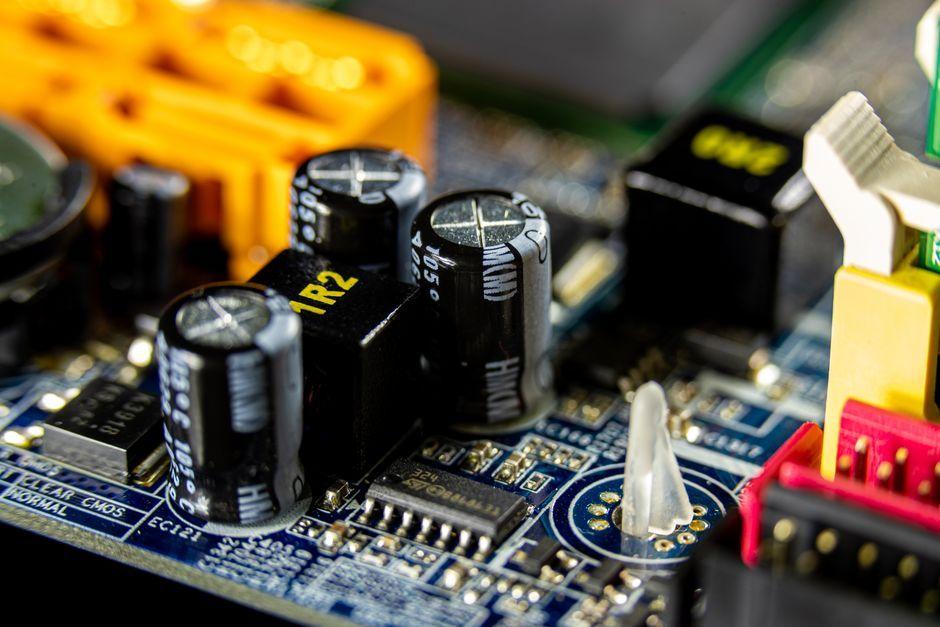
Stock photo for illustration only, not from the actual event
- A 2.4 mm target height forces the coin cell to drop into a window cut through the PCB rather than stacking.
- The coin cell and the antenna must occupy opposite short edges to prevent RF detuning.
- Thermal routing slots and shell thickness dictate sensor accuracy more than datasheet decimals.
- Total baseline quiescent current sits around 2.85 microamps before sampling or advertising begins.
Designing a sealed logging card is fundamentally a thickness problem before it becomes an electronics challenge. Every subsystem relies on a single crucial decision regarding how the available millimeters are distributed. Allocating a 2.4 mm target by simply stacking a cell above the board causes the budget to turn negative before assembly even begins.
Based on manufacturer data, a CR2016 cell stands 1.6 mm tall with a 20.0 mm diameter and 90 mAh capacity, while its larger sibling CR2032 reaches 3.2 mm in height. A 2.4 mm card cannot stack a coin cell on top of its PCB because the board and two shell walls consume almost the entire envelope. Instead, the cell drops into a cutout window through the board, making the total thickness equal to the cell height plus the two exterior walls.
Re-allocating the arithmetic closes the gap successfully: a 0.10 mm film, a 0.25 mm top shell, a 1.60 mm central plane holding both board and cell, and a 0.25 mm bottom shell yield a 2.20 mm nominal height. This leaves an unallocated margin of 0.20 mm to cover cell contacts, bonding layers, PCB thickness tolerances, and shell bowing, which must be treated strictly as the total remaining budget rather than a safe buffer.
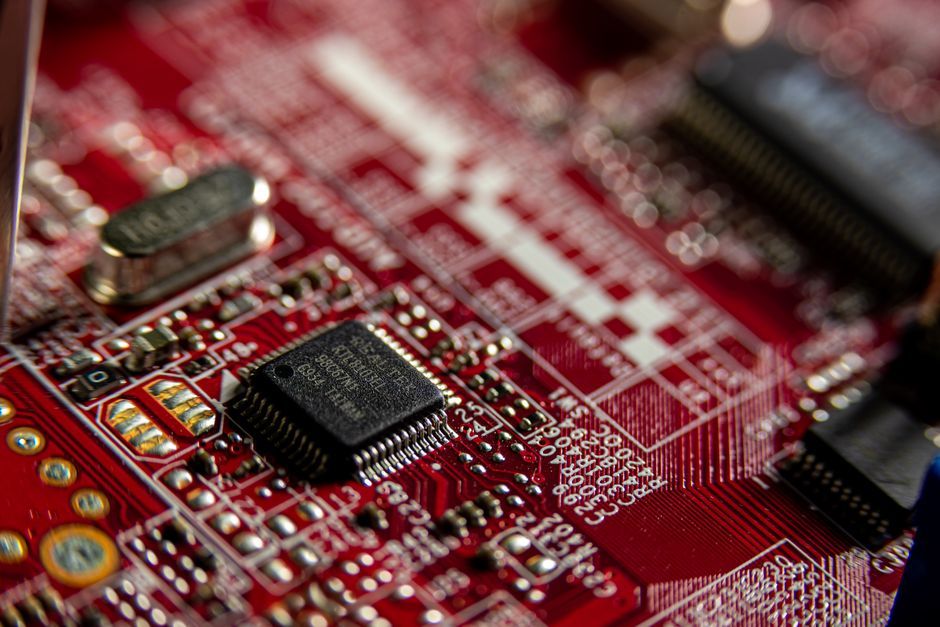
Stock photo for illustration only, not from the actual event
Regarding environmental protection, IEC 60529 classifies enclosures through specific laboratory tests, but deployments often face harsher conditions. A logging card moving from a 4 °C chiller to a humid dock encounters daily condensation loads never covered by standard IP ratings. This environmental reality dictates serviceability as well, eliminating battery doors and external test points in favor of wireless readout and a sealed continuous seam.
Ultra-thin IoT device engineering often exposes complex physical trade-offs that go far beyond standard circuit design. Micrometer-level spatial management demonstrates how engineers must compromise, such as adopting CSP chip packages instead of QFN variants to save vertical height, proving that mechanical constraints frequently dictate semiconductor packaging choices.
Six different components compete for space on a single plane, including the radio SoC, temperature sensor, ambient light sensor, non-volatile storage, cell window, and antenna keep-out zone. The cell window and antenna must take opposite short edges because any alternative layout disrupts the center of the board. Nordic guidelines require a minimum 5 mm clearance for a 23 mm reference monopole antenna, ensuring that the metallic coin cell does not detune the radio frequency.
"The routed slots and the thinned wall decide the card's accuracy far more than the last decimal place on a sensor datasheet."
Dev.to Engineering Blog
Sensor accuracy relies heavily on thermal coupling paths. While TI's TMP117 datasheet claims up to ±0.1 °C maximum error, and Sensirion's STS40 quotes 0.2 °C, inheriting these numbers requires careful thermal engineering. Routing slots around the sensor prevents the board from carrying heat from the SoC, while keeping copper pours short and thinning the shell wall above the sensor ensures reliable measurements at the cost of slower response times.
Power consumption remains tightly constrained. Quiescent figures show an nRF54L15 sleep floor of 0.7 µA, a TMP117 shutdown draw of 0.15 µA, and an OPT4001 ambient light sensor standby current of 2.00 µA. This results in a combined idle floor of approximately 2.85 µA before factoring in active sampling or wireless advertisements.
Source: Dev.to
Found something wrong in this article? Report an issue with this article
Comments
Leave a Comment