

How long to keep takeaway sushi safe from food poisoning
Essential guide on storing takeaway sushi safely, detailing safe limits at room temperature and refrigeration by sushi type, plus spoilage signs.
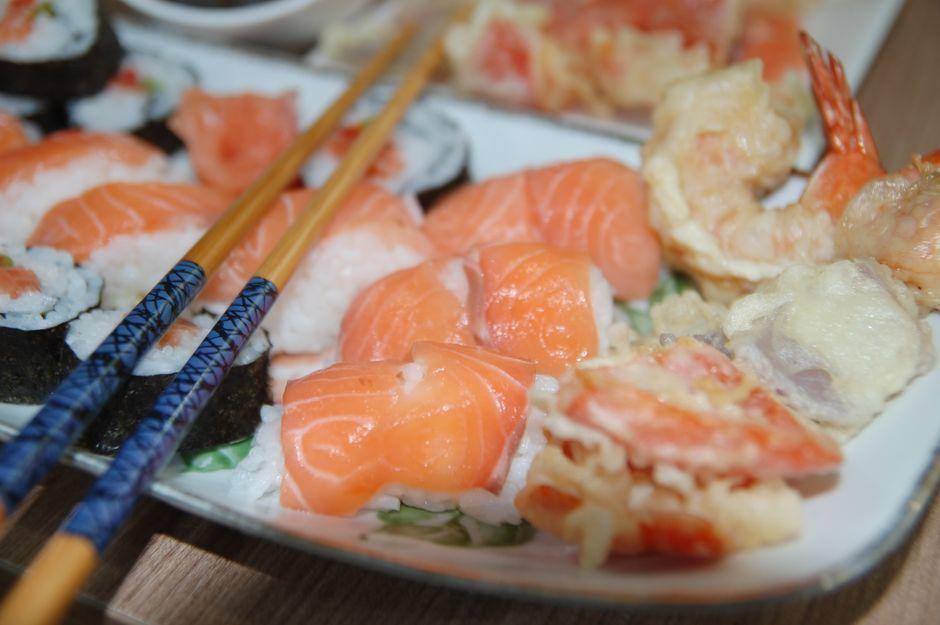
Stock photo for illustration only, not from the actual event
- Temperatures of 4-6°C form the Danger Zone where bacteria multiply
- Raw sushi must not sit outside the fridge in Thai weather over 1 hour
- Raw sushi should be consumed within 24 hours when refrigerated
- Never store sushi in the freezer as rice texture becomes ruined
Japanese sushi is a favorite dish for many, but because it contains raw and delicate ingredients, bringing it home requires special care regarding temperature and hygiene.
According to food safety standards, the temperature range between 4 and 6 degrees Celsius is considered the Danger Zone where bacteria can rapidly grow and multiply. While international room temperature allows up to 2 hours outside the fridge, Thailand's hot weather exceeding 32 degrees Celsius reduces the safe window to no more than 1 hour. Exceeding this time significantly raises the risk of dangerous bacteria such as Vibrio parahaemolyticus or Salmonella multiplying.
If you cannot finish your meal, refrigeration at 1 to 4 degrees Celsius is the best approach, though the safe storage duration varies by sushi type:
- Raw sushi (Salmon, Tuna, Hamachi, Shrimp Roe): Maximum 1 hour outside the fridge in Thai weather, consume within 24 hours in the fridge.
- Cooked sushi (Boiled shrimp, Tamagoyaki, Unagi): Maximum 1-2 hours outside the fridge, store for 1-2 days in the fridge.
- Sushi rolls with sauce or mayonnaise: Maximum 1 hour outside the fridge in Thai weather, consume within 24 hours in the fridge.
Stock photo for illustration only, not from the actual event
Experts also advise against storing sushi in the freezer. Although freezing extends shelf life, it makes the sushi rice dry and mushy when thawed, while severely ruining the flavor of the raw fish.
Understanding the Danger Zone and the rapid proliferation of pathogens like Vibrio parahaemolyticus found in seafood is critical for food poisoning prevention. Leaving food exposed to room temperatures above 32°C in Thailand for even a short period allows bacteria to multiply to hazardous levels. Proper temperature management remains the most effective defense for gastrointestinal health.
Common mistakes to avoid include leaving sushi in a parked car with high accumulated heat, placing boxes near heat-emitting appliances like microwaves or rice cookers, storing items on refrigerator door shelves where temperatures fluctuate the most, and failing to cover containers properly which causes cold air to dry out the rice and leads to cross-contamination.
Before consuming leftover sushi, inspect for danger signs including a strong fishy, sour, or ammonia odor, slimy or mushy texture on the fish and rice, and faded fish color with gray or greenish patches. Discard immediately if any sign appears.
Source: Thairath Lifestyle
Found something wrong in this article? Report an issue with this article
Comments
Leave a Comment