

China’s Hotel Investment Surge Isn’t Just a Distress Sale Story
Mainland China’s hotel investment market surged 224% to $1.5 billion in the first half of 2026, driven by regulatory changes expanding C-REITs to commercial real estate.
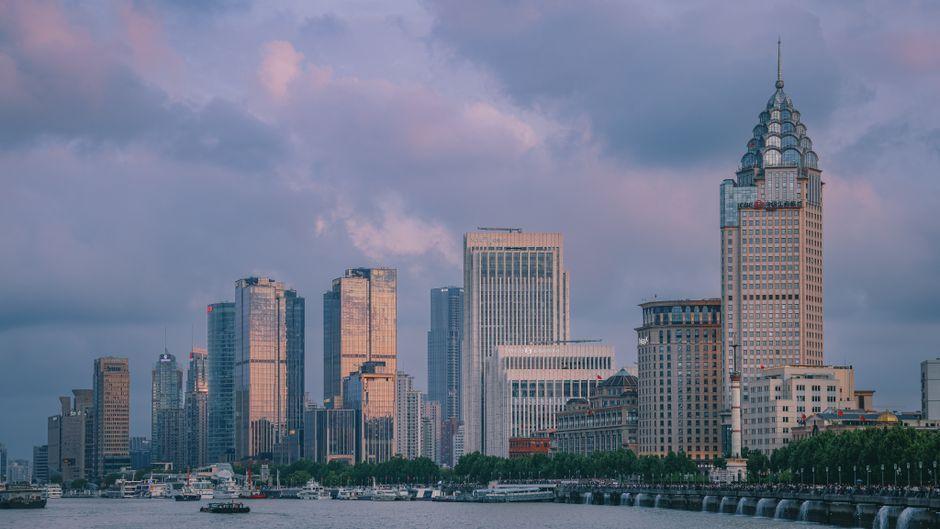
Stock photo for illustration only, not from the actual event
- China hotel transaction volume jumped 224% to $1.5 billion in H1 2026.
- Expanded C-REIT framework now permits public securitization of hotels.
- HuaAn Jin Jiang's hotel-only C-REIT approved in June.
- Asia Pacific posted its strongest first-half performance in seven years at $6.8 billion.
Mainland China has emerged as the fastest-growing hotel investment market across the Asia Pacific region during the first half of 2026, with transaction volumes spiking 224% to reach $1.5 billion, according to data from JLL.
Driving this surge is a structural shift set to transform how Chinese hotel assets are financed, valued, and transacted. At the close of 2025, Chinese regulatory authorities broadened the nation’s Real Estate Investment Trust (C-REIT) framework to incorporate commercial real estate, making hotels eligible for public securitization for the very first time.
Stock photo for illustration only, not from the actual event
“We view this as a historic inflection point for China's hotel industry as it moves toward broader asset securitization and capitalization.”
While C-REITs had been active since 2021, their scope was largely restricted to infrastructure projects like toll roads and industrial parks. The rule modification cleared the path for the approval of the first hotel-only C-REIT—HuaAn Jin Jiang encompassing 21 hotels—in June. Furthermore, Ascott China achieved a milestone by becoming the initial international operator recognized as a C-REIT asset manager.
The expansion of China's C-REIT policy acts as a vital structural remedy for liquidity constraints in the real estate sector, creating a fresh exit pathway for owners grappling with distressed-asset auctions following a prolonged property downturn. Introducing hotels to public capital markets establishes institutional-grade valuation standards, shifting the landscape away from traditional fire sales.
Across the wider Asia Pacific region, the hotel investment market delivered its strongest first-half performance in seven years, generating $6.8 billion in transactions—a 54% year-over-year increase. Japan led individual markets with $1.9 billion (up 75%), followed by Australia with $901 million, while land-constrained cities increasingly repurposed aging hospitality assets into student housing and co-living spaces.
Source: Skift
Found something wrong in this article? Report an issue with this article
Comments
Leave a Comment