

DLR Group designs human-scale neighborhoods in Middle East
DLR Group transforms megaprojects like MAAD in Makkah and EMAAR The Heights in Dubai into human-scale, approachable communities.
Stock photo for illustration only, not from the actual event
- DLR Group focuses on human scale and intimate community design in the Middle East.
- MAAD in Makkah utilizes steep mountainous terrain to balance pilgrims and residents.
- EMAAR The Heights in Dubai spans 750 hectares with over 7,500 residential homes.
- SUMOU and LIWAN Najd projects emphasize pedestrian networks and thermal comfort.
By shifting the lens from megaproject massing to human-scale perception, DLR Group’s multidisciplinary team aligns master planning, architecture, landscape, and interior design to translate massive urban footprints into legible and approachable communities. Humans require environments that feel intuitive, welcoming, and responsive to maintain emotional security. When developments become overly uniform or monumental, individuals lose their bearings and lack a clear pathway to connect with surrounding space.
A human-scale experience is primarily won or lost at the horizontal surface where people actually stand and move. Rather than allowing high-rise structures to plunge abruptly into hard paving, landscape architecture acts as a vital calibration tool, stepping down massive architectural volumes into digestible foregrounds. In hot, arid climates, outdoor spaces are often abandoned unless thermal comfort and sensory engagement are actively designed, making continuous shade and comfortable footpaths essential for walkability.
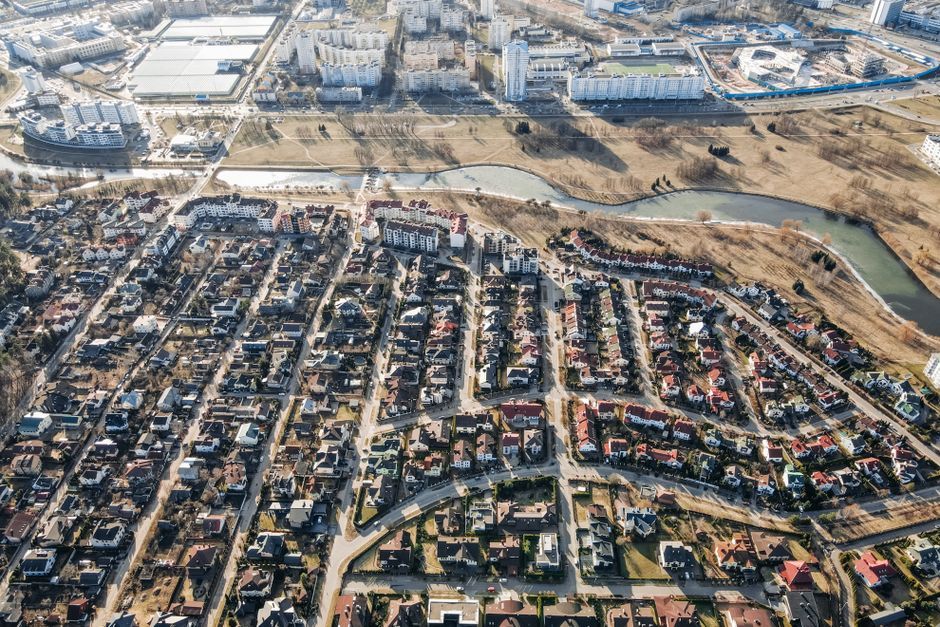
This first-principles approach to walkability is vividly illustrated at EMAAR The Heights in Dubai, a vast 750-hectare masterplan where DLR Group translates thoughtful master planning into everyday family living. The plan organizes over 7,500 homes into intimate neighborhood clusters, each anchored by a central Wellness Club sited amid a polycentric open space network spanning 1.9 million square meters. Curvilinear villa layouts, green noise-filtering buffers, and shaded pedestrian routes maintain neighborhood intimacy at scale.
Stock photo for illustration only, not from the actual event
Designing urban spaces in arid Middle Eastern climates presents significant thermal challenges. By integrating blue and green systems, DLR Group not only reduces surface radiant temperatures but also encourages residents to engage in outdoor activities, fostering the social interaction essential for sustainable community building.
Similarly, in mixed-use developments like SUMOU in Al Khobar and LIWAN Najd in Riyadh, DLR Group weaves continuous pedestrian networks and central car-free wadis using tree canopies, vegetated groundcover, and lighter paving surfaces to lower radiant temperatures. To balance density with daily well-being, the team structures these developments around central civic nodes such as schools, mosques, workplaces, and retail destinations.
Modulating monumental scale also demands deference to terrain and local context. At MAAD in Makkah, a mixed-use masterplan designed to balance seasonal pilgrim flows with permanent urban livability, DLR Group used the site’s steep mountainous terrain as an organizing framework rather than flattening the landscape. By concentrating high-density development at lower elevations and tapering massing as topography rises, built forms merge naturally into the mountain through stepped terraces.
Source: designboom
Found something wrong in this article? Report an issue with this article
Comments
Leave a Comment