

Designing Skill-Driven Financial Analysis Agents with Claude, Python, and MCP
A practical tutorial on building automated financial analysis agents with comparable company analysis and Excel exports.
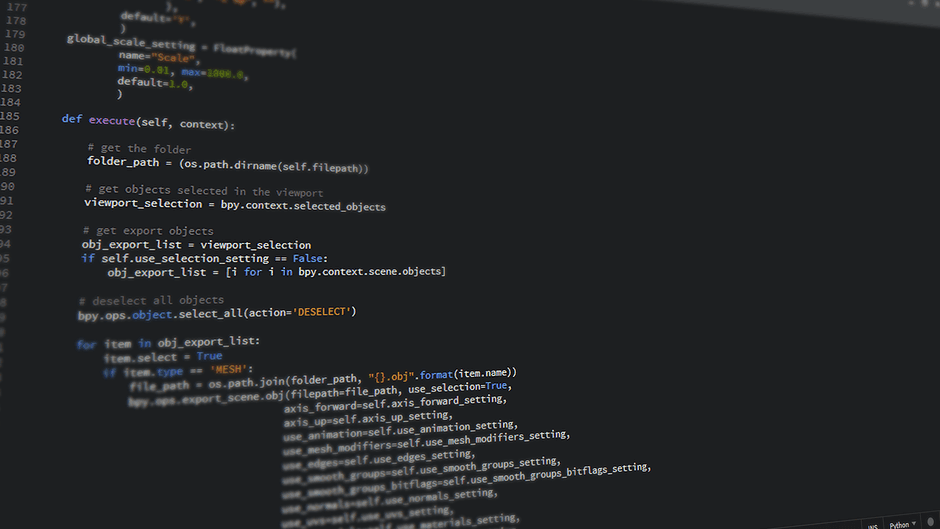
Stock photo for illustration only, not from the actual event
- Build skill-driven financial analysis agents using Claude and Python
- Automatically compute peer comparison metrics and summary statistics
- Export multi-sheet Excel reports with professional header formatting
- Adapt the agent architecture for DCF valuation and investment memos
Developing artificial intelligence agents to assist with financial data analysis has become an essential capability for modern workflows. This article explores a practical framework for designing skill-driven financial analysis agents utilizing Claude, Python, Model Context Protocol (MCP) connectors, and automated deliverable generation, approximating Anthropic's financial-services agent framework within a Google Colab environment.
In the comparable company analysis demonstration, the system processes a synthetic peer set consisting of companies such as ALFA, BRVO, CHRL, and DLTA. It ingests parameters including stock prices, shares outstanding, net debt, NTM revenue, NTM EBITDA, and NTM EPS to compute enterprise value, EV-to-revenue, EV-to-EBITDA, and price-to-earnings multiples on a next-twelve-months basis.
Implementing this type of agent reduces manual friction in valuation modeling and comparable table generation. By coupling large language models with a persistent Python execution runtime, the AI can perform quantitative computations reliably rather than relying solely on text generation, which is critical for financial tasks requiring verifiable numerical accuracy.

Stock photo for illustration only, not from the actual event
Once the agent executes the prompt, the system extracts the structured JSON payload containing both the comparable table and summary statistics—including minimum, 25th percentile, median, 75th percentile, and maximum values. It converts these payloads into Pandas DataFrames and exports them directly into an Excel workbook named outputs/comps_analysis.xlsx across separate sheets named Comps and Summary Stats, applying custom styling with bold white text over dark blue headers and automatic column sizing.
Beyond comparable company analysis, this modular agent architecture scales to support multiple financial workflows, including discounted cash flow (DCF) valuation, sensitivity testing, automated spreadsheet reporting, and investment committee memo preparation. Practitioners can further extend the system by loading additional valuation playbooks, integrating licensed financial data providers via MCP connectors, and transitioning the sandbox to a production runtime.
Source: MarkTechPost
Found something wrong in this article? Report an issue with this article
Comments
Leave a Comment