

Is it time to stop using glue and labels on paper?
Europe introduces stricter packaging regulations, spurring innovations in glue-free paper sealing to tackle recycling challenges.
Stock photo for illustration only, not from the actual event
- Paper and cardboard packaging are largely recyclable, but labels, seals, and coatings prevent recycling.
- The EU's PPWR regulation mandates that all packaging must be at least 70% recyclable by 2030.
- Three German firms are innovating glue-free sealing technologies using lasers, ultrasound, and cold seal.
- Challenges include machinery upgrade costs, production speeds, and food-grade packaging compatibility.
While paper or cardboard packaging might on its own be recyclable, the presence of a label, a seal, or a coating can negate that entirely. And that is a shame as paper remains one of the most recycled materials in Europe, with around 74% of paper and board consumed in 2024 being recycled.
European authorities are spurring firms to do better. In August, a new Europe-wide packaging and packaging waste regulation (PPWR) kicks in, ordering that all packaging should be a minimum of 70% recyclable by 2030, rising to 80% from 2038. In addition, German law will also require stricter reporting and licensing fees.
Tackling stickies would certainly be helpful. One traditional solution has been to develop water-soluble adhesives, but what if you could skip the adhesive altogether?
Stock photo for illustration only, not from the actual event
That is the idea that three firms from Germany—Fraunhofer, Hermann Ultraschall, and Henkel—have come up with. It is no coincidence they are all German, as the country is known for its Packaging Valley, a hub for the packaging industry. Their efforts to innovate are partly a bid to satisfy ever-tightening regulation around commercial recycling, and rising fines for those who fall foul.
"If we are optimistic, we will have the first solution out in two years."
Fraunhofer
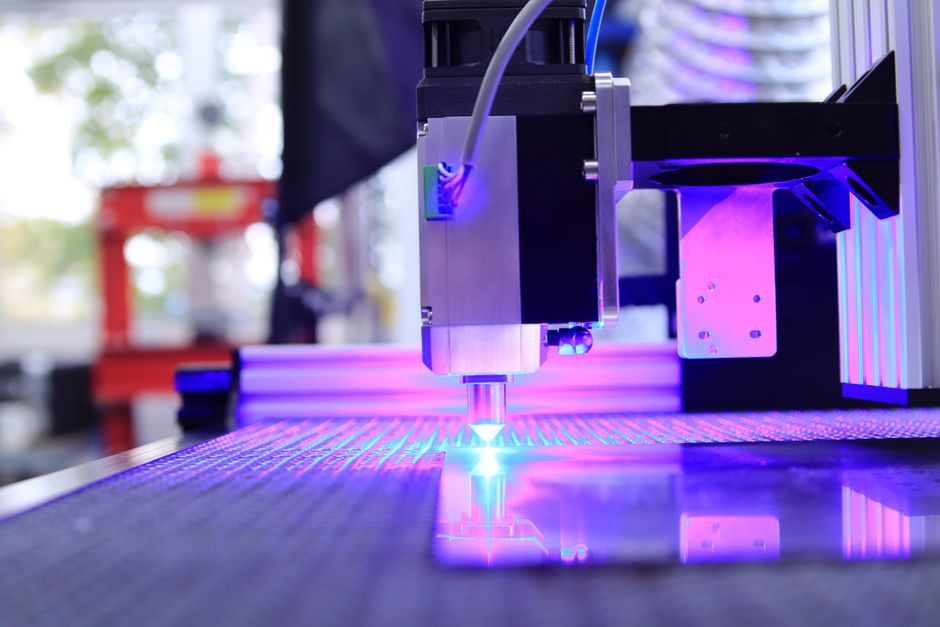
With that in mind, German research organisation Fraunhofer established the PAPURE project in 2023 to develop a laser-based heating process that can seal paper packaging without an adhesive at all. From September, when the project is set to officially close, Fraunhofer hopes to find an industry partner to take the technology to market, having exhibited their work at the Interpack packaging trade show in Dusseldorf in May.
Context: Laser and ultrasonic paper sealing represent major milestones in removing chemical adhesives from paper recycling streams. However, the engineering hurdle lies in scaling line speeds to match conventional adhesive systems without putting manufacturers at a cost disadvantage.
Also in 2023, engineering firm Hermann Ultraschall bought the rights to develop a patented ultrasonic paper sealing technology, a process which it likens to welding.
Stock photo for illustration only, not from the actual event
"One customer told me this is an innovation they have never seen before."
Hermann Ultraschall
Yet these seemingly simple solutions stem from complex technology, bringing natural challenges. Firstly, it is not as simple as getting product manufacturers and packaging companies to swap out their old packaging for these new options. It requires updating, and in some cases completely replacing, existing machinery, which can be costly and time-consuming. Yet Volker Franke, a research group leader at Fraunhofer, is confident that those existing machines can be modified by integrating the laser module that PAPURE has been developing. Both acknowledge that production rate is currently much slower than adhesive-based paper packaging, but Franke emphasizes that PAPURE's fully automated production can continue to be developed for speed.
The other issue is that the technologies do not work on all types of paper. PAPURE has yet to find a way to apply their laser sealing technology to food-grade packaging, which needs a coating to protect the item, explaining why plastic is often favoured for food packaging.
However, this is something Henkel, with both a consumer brand division and adhesive technologies division, has cracked. In February, Henkel announced the launch of the first cold seal solution that works with barrier-coated paper, which is both recyclable and suitable for food products. Barrier paper can be a difficult surface to bond, and using heat is unsuitable for heat-sensitive food products like ice cream or chocolate. Hence the cold seal solution applies enough pressure for the barrier-coated paper to be bonded against itself, which is already available for packaging manufacturers and used in snack and confectionery products.
Source: BBC Science & Environment
Found something wrong in this article? Report an issue with this article
Comments
Leave a Comment