

EU Ends Border Safety Valve as Airlines Warn of Delays
The European Union's temporary safety valve for the Entry-Exit System (EES) has lapsed, prompting airline warnings.

Stock photo for illustration only, not from the actual event
- The formal mechanism allowing temporary EES check suspensions expired on Sunday.
- Ryanair urged the European Commission to reinstate the pause option until April 2027.
- Airlines and airports cite ongoing issues with kiosk reliability and staffing shortages.
- The EU Commission stands firm, citing 160 million registrations and 50,000 refusals.
A policy that permitted European Union countries to temporarily suspend parts of the Entry-Exit System (EES) during peak demand periods lapsed on Sunday. This leaves border authorities without a formal release valve for the first time since biometric registration became a mandatory requirement across the bloc back in April.
Ryanair has formally called upon the European Commission to reinstate the capability for states to pause checks until at least April 2027. As Europe's largest low-cost carrier, the airline argues that airports and border authorities require additional time to repair kiosks, boost staffing numbers, and ensure reliable system operations before full enforcement takes effect.
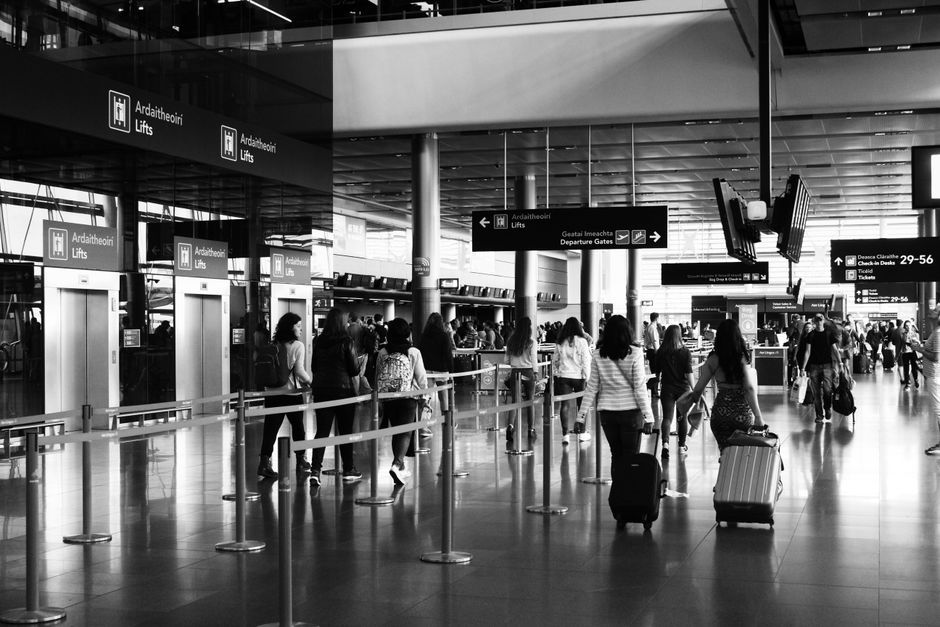
Stock photo for illustration only, not from the actual event
Neal McMahon, Ryanair's Chief Operating Officer, criticized the EU's execution on Monday, describing the handling of the EES rollout as a shambles from start to finish. He accused Brussels of ignoring prior warnings from industry bodies regarding lengthened processing times and asserted that the EU was forcing passengers to pay the price for the system's shortcomings, which previously caused summer border delays of two to three hours at airports such as Krakow, Lisbon, Milan, and Rome.
The expiration of this border safety valve arrives at a critical juncture just ahead of major winter travel peaks like the October half-term and the Christmas and New Year holidays. Industry stakeholders including IATA and ACI Europe do not oppose digital borders in principle, but they emphasize that uneven infrastructure deployment—such as pre-registration apps being adopted exclusively by Sweden and Portugal—creates severe operational bottlenecks.
"The EU's handling of EES has been a shambles from start to finish."
Neal McMahon, Ryanair Chief Operating Officer
In July, nine member states alongside Switzerland had already written to Brussels seeking to retain the suspension mechanism. Meanwhile, the European Commission continues to defend the system based on its security record, pointing to 160 million registrations and 50,000 refusals accumulated over nearly 300 days of operation.
Source: Skift
Found something wrong in this article? Report an issue with this article
Comments
Leave a Comment