

Democrat MPs Urge 5% Budget Cut for Thailand Ministry
Democrat Party MPs Karndee Siewpairoj and Rutklao Suwankiri call for a 5% budget reduction for Thailand Ministry of Natural Resources, criticizing internal spending and transboundary pollution.

Stock photo for illustration only, not from the actual event
- Karndee Siewpairoj proposes a 5% budget cut for Thailand Ministry of Natural Resources over internal carbon spending.
- Points out that a 52.5 million baht helicopter and a 30 million baht carbon footprint project are overpriced.
- Rutklao Suwankiri demands proactive measures against rare earth mining pollution reaching the Mekong River.
- Criticizes 83.9 million baht water monitoring as a reactive measure while downstream remediation costs billions.
During the Thai parliamentary debate on the annual expenditure bill, key criticisms emerged regarding the allocation strategies of the Thailand Ministry of Natural Resources and Environment. Democrat Party members highlighted critical misallocations and structural flaws in managing both the national low-carbon transition and transboundary water pollution crises affecting local communities.
Karndee Siewpairoj, a party-list MP for the Democrat Party, formally proposed a 5% budget reduction for the ministry. She questioned the cost-effectiveness and strategic direction of the ministry, noting that its initiatives fail to meaningfully drive Thailand toward a low-carbon society. Specifically, she pointed to a 141 million baht natural resource management project which allocates 52.5 million baht for a single-engine helicopter, alongside nearly 100 million baht in multi-year maintenance obligations, warning that such high expenditures must prioritize public safety without resembling political giveaways.
Karndee further revealed a glaring contradiction in the ministry's allocation toward the national Net Zero 2050 target. Out of approximately 306 million baht designated for carbon-related initiatives, an overwhelming 97%—or roughly 297 million baht—was absorbed by internal operational costs, IT systems, office supplies, PR, and studies across 125 items. In stark contrast, funds directly reaching citizens and farmers to facilitate the green transition stood at a mere 8 million baht, or just 2.9%.
This debate highlights a structural inefficiency common among public institutions in Thailand, where operational expenditures frequently overshadow productive investments aimed at grassroots development. In the context of the low-carbon transition, small and medium enterprises (SMEs) and local farmers often lack the necessary financial resources and technical know-how. When state agencies heavily prioritize internal administrative systems, it fails to generate practical greenhouse gas emission reductions on the ground.
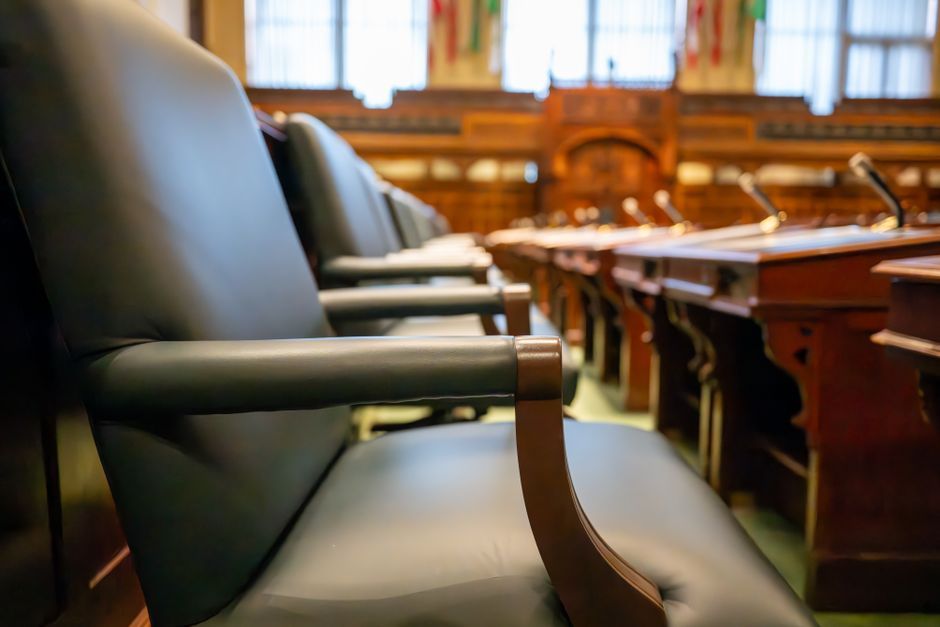
Stock photo for illustration only, not from the actual event
Elaborating on the figures, Karndee noted that data infrastructure and carbon ecosystem platforms, such as the national carbon registry and trading exchange, received a meager 14.92 million baht compared to 77 million baht for internal administrative work. She also cited the Department of Water Resources' internal carbon footprint project valued at 30 million baht as excessively expensive given the ministry's existing pool of experts. She concluded by proposing three parliamentary solutions: investing in Open Data systems, subsidizing SMEs via carbon footprint vouchers, and reallocating funds to directly aid affected groups.
Meanwhile, Rutklao Suwankiri, another party-list MP for the Democrat Party, shifted the focus to the escalating crisis of transboundary heavy metal contamination originating from rare earth mining operations in neighboring countries. She warned that toxic pollutants have migrated from the Kok River down into the Mekong River, an alarming development given the Mekong's greater volume and depth, which demands an immediate, systematic tracing of pollution sources.
"We have 83.9 million baht to enhance water quality monitoring, but the question is what we do once we find the source. If the source keeps discharging toxins, we will be forced to spend on testing, absorption, treatment, and remediation year after year."
Rutklao Suwankiri
Rutklao criticized the ministry's budget for lacking a proactive strategy to halt pollution at the source. She highlighted a 83.9276 million baht environmental protection project dedicated to automatic water monitoring stations, drones, and law enforcement. While monitoring is necessary, detection alone cannot stop pollutants upstream, trapping the government in an expensive end-of-pipe treatment cycle. She noted that other state agencies already bear massive downstream costs, such as the Provincial Waterworks Authority allocating roughly 2.2 million baht—alongside 188 million baht from central funds—to relocate raw water sources and provide relief.
Source: Matichon Politics
Found something wrong in this article? Report an issue with this article
Comments
Leave a Comment