

Google DeepMind alumni build tools for fusion power
Former Google DeepMind researchers founded Lausanne-based Fusionality and secured $3.7 million in pre-seed funding to build fusion reactor control systems.
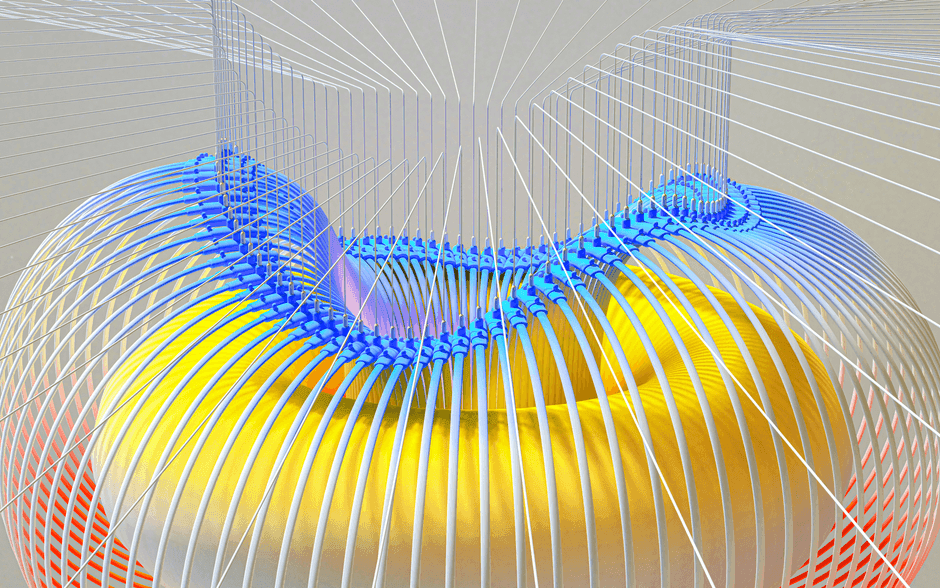
Stock photo for illustration only, not from the actual event
- Federico Felici and Jonas Buchli, former Google DeepMind alumni, launched Fusionality in Lausanne, Switzerland.
- The startup secured a $3.7 million (CHF 3 million) pre-seed funding round led by Founderful and Playfair.
- The founders highlight that 80% of fusion control systems share identical core architectures across the industry.
While some entrepreneurs spend months searching for a viable startup concept, others stumble upon it through direct industry experience. Federico Felici and Jonas Buchli found themselves in the latter group after repeatedly hearing the exact same pain point from fusion energy companies. Developers consistently needed to acquire specialized components for reactor control systems, yet found zero suppliers who spoke the specialized language of nuclear fusion. To bridge this gap, Felici and Buchli established Fusionality in Lausanne, Switzerland, this year, rapidly closing a $3.7 million (CHF 3 million) pre-seed funding round backed by Founderful and Playfair, with Felici stepping in as CEO and Buchli as CTO.
Fusionality enters an expanding supply chain supporting the emerging commercial fusion power sector. While enterprises like Kyoto Fusioneering focus on hardware components required to convert experimental engineering breakthroughs into grid-ready electricity, and other legacy manufacturers build high-precision parts, very few tech firms specialize in the hardware and software necessary to govern the reactors themselves. Felici noted that across the entire industry, individual fusion firms routinely construct their custom control systems entirely from scratch, despite roughly 80 percent of each company's control architecture being identical.
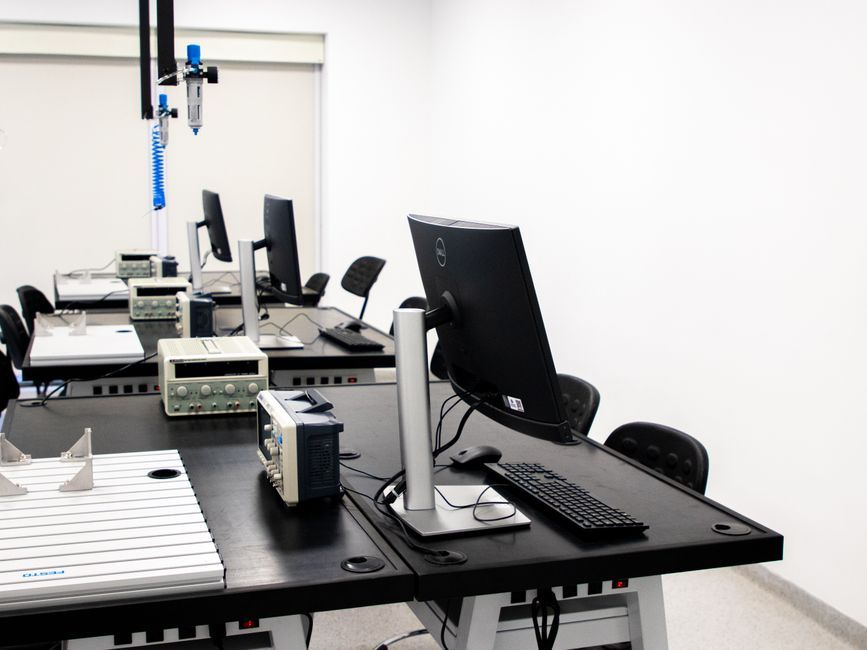
Stock photo for illustration only, not from the actual event
Fusion power plants generate electrical grid capacity by harnessing energy released during atomic fusion, a reaction that requires superheated plasma. Maintaining the necessary plasma temperature, confinement shape, and fuel density demands split-second computational decisions. Fusionality aims to capitalize on underlying design commonalities by engineering a modular suite of control systems and simulation environments that individual fusion startups can fine-tune to match their proprietary reactor architectures.
The transition of deep tech talent from elite AI research labs like Google DeepMind into specialized infrastructure startups underscores fusion energy's maturation. Providing standardized software and hardware control layers mirrors the early enterprise adoption phases of cloud computing, where foundational developer tools accelerated broader industry deployment.
The founding duo initially crossed paths while teaching artificial intelligence algorithms to control experimental tokamaks, which are doughnut-shaped confinement vessels utilized in plasma physics research. Felici conducted research at EPFL in Switzerland before moving to Google DeepMind, while Buchli joined Google DeepMind to develop machine learning interfaces and reactor simulations. While acknowledging that AI will play a critical role in future reactor management, Felici cautioned that artificial intelligence is not yet equipped to independently govern an entire nuclear fusion facility, serving instead to complement, optimize, and enhance specific subsystems.
"We start with a few of these blocks and then we build out more. We have the ambition to serve the really wide range of technology that you need to operate a fusion reactor."
Federico Felici, CEO and co-founder of Fusionality
Fusionality's current operational focus centers on magnetic confinement, an approach utilizing powerful electromagnets to sustain dense, ultra-hot fusion fuel, matching methodologies pursued by startups such as Commonwealth Fusion Systems, Realta Fusion, Proxima Fusion, and Type One Energy, with plans to expand to alternative approaches later. The startup's seven-person team will deploy its pre-seed capital to engineer a tightly curated selection of core technologies, comparing their modular approach to building with Lego bricks to ultimately service the expansive technology stack required for commercial fusion operation.
Source: TechCrunch
Found something wrong in this article? Report an issue with this article
Comments
Leave a Comment