

Nvidia becomes AI central bank with chip financing
Discover how Nvidia's valuation surpassed 5.4 trillion dollars by transforming GPU chips into financial assets to guarantee loans and boost sales.

Stock photo for illustration only, not from the actual event
- Nvidia is dubbed the central bank of the AI era for controlling liquidity and financing.
- GPU chips are viewed as revenue-generating financial assets rather than hardware.
- The company provides comprehensive financial assistance including revenue guarantees.
- Analysts warn that nearly 300 billion dollars in guarantees act as ticking time bombs.
When mentioning Nvidia, most people picture a manufacturer of graphics cards and processing units, or GPUs, whose traditional business model involved selling hardware, receiving payment, and concluding the transaction. In reality, the company's staggering valuation surpassing 5.4 trillion US dollars stems not merely from manufacturing and selling chips, but from a massive strategic transformation led by Jensen Huang. Analysts now refer to Nvidia as the central bank of the AI industry because the firm actively controls liquidity, injects capital, and underwrites risks across the entire AI ecosystem, mirroring the functions of a traditional central bank.
The core of this transformation lies in shifting perspectives toward the product itself. Nvidia no longer views GPUs or processors as mere hardware awaiting depreciation, but rather as revenue-generating financial assets with profit and management mechanisms comparable to the real estate market. Jensen Huang has sought to prove to the market and financial institutions that Nvidia chips possess strong durability and retain their value well even as years pass. For instance, legacy chips like the A100 launched in back in 2020 still maintain lease contracts running through 2029, while flagship H100 chips exhibit only minor rental rate declines over the years. Due to tight computing capacities, tech companies continuously demand chips for training and inference workloads, prompting financial institutions to gain confidence in utilizing these chips as collateral for loans.
The primary catalyst forcing Nvidia to act like a central bank stems from a dual-sided dilemma in the market. When new clients desired chips but lacked purchasing capital while traditional banks refused to grant loans, Nvidia decided to step in as a lender to generate liquidity so clients could purchase its products. The company established three main pillars of financial assistance:
- Revenue guarantees for clients: Agreeing with new cloud providers to subsidize shortfalls if rental revenues miss targets and committing to repurchase idle computing capacity under six-year contracts.
- Debt underwriting for mega projects: Guaranteeing building leases, land leases, and power contracts valued at 105,000 million US dollars for OpenAI-backed data center initiatives.
- Wall Street capital mobilization and equity acquisition: Partnering with six Wall Street financial institutions to raise 500,000 million US dollars by backing a 25% residual value guarantee on chips, while acquiring equity in various AI startups.
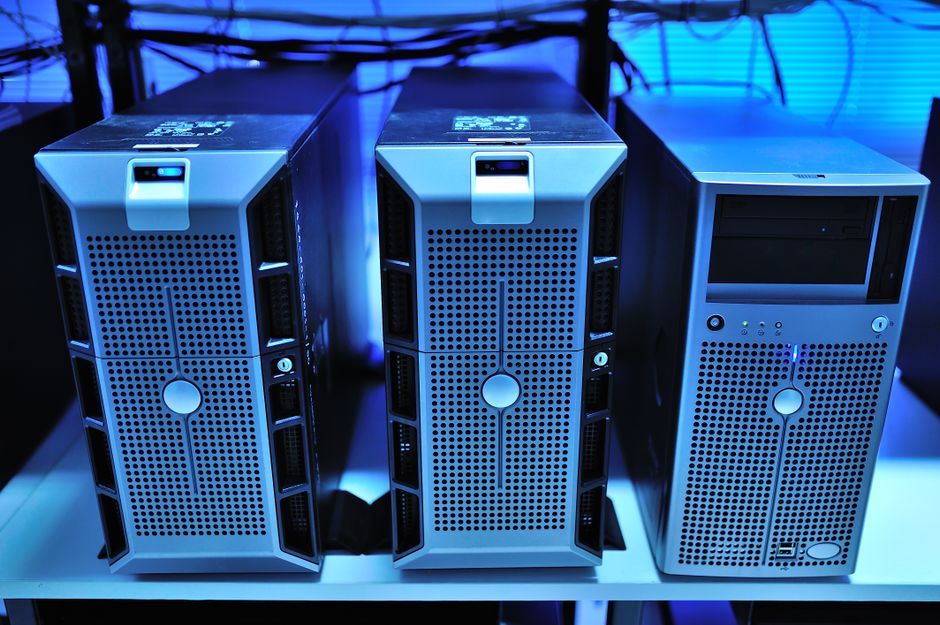
Stock photo for illustration only, not from the actual event
This central banking strategy highlights how major tech enterprises adapt by establishing financial ecosystems that allow customers to adopt technology despite liquidity constraints. This model shares similarities with historical episodes like the dot-com bubble, where hardware providers extended credit to customers to purchase equipment, fueling rapid short-term growth while introducing vulnerabilities if the market suddenly contracts.
However, while this banking strategy successfully supercharges sales and elevates Nvidia's market valuation to dizzying heights, it carries immense risks. Currently, Nvidia bears nearly 300,000 million US dollars in hidden off-balance-sheet financial obligations and guarantees. Analysts have begun warning that Nvidia's actions closely resemble artificial demand creation, bearing similarities to the late 1990s Dot-com crisis when telecommunications giant Cisco provided customer financing to buy its equipment. When market demand eventually slowed, those clients collapsed, inflicting severe damage back upon the manufacturer. If future AI demand fails to grow at market-expected speeds or if a chip oversupply causes rental prices to plummet, these startups will struggle to repay debts, and the nearly 300,000 million US dollars in guarantees will be immediately called upon Nvidia. The company would be forced to pay revenue compensations and repurchase unused computing capacity, severely undermining profits and cash flow. While the AI industry remains prosperous, this strategy acts as a powerful engine, but these guarantee contracts serve as ticking time bombs that investors must recognize, as the more Nvidia drives sales through this method, the greater the downside risk it shoulders if the market stalls.
Source: Techsauce
Found something wrong in this article? Report an issue with this article
Comments
Leave a Comment