

NVIDIA Details BioNeMo Inference Runtime for Speed
NVIDIA details BioNeMo Inference Runtime (BioIR), delivering 2.90x higher Boltz-2 folding throughput and 58.5K residues per GPU-hour on 8xH100 systems.

Stock photo for illustration only, not from the actual event
- NVIDIA launches BioNeMo Inference Runtime (BioIR) as an open GitHub repository with precompiled CUBINs.
- Achieves 2.90x higher Boltz-2 folding throughput and 58.5K residues per GPU-hour on 8xH100 setups.
- Supports two primary usage paths: end-to-end processor and direct PyTorch integration.
- Optimizes distinct layers to outperform OSS torch.compile baselines across H100 hardware.
NVIDIA has officially detailed its BioNeMo Inference Runtime (BioIR), a specialized runtime built to accelerate computational biology and protein folding models. The runtime is available now as an open GitHub repository containing a wheel with precompiled CUBINs. Running the runtime requires Python 3.12+, a compatible NVIDIA GPU and driver, a staged model checkpoint, and per-chain A3M MSAs, while notably omitting requirements for nvcc, CUDA source, CMake, or the CUDA toolkit.
BioIR targets operations that general-purpose inference stacks fail to fully optimize. These encompass Pairformer and Evoformer stacks, triangle operations, pairwise attention, diffusion transformers, and atom-level modules. Models remain standard torch.nn.Module objects, meaning there is no engine build, export step, or separate artifact required between a model checkpoint and a forward pass.
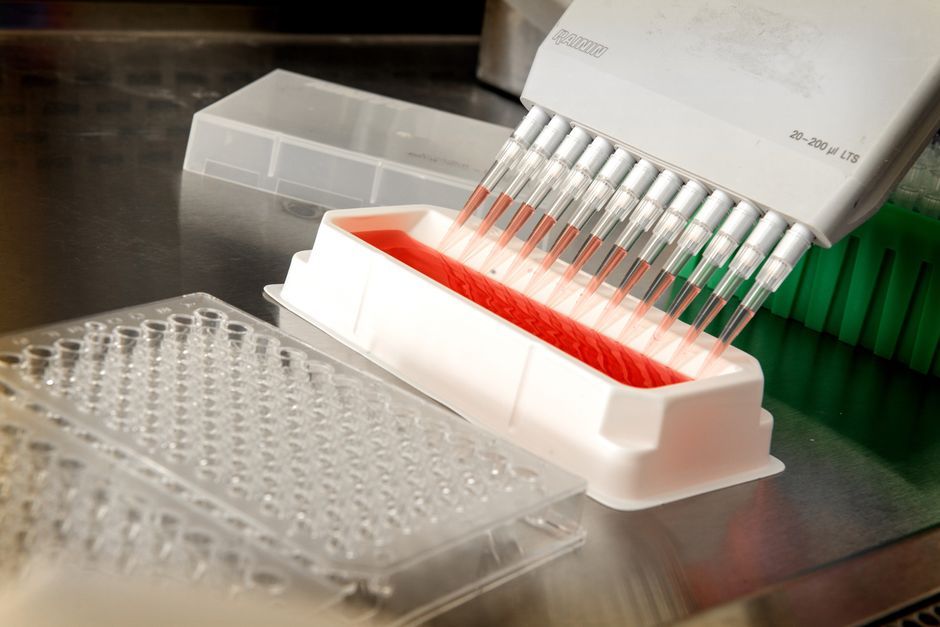
Stock photo for illustration only, not from the actual event
Developers can utilize the runtime through two distinct pathways. The end-to-end processor routes an InputRequest through parsing, tokenization, feature generation, GPU inference, and PDB or mmCIF writing. Alternatively, direct PyTorch integration enables developers to construct supported models or reuse selective optimized modules inside custom code. The tutorial highlights the processor pipeline using Boltz-2, where each protein chain requires an A3M MSA, accepting paired or unpaired MSAs for inputs featuring multiple non-identical protein chains.
At the model-forward layer, NVIDIA's early benchmark metrics highlight geometric-mean speedups over an OSS torch.compile baseline. On H100 GPUs, it achieved 1.55x for OpenFold3, 1.78x for Boltz2, and 2.56x for OpenFold2 monomer. H200 figures remain comparable at 1.54x, 1.75x, and 2.61x, measured across 17 distinct inputs spanning lengths from 29 to 1,734 residues.
The introduction of BioNeMo Inference Runtime (BioIR) highlights NVIDIA's strategic push to eliminate performance bottlenecks inherent in life sciences AI workloads, which feature unique architectural complexities compared to conventional LLMs. By maintaining compatibility with native PyTorch objects and bypassing separate compilation artifacts, BioIR significantly streamlines the engineering pipeline for computational biologists aiming to scale protein simulations.
To quantify end-to-end delivery, the NVIDIA team executed a matched benchmark across 1,000 human dimer targets possessing combined sequence lengths under 2,800 residues. The test pitted BioIR-accelerated Boltz-2 against a torch-compiled open-source Boltz-2 implementation on 8xH100 80GB GPUs, utilizing identical targets, staged MSAs, a specific inference recipe of 3 recycles, 200 sampling steps, and 5 diffusion samples, alongside matching hardware configurations.
"These numbers are folding-stage measurements specific to this dataset and hardware. They exclude MSA generation, preprocessing CPU allocations, storage, data transfer, and retries."
NVIDIA Research Blog

Stock photo for illustration only, not from the actual event
Extrapolating these benchmark metrics linearly to 1 million comparable targets, BioIR is projected to consume 11 MWh compared to 35 MWh required by the public implementation using 8-GPU TDP equivalents. Utilizing full-node maximum-power equivalents yields an estimate of 21 MWh versus 64 MWh. These figures represent rated-power, folding-only IT equipment metrics and exclude auxiliary data center overhead like PUE. Nonetheless, saving between 23 and 43 MWh per million targets represents a substantial efficiency gain for proteome-scale operations.
Source: MarkTechPost
Found something wrong in this article? Report an issue with this article
Comments
Leave a Comment