

Palantir Foundry and cuOpt drive NVIDIA supply chain allocation
NVIDIA utilizes Palantir Foundry and the Nemotron 3.5 Lightning model to automate and optimize global hardware supply chain allocation decisions.
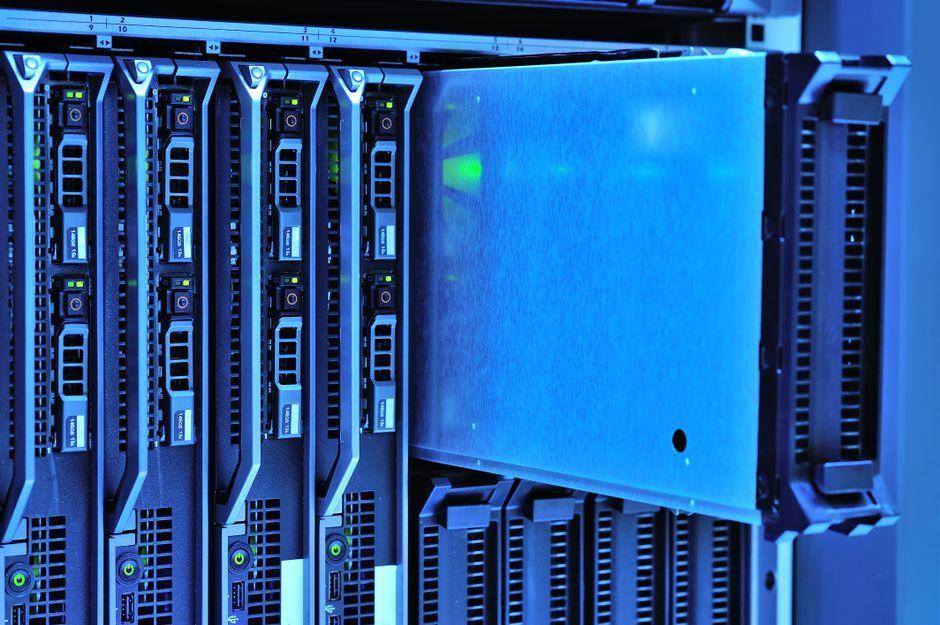
Stock photo for illustration only, not from the actual event
- NVIDIA deploys Palantir Foundry and cuOpt for global hardware supply chain management
- Nemotron 3.5 Lightning model handles unstructured human operational data
- Decision accuracy reaches 86.7 percent after targeted post-training
- Fine-tuning completes in minutes using two NVIDIA B200 GPUs
NVIDIA is transforming its global hardware supply chain allocation decisions by deploying Palantir Foundry and cuOpt tools to automate operations across manufacturing sites. The company measures delivery performance from wafer output to the first token, dividing this window into transit times to racks and the preparation timelines for power, cooling, networking, and day-one software readiness.
Hardware scaling challenges have significantly magnified supply constraints. An NVIDIA Grace Blackwell NVL72 rack integrates 18 compute trays, with each tray requiring two Grace CPUs, four Blackwell GPUs, and 32 HBM3e memory packages sourced from thousands of suppliers and OEMs. Furthermore, the upcoming supply chain designed for the Vera Rubin architecture is twice the scale of the Grace Blackwell network.
Assembly processes remain on hold until components arrive from three designated channels: direct inventory, consignment stock, and external suppliers. Delayed shipments extend the duration NVIDIA defines as Time of Ownership. To coordinate these dependencies, the operations team constructed a Digital Supply Chain Intelligence command center powered by Palantir Foundry to model facilities, supplier commitments, and production targets as interconnected objects.
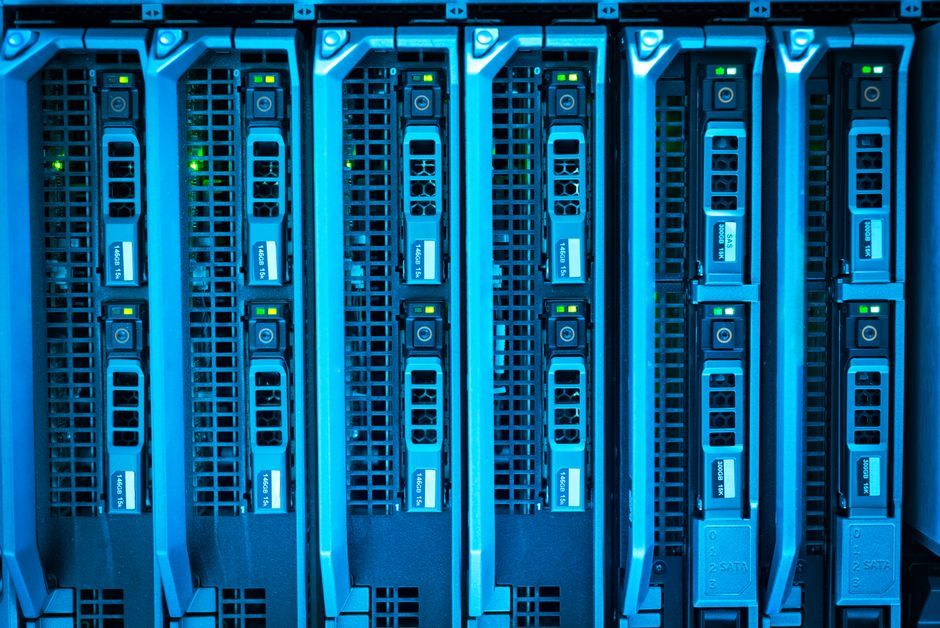
Stock photo for illustration only, not from the actual event
Concurrently, cuOpt, an open-source library for GPU-accelerated decision optimization, directly reads this operational layer to formulate distribution as a mixed-integer linear program. The solver evaluates component constraints across every tier of the bill of materials and identifies active factory limits, such as regional assembly capacity caps versus raw memory availability.
The integration of mathematical optimization and specialized AI models in high-end supply chains highlights the necessity of overcoming bottlenecks that traditional methods fail to resolve. Combining structured manufacturing metrics with unstructured human operational inputs allows enterprise systems to dynamically adapt to rapidly evolving global supply constraints and geopolitical shifts.
Because mathematical optimization alone failed to capture unstructured operational variables managed by human planners, such as supplier call transcripts, regional weather forecasts, and partner emails, NVIDIA addressed this gap by post-training Nemotron 3.5 Lightning. This open-weight mixture-of-experts model features approximately 30 billion total parameters and three billion active parameters per forward pass.
"Evaluated on historical allocation records, the post-trained Nemotron 3.5 Lightning model achieved 86.7 percent decision accuracy"
AI News
When evaluated on historical allocation records, the post-trained Nemotron 3.5 Lightning model achieved an 86.7 percent decision accuracy, significantly outperforming the larger Nemotron 3 Ultra model and the un-tuned Lightning base model. Domain fine-tuning was successfully completed on two NVIDIA B200 GPUs within minutes, reinforcing production efficiency.
Source: AI News
Found something wrong in this article? Report an issue with this article
Comments
Leave a Comment