

Inside NVIDIA cuDNN Graph API: Fusion and Plan Reuse
Explore how NVIDIA cuDNN Graph API combines convolution, matmul, and attention into a single graph while reducing memory overhead.

Stock photo for illustration only, not from the actual event
- Graph-level execution unifies convolution, matmul, and attention kernels.
- Folds bias adds, activations, and AMAX reductions into epilogues to avoid intermediate memory writes.
- Employs autotuning by benchmarking candidate configurations to select the optimal engine.
- Leverages serialized plans, shared kernel caches, and CUDA graph capture to bypass hot-path compilation overhead.
An in-depth article published by MarkTechPost explores a compact yet comprehensive implementation featuring convolution, matmul, and attention kernels expressed as computation graphs rather than standard library calls. Operating at this granular level fundamentally transforms what can be optimized during execution.
A major highlight of this approach is the ability to determine which operations collapse into a single kernel. By folding operations such as bias adds, activations, and AMAX reductions directly into epilogues, the system eliminates the need to write intermediate states back to memory, significantly boosting processing efficiency.
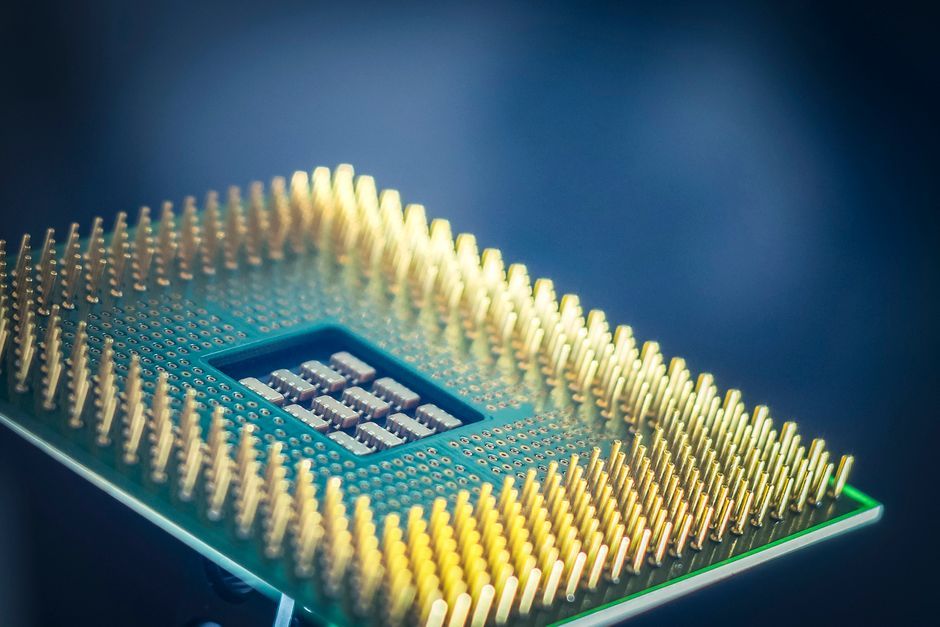
Stock photo for illustration only, not from the actual event
NVIDIA's cuDNN Graph API is engineered to overcome traditional deep learning library bottlenecks by giving developers direct control over graph-level optimizations. This capability is crucial for large-scale model training and inference workloads where hardware utilization must be maximized. Kernel fusion drastically reduces redundant memory round-trips between global memory and compute units, which typically constitute major performance bottlenecks.
Furthermore, developers can manually select engines rather than relying solely on automated heuristics. By timing every candidate configuration, developers gain precise insights into performance trade-offs. Compilation overhead is also strategically mitigated by pushing it out of the hot path utilizing serialized plans, cross-shape kernel caches, and CUDA graph capture mechanisms.
Benchmarking against PyTorch revealed that instances of performance parity typically occurred because PyTorch itself delegates those underlying operations to cuDNN. This demonstrates exactly where the API delivers peak value: complex fusions lacking direct framework equivalents, shapes executed frequently enough to justify autotuning, and small kernels where startup and launch latencies dominate performance metrics.
Source: MarkTechPost
Found something wrong in this article? Report an issue with this article
Comments
Leave a Comment