

Canon EOS R8 Mark II debuts with stabilization
Canon announces the EOS R8 Mark II featuring a 24.2-megapixel full-frame sensor, retro design, and in-body stabilization, launching in late October starting at $1,899.

Stock photo for illustration only, not from the actual event
- Canon EOS R8 Mark II features a 24.2-megapixel full-frame CMOS sensor
- Adds 5-axis in-body image stabilization offering up to 7.5 stops of shake correction
- Retro-inspired angular body design drawing inspiration from the nearly 40-year-old EOS 650
- Releasing in late October priced at $1,899 for the body only or $2,099 with a 24-50mm kit lens
Canon has officially announced the second-generation EOS R8 Mark II, bringing a fresh retro redesign and adding long-awaited in-body image stabilization to its lightweight full-frame lineup. The original R8, launched in 2023, omitted stabilization as a trade-off to create a smaller and more affordable alternative to the R6 Mark II. While the new model is slightly heavier at 1.2 pounds due to the stabilization hardware, it remains lighter and more affordable than last year's higher-end EOS R6 Mark III.
The Canon EOS R8 Mark II is scheduled to hit shelves in late October, priced at $1,899 for the camera body alone or $2,099 when bundled with a stabilized Canon 24-50mm lens. Although this represents an increase from the original R8's $1,499 launch price, it stays well below the $2,799 price tag of the EOS R6 Mark III by trimming certain high-end specifications.
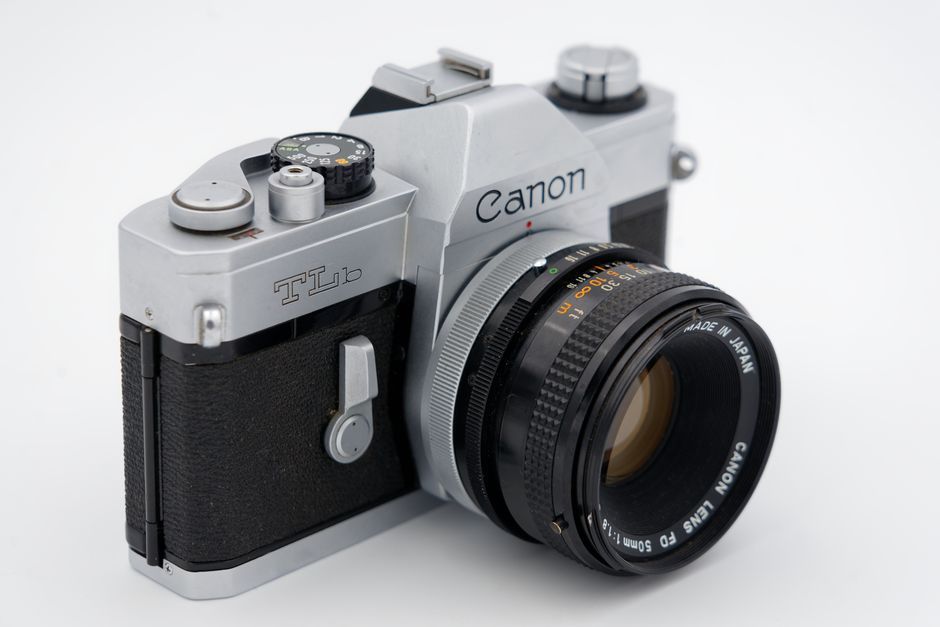
Stock photo for illustration only, not from the actual event
Under the hood, the R8 Mark II retains the same 24.2-megapixel full-frame CMOS sensor found in the R6 Mark II, whereas the R6 Mark III upgraded to a 32.5-megapixel sensor. The new camera continues to rely exclusively on an electronic shutter, maxing out high-speed continuous capture at 40fps. A pre-continuous shooting mode also captures up to 20 additional frames before the shutter button is fully pressed to ensure critical moments are never missed.
The newly added five-axis in-body stabilization provides up to 7.5 stops of shake correction, which can be further expanded when paired with an optically stabilized lens. Autofocus duties are handled by Canon's Dual Pixel CMOS AF II system, featuring enhanced subject tracking for animals, vehicles, and people, along with a registration feature for up to 10 individual faces with customizable priority rankings.
"Canon credits the nearly 40-year-old EOS 650 and its pentaprism housing on top as the inspiration for the R8 Mark II."
Andrew Liszewski, The Verge
Aesthetically, the R8 Mark II replaces the curved contours of its predecessor with a boxier, angular chassis heavily inspired by the nearly 40-year-old EOS 650 and its classic pentaprism housing. Hardware enhancements include a newly added multi-controller joystick positioned above the screen for easier focal point selection, alongside a repositioned single SD card slot on the side for convenient access while mounted on a tripod. Canon will also offer a matching $99.99 grip extension accessory.
Integrating in-body image stabilization into the Canon EOS R8 Mark II effectively addresses the primary critique of the first-generation model, transforming it into a much more versatile option for hybrid creators and amateur photographers. By pairing this functional upgrade with a nostalgic retro aesthetic that appeals to vintage camera enthusiasts, Canon is strategically strengthening its position in the competitive entry-level full-frame market.
Additionally, Canon will release a free Windows application named Dual Pixel 3D Converter in October. The software leverages supplementary data captured by the dual-pixel autofocus system to generate 3D imagery from standard 2D photos, allowing users to create adjustable background 3D photos, isolated 3D models, or short perspective-shifted video clips.
Source: The Verge
Found something wrong in this article? Report an issue with this article
Comments
Leave a Comment