

Iceland-based Treble raises $18 million for voice simulation
Icelandic startup Treble secures an $18 million Series A extension led by Paladin Capital Group, bringing its total funding past $40 million.
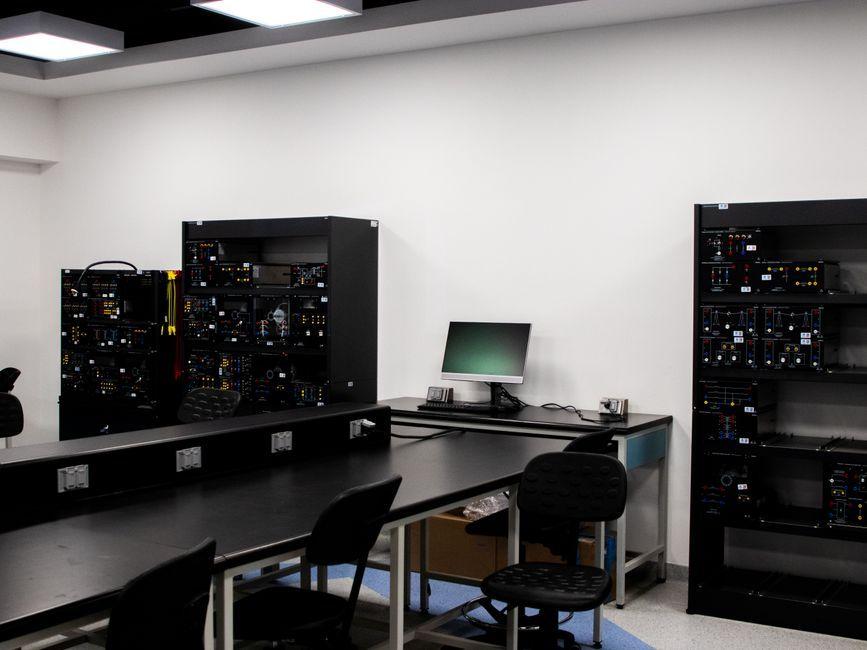
Stock photo for illustration only, not from the actual event
- Treble raises $18M in Series A extension, pushing total funding over $40M
- Focuses on voice simulation and synthetic data platforms for AI and hardware
- Founded in 2020 by acoustic engineers Finnur Pind and Jesper Pedersen
- Counts major global tech giants like Amazon and Logitech as customers
Voice AI has rapidly emerged as one of the hottest sectors in the artificial intelligence industry, attracting billions in investments to power use cases ranging from automated customer support and sales calls to meeting notetakers and voice-first smart glasses.
As artificial intelligence laboratories quickly release new models and hardware manufacturers strive to build the ultimate consumer interaction experiences, the entire ecosystem faces a critical requirement for rigorous testing and continuous feedback loops.
Positioning itself right at the center of this burgeoning acoustic infrastructure market is Treble, an Iceland-based startup founded in 2020 by acoustic engineers Finnur Pind and Jesper Pedersen, which builds simulation platforms catering to AI model makers, robotics companies, and hardware manufacturers.
The company announced that it has raised $18 million in an extension of its Series A funding round led by Paladin Capital Group, with participation from existing investors KOMPAS VC, Frumtak Ventures, EIC, and Omega ehf. This latest infusion follows a $12 million investment secured in 2024, pushing the startup's total capital raised past the $40 million mark and supporting its roster of enterprise customers including Amazon and Logitech.

Stock photo for illustration only, not from the actual event
Treble operates across several distinct verticals centered around simulation and data infrastructure. For voice AI enterprises, the startup delivers a synthetic data generation platform applicable for speech enhancement, background noise suppression, and foundational model training, alongside evaluating models under various realistic conditions.
"Audio AI is really a data challenge, and this is where the most opportunities to enable next-generation models and hardware lie. To date, pretty much all sound-related AI has been made from recordings and data scraped from the internet. We believe that accurate physics simulation can be an alternative way to create data for sound."
Finnur Pind
Beyond software data solutions, the startup places significant focus on hardware design and testing from an acoustic perspective, collaborating with headphone and speaker brands for virtual prototyping and assessing smart speaker command recognition based on physical placement, while recently venturing into wearable and AI device testing.
Treble's technological approach underscores a vital paradigm shift in audio AI development, recognizing that the primary hurdle is no longer model architecture alone, but the scarcity of high-fidelity acoustic training data. Utilizing physics-based simulations provides a viable path to generate diverse audio datasets without relying heavily on scraped internet recordings.
Looking ahead, Treble aims to deepen its footprint in the physical AI sector, targeting robotics, automotive, and drone enterprises to empower sound-based operational capabilities through advanced testing and simulation infrastructure.
Source: TechCrunch
Found something wrong in this article? Report an issue with this article
Comments
Leave a Comment