

Saving Wildcats Project Monitors Scottish Wildcats via Cameras
The Saving Wildcats partnership in Scotland uses 72 surveillance cameras to monitor endangered wildcats, with 46 already released into the wild.
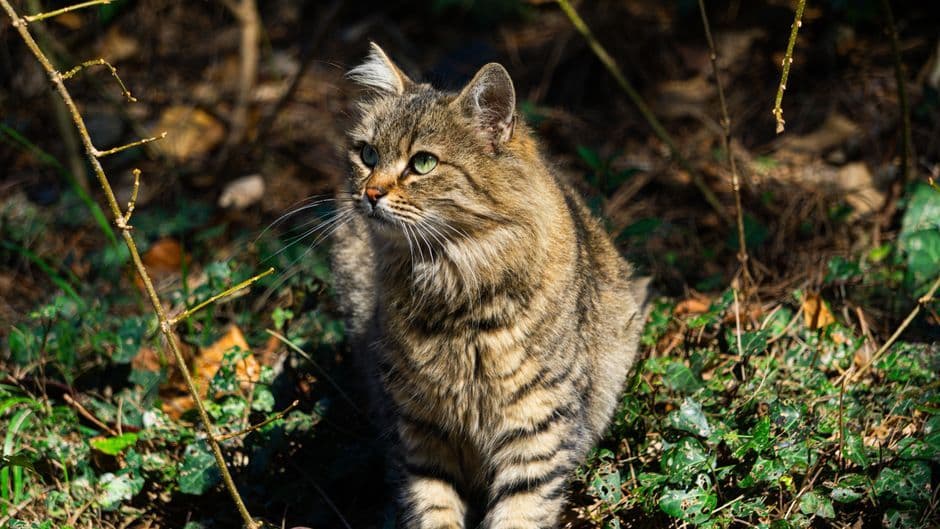
Stock photo for illustration only, not from the actual event
- Saving Wildcats team monitors wildcats using 72 cameras in a control room
- 46 wildcats have been successfully released into the Cairngorms foothills
- At least 20 wild-born litters have been recorded since 2024
- The project plans to expand wildcat conservation areas across Scotland
From behind a bank of screens in a windowless room, Estelle Morgan, animal team leader from the Saving Wildcats partnership, closely monitors the latest wildcats being bred in captivity to be released into the Cairngorms.
The team evaluates the animals' health and behavioral potential to ensure they can survive in the wild, while keeping human contact to an absolute minimum to prevent the cats from becoming comfortable around people.
Stock photo for illustration only, not from the actual event
The Saving Wildcats initiative has successfully reintroduced 46 wildcats into the flats and foothills of the Cairngorms. These released cats have successfully reproduced, with the monitoring team confirming at least 20 wild-born litters to released females since 2024.
Dr Martin Gaywood, species project manager at NatureScot, noted that while the Cairngorm project has achieved enormous success, it is only the first step toward restoring wildcats across the whole of Scotland through long-term planning.
"Wildcat conservation is really complex. It has all sorts of threats and issues and in order to restore wildcats to the whole of Scotland we need to plan long term and we need to plan at a big scale."
Dr Martin Gaywood
Climate change impacts and habitat fragmentation pose severe threats to endangered wildlife. Establishing robust population sizes across multiple geographic regions is a vital risk-mitigation strategy for long-term species survival.
Back in 2018, scientists warned that the Scottish wildcat population was functionally extinct. Classified as critically endangered, the roaming cats continue to be carefully tracked via a network of trail cameras and drop-off GPS collars.
Source: BBC Science & Environment
Found something wrong in this article? Report an issue with this article
Comments
Leave a Comment