

AutoScheduler launches warehouse app builder for logistics teams
AutoScheduler has launched its warehouse app builder module, empowering logistics teams to create custom tools from live facility data without IT queues.
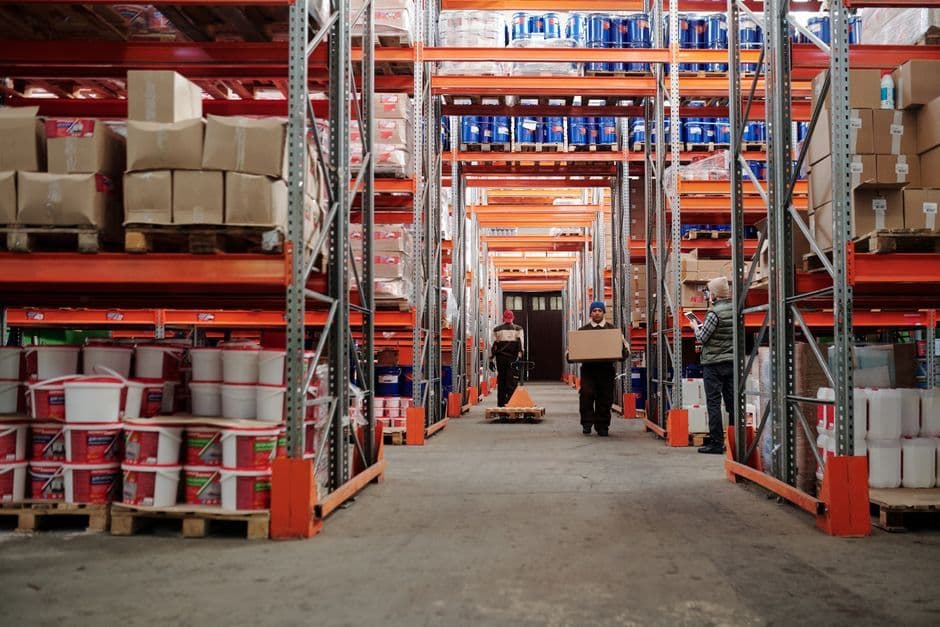
Stock photo for illustration only, not from the actual event
- AutoScheduler launches Warehouse App Builder for logistics teams
- Builds custom tools from live warehouse data using plain language prompts
- Powered by a semantic data layer built over six years of operations
- Bypasses lengthy software release cycles and overburdened enterprise IT
AutoScheduler has officially launched its new Warehouse App Builder software module, designed to let logistics facility teams construct custom tools and applications directly from live facility data. The new software module forms an integral part of the company’s broader Warehouse AI Platform, serving distribution centers that must balance inventory, machinery, and labor simultaneously.
Distribution facilities routinely depend on rigid enterprise resource planning (ERP) and warehouse management suites (WMS). When operational snags occur between these massive systems, floor managers frequently resort to manual spreadsheets or unrecorded staff routines. The new capability now enables site planners to assemble targeted software routines using plain language prompts, bypassing lengthy commercial software release cycles and overburdened enterprise IT queues.
"Warehouses run on massive systems that are expensive and slow to customise, so operators fill the gaps with spreadsheets, business intelligence tools, homegrown tools, and tribal knowledge."
Keith Moore, CEO at AutoScheduler
Keith Moore, CEO at AutoScheduler, explained that the people who encounter problems every day can now fix them directly, building applications on live warehouse data backed by real optimization math in just days. He added that while the company still orchestrates all internal building systems, it now hands the floor the tools to solve everything in between.

Stock photo for illustration only, not from the actual event
By avoiding broad, unstructured large language models in favor of an operational semantic layer mapped across six years of distribution data, AutoScheduler bridges a critical gap in enterprise AI. This approach ensures that natural language prompts are translated into mathematically sound instructions and monitoring dashboards rather than relying on generalized AI guesswork.
Instead of relying on broad, unstructured language models to guess logistics logic, the environment sits on an operational semantic layer built across six years of distribution operations. That layer maps relationships across warehouse management systems, labor management records, yard software, and automated machinery, while mathematical solvers interpret user requests and convert plain text prompts into live monitoring dashboards, predictive trackers, and automated tasks.
The system writes verified instructions straight back to core management software for floor execution. Operators have already built applications targeting wave sequences, replenishment triggers, and cross-dock allocation priorities, alongside other deployments tracking dock door schedule compliance, on-time in-full performance, and production schedules.
Kunj Pandya, Head of Product and Customer Success at AutoScheduler, explained that anyone can point AI at a warehouse, but the core difference is that their semantic layer already understands data meanings across WMS, ERP, and labor systems, allowing every built app to leverage optimization solvers proven across nearly 100 sites.
Early rollouts indicate fast operational turnarounds across industrial distribution networks. Site staff built one working application in under 15 minutes during an initial workshop, while another facility planner independently devised a replenishment tracking tool that verified substantial operating gains within a fortnight, generating operational savings large enough to justify an annual six-figure operating allocation.
"The AutoScheduler App Builder feature is one of the best integrations of software and AI that I’ve seen so far. It helps bridge one of the biggest challenges in software development: the gap between understanding a business problem and turning that knowledge into a practical digital solution."
A planner at a global food and beverage company
The AI App Builder has now entered general commercial availability across the vendor's client base, with AutoScheduler coupling the software rollout with forward-deployed technical specialists to assist client engineering groups during initial application builds.
Source: AI News
Found something wrong in this article? Report an issue with this article
Comments
Leave a Comment