

Fitness Trackers Are Inaccurate at Tracking Calories
Studies show smartwatches and fitness wearables frequently miss the mark on calorie burn, with error rates detailed across top brands.

Stock photo for illustration only, not from the actual event
- Fitness trackers calculate calorie burn through mathematical estimates rather than direct measurements.
- A 2020 study found Garmin underestimated calories 69% of the time, while Apple and Polar overestimated by 58% and 69%.
- Tracking accuracy is further affected by individual body composition factors such as body fat percentage.
When reviewing smartwatches and fitness trackers, testers often focus on pace accuracy, heart rate tracking, and lab-tested VO2max scores. However, calorie burn accuracy is rarely tested because none of the devices agree with one another, and scientists who study wearable accuracy cannot provide a definitive answer for shoppers.
Before the era of fitness wearables, calculating daily calorie burn relied on rough estimates based on body size, sex, age, or gym equipment readouts. The introduction of wrist-worn gadgets revolutionised personal tracking, but those calorie figures were fundamentally flawed.
Wearables primarily derive calorie calculations from motion and heart rate data. Accelerometers track rhythmic arm movements to guess walking or running based on bounce patterns and wrist motion.
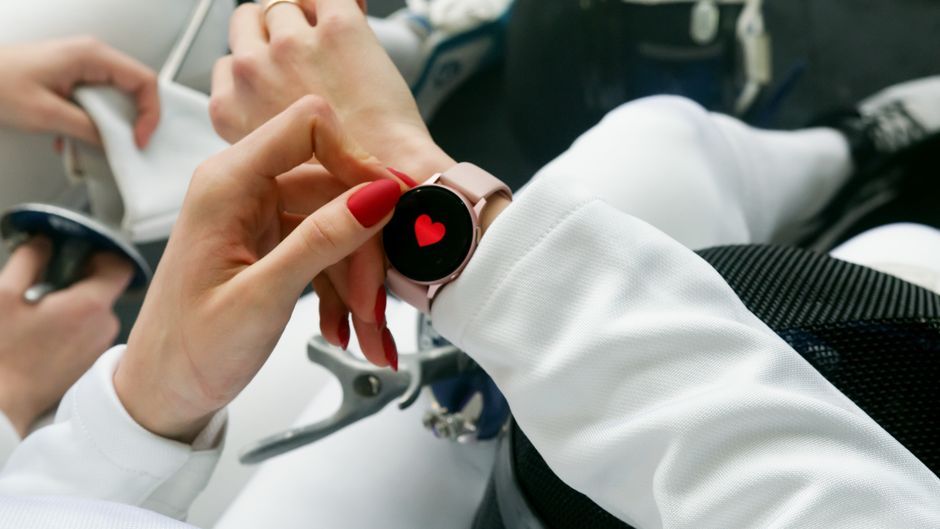
Stock photo for illustration only, not from the actual event
If humans were identical robots moving in predictable patterns, this formulaic approach might succeed. In reality, human movement is complex, leading to different step counts depending on which wrist wears the device. Furthermore, optical heart rate sensors may perform less accurately on dark skin tones, and calorie burn is merely an algorithmic estimate derived from measured data rather than a direct measurement.
Because manufacturers are not required to publish their proprietary algorithms or verify calorie count accuracy before market release, consumers must rely entirely on marketing claims. This highlights the lack of universal testing standards across the wearable technology industry.
A 2020 study evaluating devices from Apple, Garmin, Polar, and Fitbit revealed that most gadgets were inaccurate more often than accurate, using a threshold of plus or minus 3% compared to lab settings:
A 2022 study comparing the Apple Watch 6, Fitbit Sense, and Polar Vantage V gave every gadget a poor accuracy rating across all activities, with coefficients of variation ranging from 15% to 30%.
A 2025 review of Apple Watch studies found calorie burn estimates were off by about 18% on average, missing the proposed International Electrotechnical Commission standard that recommends trackers not exceed a 10% error margin.
Additionally, a 2026 study discovered that body fat percentage significantly impacts accuracy. Higher body fat levels correlated with greater inaccuracies in calorie burn results, with devices like the Garmin Forerunner 955 and Samsung Galaxy Watch 5 showing serious overestimations.
Source: Lifehacker
Found something wrong in this article? Report an issue with this article
Comments
Leave a Comment