

Jenny Holzer revisits Times Square billboard art in Porto
Exploring Jenny Holzer's 40-year career from the 1982 Spectacolor board to AI-driven works in Wrong Answers at Serralves Museum in Porto, Portugal.
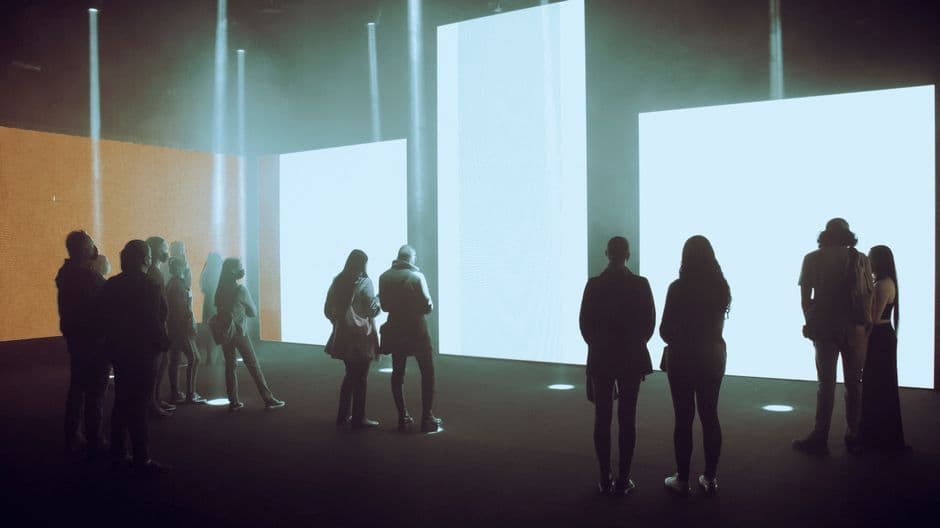
Stock photo for illustration only, not from the actual event
- Jenny Holzer displayed Truisms on a Times Square billboard in 1982 to challenge commercial spaces
- The Wrong Answers exhibition at Serralves Museum reflects today's media and AI landscape
- The artist uses diverse media ranging from paper, bronze, and stone to LED screens
Back in 1982, brief sentences appeared sandwiched between advertisements on a massive electronic billboard in Times Square, New York. Statements like PRIVATE PROPERTY CREATED CRIME, TORTURE IS BARBARIC, and ABUSE OF POWER COMES AS NO SURPRISE were not selling merchandise or giving directions. Jenny Holzer positioned her Truisms inside the Spectacolor board, transforming one of New York's most prominent commercial facades into a vehicle for provocative statements.
This gesture was striking because Holzer adopted the visual conventions of advertising—matching the scale, motion, and glow of the billboard—while delivering unsettling, short statements instead of consumer goods. For a few moments, a space built strictly for commerce became a place to encounter language.
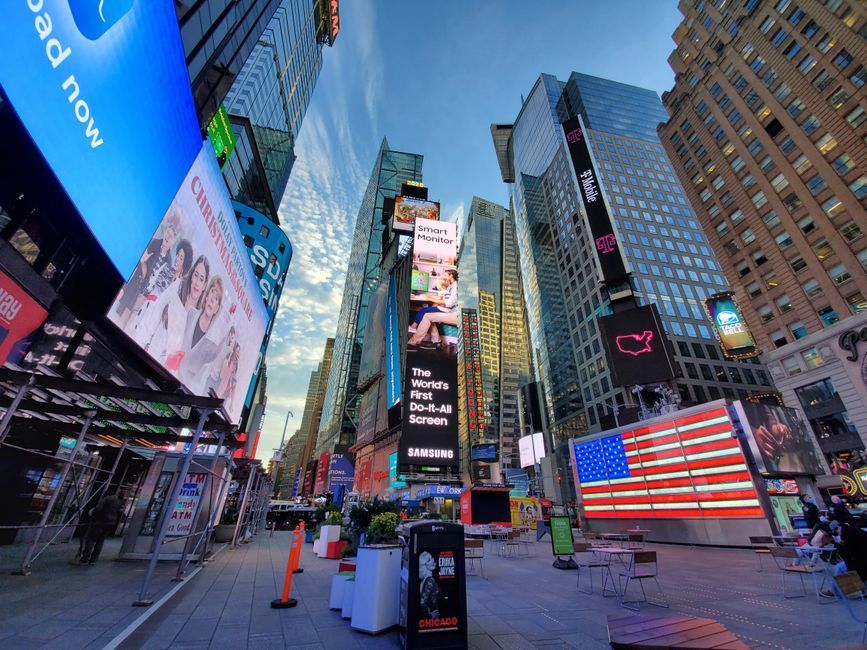
Stock photo for illustration only, not from the actual event
More than forty years later, Holzer's Wrong Answers exhibition at the Serralves Museum of Contemporary Art in Porto revisits these concepts within a radically altered media landscape. Today, screens are no longer concentrated in isolated hubs; they are embedded in buildings, streets, public transit, and the smartphones we carry everywhere.
This evolution from targeted temporary displays in the 1980s to pervasive digital screens highlights how public art's core challenge has shifted. The modern hurdle is no longer securing screen access, but capturing attention amidst an overwhelming information ecosystem.
Holzer's journey began back in 1977 by pasting paper Truisms across New York City streets before expanding into the Living series on bronze plaques, lending subjective observations civic authority. Her intervention reached mass communication architecture through the Messages to the Public project (1982-1990) on the Spectacolor board, lasting only seconds before commercial programming resumed.
Today's conditions differ entirely. Advertising targets individuals via data, algorithms, and personalized feeds rather than broadcasting blanket messages. Commercial screens now form part of the ambient environment, altering the framework for artistic interventions.
The Wrong Answers exhibition in Porto brings together paper works, stone carvings, LED installations, and newer pieces responding to contemporary political communications. Among them, READY FOR YOU (2023–25) incorporates contemporary political rhetoric alongside AI-generated transformations, mirroring an information sphere where statements are continuously recycled and accelerated.
"These statements did not try to sell products, but instead turned a commercial platform into a space to confront language and thought."
Jenny Holzer
Holzer's work demonstrates that utilizing varied materials—paper, stone, paint, and LEDs—creates distinct reading experiences. Text carved into stone implies permanence, whereas an LED message can vanish before it can be fully absorbed.
Source: designboom
Found something wrong in this article? Report an issue with this article
Comments
Leave a Comment