

Harvest Moon 2026: When and how to see it on Sept 26
Catch the Harvest Moon lighting up UK skies on September 26, 2026, reaching its fullest at 17:49 BST. Check weather forecasts and viewing tips.
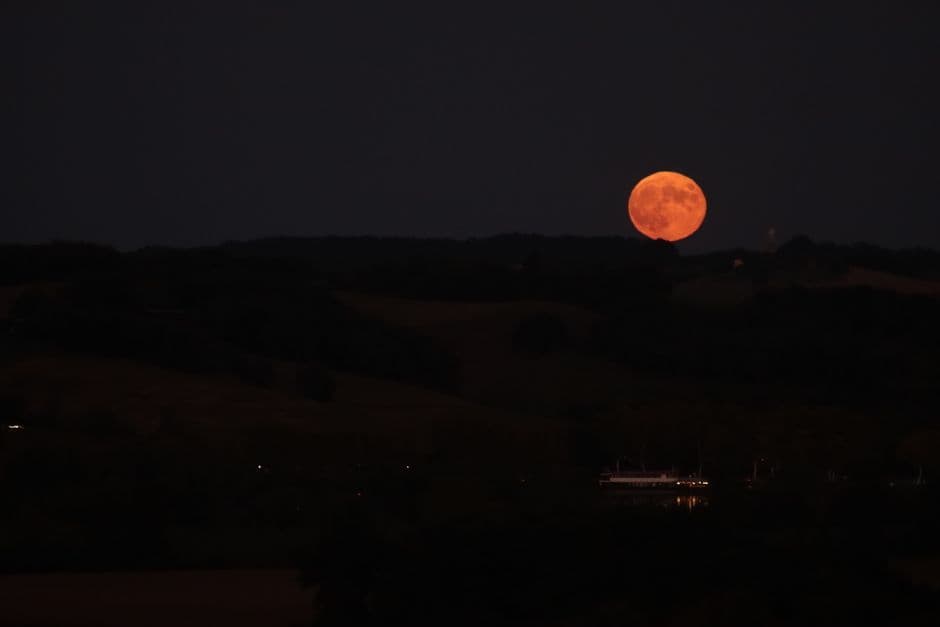
Stock photo for illustration only, not from the actual event
- The 2026 Harvest Moon peaks at fullest illumination at 17:49 BST on Saturday, September 26.
- The Moon will rise shortly after peak time and appear nearly full throughout Saturday evening.
- It earns its name as the full Moon closest to the autumn equinox.
- Southern and eastern UK currently hold the best chances for clear viewing skies.
September's full Moon, widely known as the Harvest Moon, is set to grace UK skies this weekend, arriving just days after the autumn equinox on Wednesday. According to Emily Wood of BBC Weather, the lunar event will reach its exact full phase at 17:49 BST on Saturday, September 26, 2026.
At that precise hour, the Moon will still sit below the horizon across much of the UK, but it will climb into view shortly afterwards, maintaining an almost entirely full appearance throughout Saturday evening. The traditional moniker stems from its status as the full Moon closest to the autumn equinox, a time when historical farming communities relied on the extended evening moonlight to gather their crops.
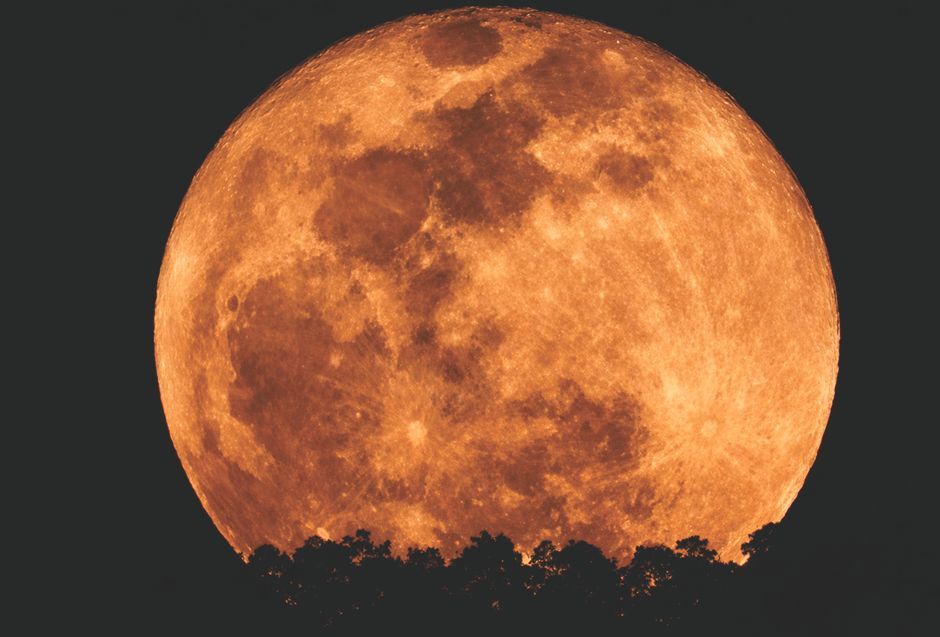
Stock photo for illustration only, not from the actual event
In addition to the Harvest Moon, the Royal Observatory Greenwich notes that the Corn Moon serves as another common designation, highlighting the seasonal crops traditionally harvested during this period. However, this title does not always fall in September; if October's full Moon happens to sit closer to the autumn equinox, it claims the designation instead.
Viewers who catch the Moon right as it breaches the horizon might notice a yellow, orange, or even reddish hue. Emily Wood clarifies that this coloration is not a unique trait of the Harvest Moon itself, but rather a result of its low trajectory; moonlight must cut through a thicker layer of Earth's atmosphere when near the horizon, scattering shorter blue wavelengths and allowing warmer yellows, oranges, and reds to dominate.
Rayleigh scattering is the atmospheric phenomenon responsible for the reddish or orange tint of celestial bodies near the horizon. Because low-angle light traverses a denser path of air, short blue light waves scatter away, leaving longer red and orange wavelengths to reach human eyes.
Stock photo for illustration only, not from the actual event
Current meteorological forecasts indicate that Saturday could deliver drier, brighter conditions, particularly across parts of England. Conversely, western regions may experience cloud cover, while parts of Scotland and Northern Ireland face evening rain. Southern and eastern portions of the UK currently boast the highest probability of clear skies, while weather conditions elsewhere remain more changeable. Exact moonrise times will fluctuate across the UK but will occur shortly after the official peak fullness.
Source: BBC Science & Environment
Found something wrong in this article? Report an issue with this article
Comments
Leave a Comment