

Global Gender Gap Report 2026: Thailand Rises 11 Spots
WEF 20th anniversary report ranks Thailand 55th globally and 3rd in ASEAN, led by a remarkable 64.8% share of female top executives.

Stock photo for illustration only, not from the actual event
- The world needs another 120 years to fully close the gender gap, according to the WEF Global Gender Gap Report 2026.
- Thailand jumped 11 places to rank 55th globally and 3rd within the ASEAN region.
- Thailand leads 132 economies with 64.8% of private firms having women as top executives.
- Iceland maintains the #1 spot for the 17th consecutive year with a score of 93%.
Humanity must wait roughly 1.2 centuries, or approximately 120 years, before economic, educational, health, and political opportunities between women and men achieve complete parity. This stark figure was revealed in the 20th-anniversary edition of the Global Gender Gap Report 2026 by the World Economic Forum (WEF), covering 145 economies worldwide. The latest findings show that the global average has closed the gender gap by merely 69.2%, with no country having reached absolute equality.
Over the past two decades since 2006, the nature of the equality challenge has fundamentally shifted. While women have gained unprecedented access to classrooms and labor markets, fresh data from LinkedIn and the World Bank indicates that the next hurdles involve who ascends to leadership roles, who secures high-paying AI jobs, and who dictates capital allocation—areas that have largely stagnated.
Thailand demonstrated stellar performance in this year's index, climbing 11 positions to secure the 55th spot globally and ranking 3rd in ASEAN. Furthermore, the country-specific breakdown highlighted an extraordinary statistical milestone within the Thai private sector.
The WEF index evaluates four core dimensions: economic participation, educational attainment, health and survival, and political empowerment, tracked across 14 indicators. The scoring system divides women's values by men's, yielding scores from 0 to 1 to reflect the proportion of the gap bridged. If women surpass men in any metric, scores are capped at 1, as the index measures parity rather than granting bonuses for outperformance.
"The equality challenge has changed. Over the past two decades, women gained greater access to classrooms and labor markets, but the next hurdle is who becomes a leader."
World Economic Forum
A dimensional breakdown exposes a deeply polarized world. Educational attainment has closed 96.9% of its gap, closely followed by health and survival at 96.2%. However, economic participation has closed only 61.7%, requiring another 129 years to bridge, while political empowerment trails drastically at 22.1%, needing an estimated 194 years.
The near-complete closure of educational and health dimensions illustrates that foundational investments over the past 20 years have successfully paid off. However, the real crisis now lies within 'high-level power structures' such as politics and C-suite management, signaling that inequality has shifted from basic access rights to the possession of decision-making authority and financial resources.
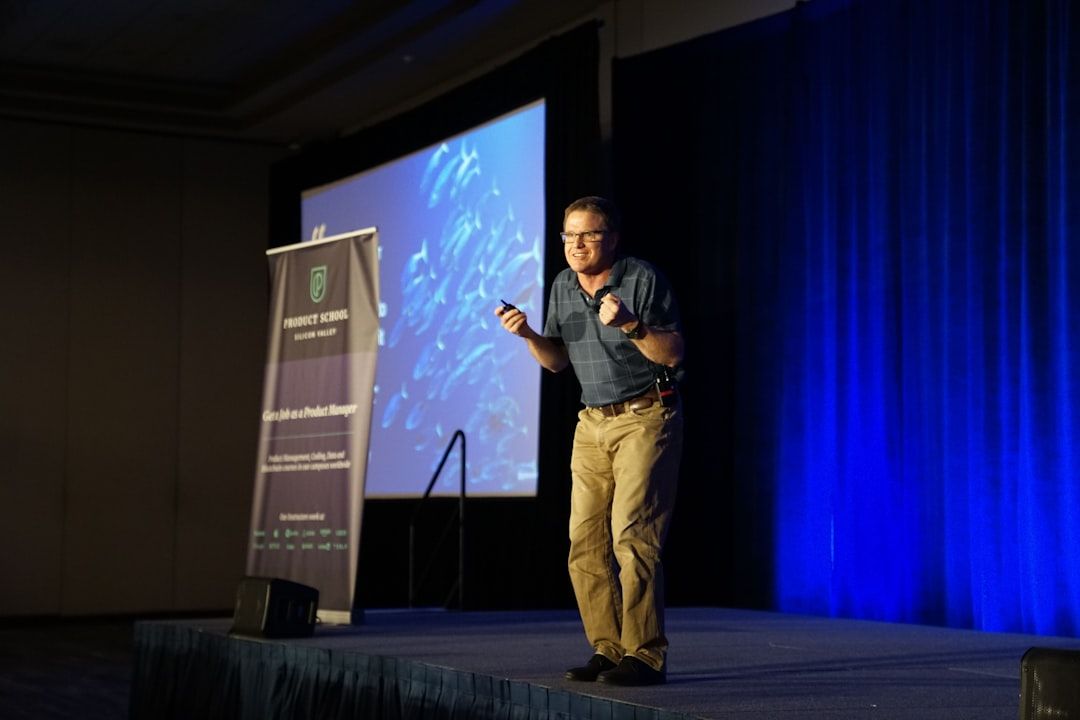
Photo by Product School / Unsplash
Regarding the global rankings, Iceland retained the top spot for the 17th consecutive year with a score of 93%, remaining the sole nation to breach the 90% threshold. It was followed by Finland (87.2%) and Norway (85.7%), with European nations claiming 7 of the top 10 positions. Meanwhile, the East Asia and Pacific region, to which Thailand belongs, surpassed 70% for the first time at 70.3%, though it still requires 144 years to close its remaining gap.
Source: Techsauce
Found something wrong in this article? Report an issue with this article
Comments
Leave a Comment