

Turkish Airlines Places Largest Boeing Narrowbody Order
Turkish Airlines finalizes its largest Boeing narrowbody order for up to 150 jets and pushes its 800-aircraft fleet target to 2036 to prioritize profit.
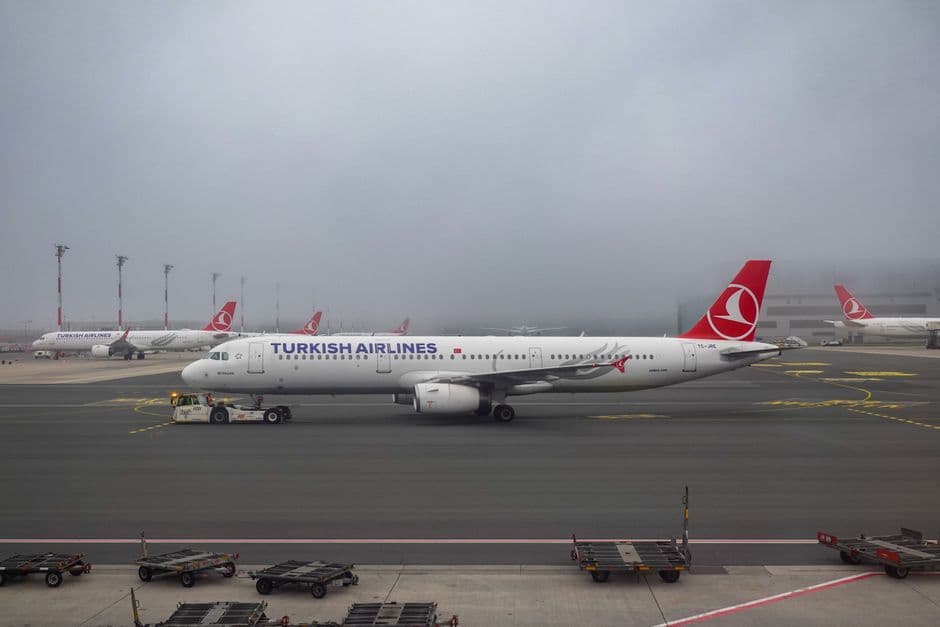
Stock photo for illustration only, not from the actual event
- Turkish Airlines commits to its largest-ever Boeing narrowbody order for up to 150 aircraft.
- The firm agreement covers 100 Boeing 737-8 jets with options for 50 additional units.
- New leadership shifts focus to profitability, delaying the 800-aircraft fleet goal from 2033 to 2036.
- Second-quarter revenue rose 20.5% to $7.2 billion while net income dropped 71.5% to $197 million.
Flag carrier Turkish Airlines has finalized a landmark agreement with Boeing for up to 150 737 MAX aircraft, marking the airline's largest-ever narrowbody order with the manufacturer. This major fleet decision is driven by a new executive leadership team taking a more calculated approach to the carrier's next phase of development.
The agreement includes 100 firm orders for the 737-8 model alongside options to purchase 50 more. Additionally, the airline holds substitution rights to switch to the larger 737-10 variant, allowing management to flexibly adjust seat capacity as travel demand and Istanbul airport constraints evolve.
This monumental deal represents the first major fleet strategy decision under Chairman Murat Seker, a former chief financial officer, and CEO Ahmet Olmustur, who both stepped into their current roles following the departure of Ahmet Bolat earlier in the year. The transition serves as an early barometer of how the new leadership intends to balance aggressive network expansion with heightened discipline in profitability and operational efficiency.
Stock photo for illustration only, not from the actual event
Seker has spent his initial months as chairman emphasizing a strategic pivot away from chasing sheer size. Consequently, the airline has postponed its target of reaching an 800-aircraft fleet from 2033 to 2036, citing widespread industry delivery delays.
"The airline notes that the 737-8 burns about 20% less fuel than the planes it replaces."
Turkish Airlines
Turkish Airlines' shift from prioritizing sheer scale to focusing on profit margins highlights the broader financial pressures confronting global hub carriers amid volatile fuel prices, Middle Eastern geopolitical disruptions, and persistent aircraft delivery delays. Locking in fuel-efficient narrowbodies like the 737 MAX for its Istanbul hub provides essential cost control, while reintroducing premium economy cabins on Airbus A350s in 2028 underscores a strategy designed to extract higher yields from existing travelers.
Financial friction has become increasingly visible in recent balance sheets. Second-quarter revenue climbed 20.5% to $7.2 billion, yet net income plunged 71.5% down to $197 million, squeezed heavily by escalating fuel expenses and Middle East disruptions. To counteract these headwinds, Turkish emphasizes that the newly ordered 737-8 aircraft consume approximately 20% less fuel than the older planes they are phasing out, while premium economy is slated to return aboard Airbus A350s by 2028 to capture higher passenger yield.
Source: Skift
Found something wrong in this article? Report an issue with this article
Comments
Leave a Comment