

When Art Gives You Nothing to Look At: The Spectacle of Absence
Explore postwar art experiments from Robert Rauschenberg to Yves Klein that replaced visible works with empty spaces to reshape human perception.
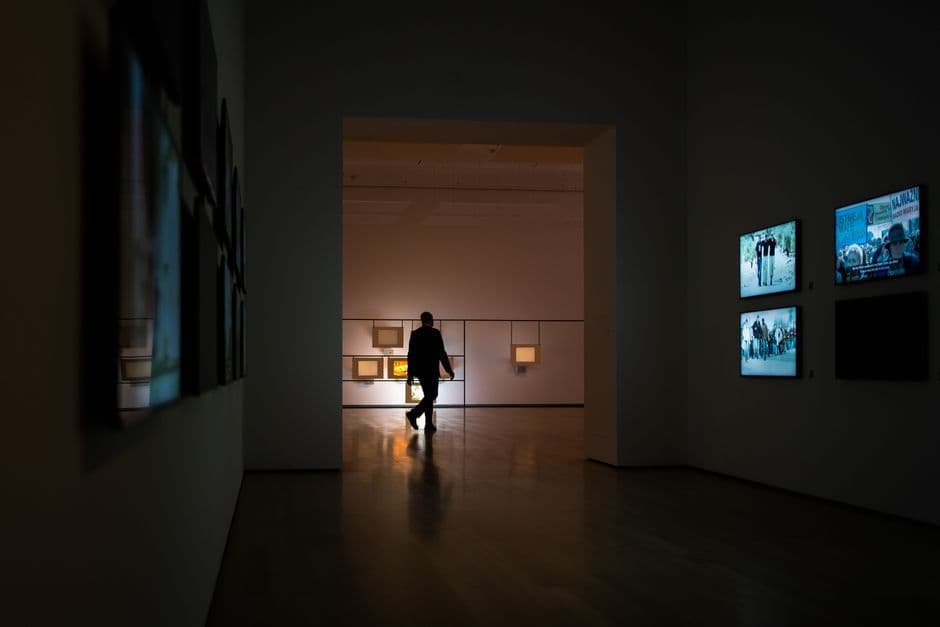
Stock photo for illustration only, not from the actual event
- Postwar art explored withholding visible and audible elements from artworks.
- Robert Rauschenberg and John Cage invited the surrounding world into their pieces.
- Yves Klein emptied the Galerie Iris Clert in 1958 for his Le Vide exhibition.
- Doug Wheeler and Mark Rothko utilized environment and lighting to alter visitor perception.
We are accustomed to thinking of art as something that asks us to look. Still, some of the most influential experiments in postwar art began by questioning this basic expectation, asking what could happen if an artist withheld the very elements that make an artwork visible or audible. These works leave space for something less obvious to come through, whether that is the changing light of a room, the sounds of an audience, the physical character of architecture, or just the awareness of one’s own body occupying a particular place at a particular time.
From Robert Rauschenberg and John Cage in the early 1950s to Yves Klein, Doug Wheeler, Mark Rothko, and Alvin Lucier, there is a recurring interest in what becomes perceptible when the artwork begins to recede. Seen together, their work suggests an alternative history of spectacle in which attention is not captured through abundance, but redirected through absence.
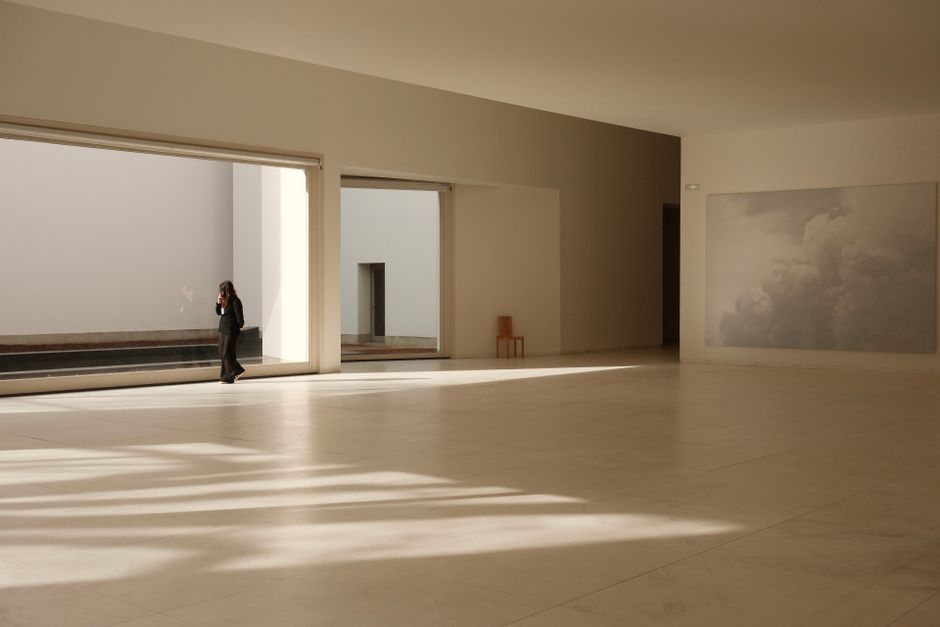
Stock photo for illustration only, not from the actual event
Both Cage and Rauschenberg were interested in what happened when the artist stopped determining exactly what the audience should encounter, allowing the surrounding world to enter the work. Yves Klein’s Le Vide, presented at Galerie Iris Clert in Paris in 1958, took this logic out of the canvas and into the gallery. Klein emptied the exhibition space and painted it white, removing the paintings and objects that visitors had arrived expecting to see. Through a deliberately theatrical gesture, the opening was carefully staged to heighten the impact of entering a gallery where the expected artworks had disappeared. What remained was the architecture of the room, the white surfaces, the people standing inside it, and perhaps most importantly, the expectation that something should be there. The absence of the artwork exposed the usual role of the gallery, turning the space itself into the experience.
"The absence of the artwork exposed the usual role of the gallery, turning the space itself into the experience."
Yves Klein
By the time artists began working directly with architectural environments, the question had shifted from what could be removed from an artwork to what could happen when the environment became the medium. Doug Wheeler’s PSAD Synthetic Desert III, presented at the Solomon R. Guggenheim Museum in 2017, transformed the gallery through controlled surfaces and lighting, using acoustic absorption to reduce the sounds and reflections that normally help us perceive the dimensions of a room.
The concept of the anti-spectacle serves as a vital framework for understanding contemporary visual culture, which frequently competes for attention using screens and constant sensory stimuli. Deliberately leaving elements out fosters a renewed awareness of surrounding environments that are typically overlooked in daily life.
In an environment where familiar acoustic cues have been suppressed, the visitor becomes more conscious of small sounds and movements, while the boundaries of the space become harder to read. The room stops behaving like a neutral background and begins to determine what the visitor can perceive. Wheeler’s work is therefore less about presenting an image of a desert than about constructing some of the perceptual conditions associated with its vastness and stillness.
The Rothko Chapel in Houston approaches the same territory through a very different atmosphere. Opened in 1971, the chapel contains fourteen monumental paintings by Mark Rothko within an environment designed for contemplation, with subdued natural light and very little visual distraction beyond the paintings. The space rejects the rapid succession of visual stimuli that defines much of the museum experience. Its scale, darkness, and stillness allow visitors to focus on a small number of visual elements for longer, while time becomes part of the experience.
Source: designboom
Found something wrong in this article? Report an issue with this article
Comments
Leave a Comment