

BEARS WOOD PROJECT 2022: Bear-Scarred Cedar Surfboards
Kyoto's BEARS WOOD PROJECT transforms bear-damaged cedar timber into urushi-lacquered surfboards through the siita brand.
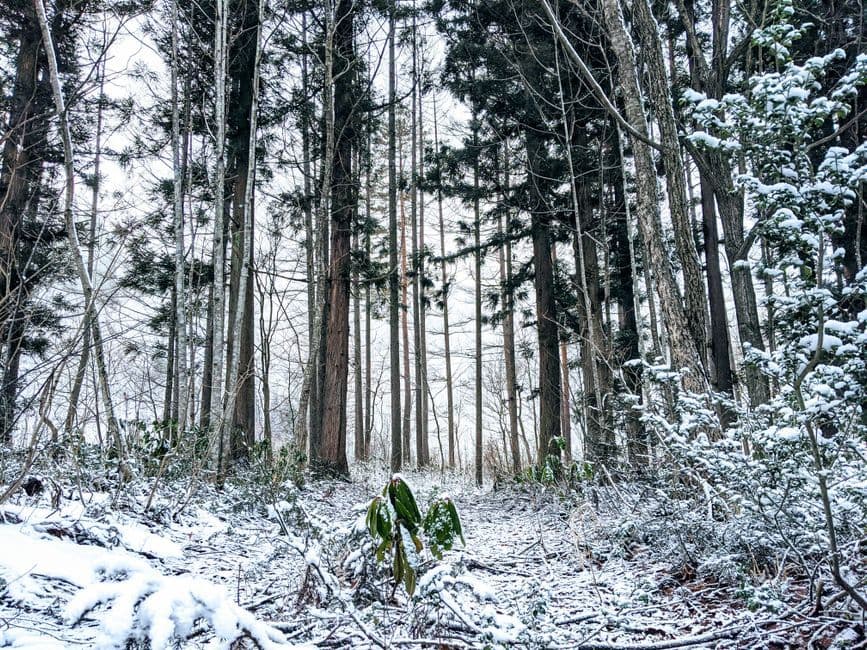
Stock photo for illustration only, not from the actual event
- BEARS WOOD PROJECT launched in 2022 to utilize damaged cedar timber.
- Natural bear scars are transformed into unique patterns on surfboards.
- Takuya Tsutsumi collaborates with shaper Rodrigo Matsuda in Keihoku.
- Surfaces are coated in traditional urushi lacquer from Kyoto.
In the forests of Keihoku, north of central Kyoto, Asian black bears occasionally strip the bark off cedar and cypress trees, leaving long wounds along their trunks known as kumahagi. As the trees attempt to heal, irregular grain forms around the damaged areas, which drastically reduces the commercial timber value. According to Kyoto City, these affected trees are frequently chipped for fuel or left behind in the mountains.
These distinct scars are precisely what inspired the creation of the BEARS WOOD PROJECT in 2022. Initiated by Kyoto lacquer workshop Tsutsumi Asakichi Urushi alongside local foresters and woodworkers in Keihoku, the project rescues timber whose market value dropped due to bear activity. Under their siita brand, the altered wood is shaped into long, curved surfboards and coated in glossy urushi lacquer, making the forest-born scars even more prominent.

Stock photo for illustration only, not from the actual event
At the forefront of the project is Takuya Tsutsumi, the fourth-generation head of Tsutsumi Asakichi Urushi, a Kyoto lacquer shop established by his family in 1909. Having joined the family enterprise in 2004, Tsutsumi has expanded traditional urushi applications onto unconventional objects such as bicycles, skateboards, and surfboards, pushing the craft beyond its conventional boundaries.
For the siita brand, Tsutsumi teams up with wooden surfboard shaper Rodrigo Matsuda, who boasts nearly two decades of board-shaping experience. Matsuda shapes the timber in Keihoku, while Tsutsumi applies the urushi finish inside a converted century-old farm shed situated by the Katsura River. Because humidity and temperature directly impact the viscosity and sheen of urushi, Tsutsumi fine-tunes his technique according to the environmental conditions of each session.
"The scar becomes an economic question as much as an aesthetic one. A feature that once lowered the value of the wood becomes the detail that distinguishes one board from another."
Takuya Tsutsumi
Upcycling damaged timber offers an innovative approach to resource management amidst environmental and commercial challenges. In Japan's historic Keihoku region, which has supplied timber to Kyoto since the Heian period, combining centuries-old lacquer craftsmanship with biological tree markings bridges traditional forestry and contemporary sustainable design, providing a new economic lifeline for local materials.
While the exact reasons behind the kumahagi phenomenon remain unresolved by forestry officials, the collaborators address the issue by purchasing the affected cedar trees at proper prices rather than discarding them. Drawing design references from the ancient Hawaiian alaia finless wooden surfboards, the project turns a structural disruption in the tree's growth cycle into the defining visual feature of each surfboard.
Source: designboom
Found something wrong in this article? Report an issue with this article
Comments
Leave a Comment