

ETH Zurich creates autonomous robotic hand that walks on fingertips
Researchers at ETH Zurich developed an untethered 818-gram robotic hand with five fingers that can walk, balance, and manipulate objects.
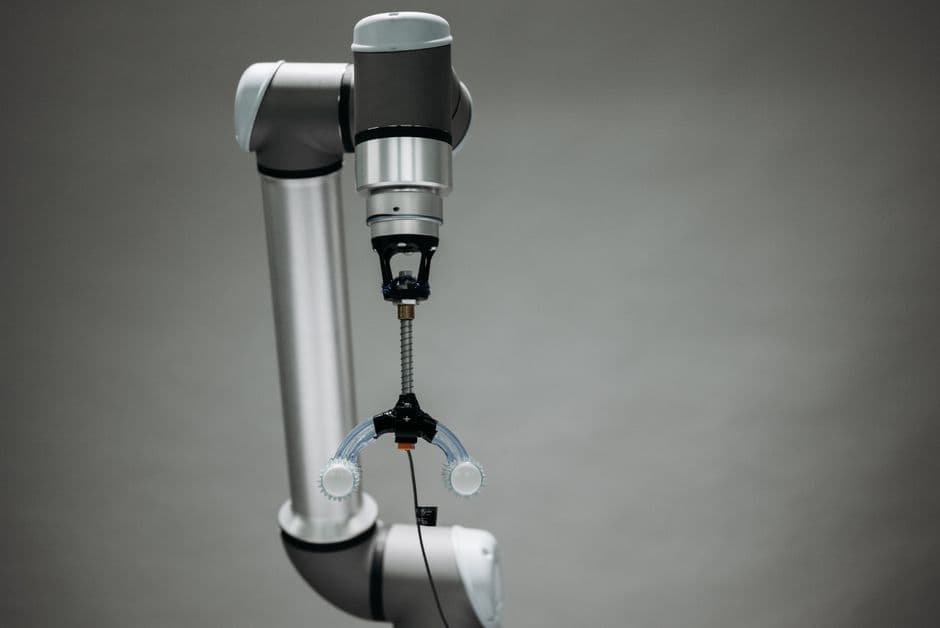
Stock photo for illustration only, not from the actual event
- ETH Zurich's Soft Robotics Lab researchers developed a five-fingered robotic hand capable of walking on fingertips.
- The untethered prototype weighs 818 grams with an onboard battery, sensors, and computing hardware.
- It utilizes reinforcement learning to master locomotion and balance across diverse surfaces.
- The hand can seamlessly switch from walking to manipulation tasks like typing and puzzle-solving.
Researchers at ETH Zurich's Soft Robotics Lab have unveiled a novel autonomous five-fingered robotic hand capable of walking across various surfaces using the same digits typically reserved for gripping. Developed by Amirhossein Kazemipour, Hehui Zheng, and Robert K. Katzschmann, the prototype bypasses traditional wheels or robotic legs by transforming the end effector itself into a mobile unit.
Weighing 818 grams, the untethered machine carries an integrated compact system featuring a battery, computing hardware, and sensors. The design eliminates the need for an external robotic arm to transport it, bearing a striking resemblance to the iconic hand character from The Addams Family while serving as a functional study in mobile manipulation.
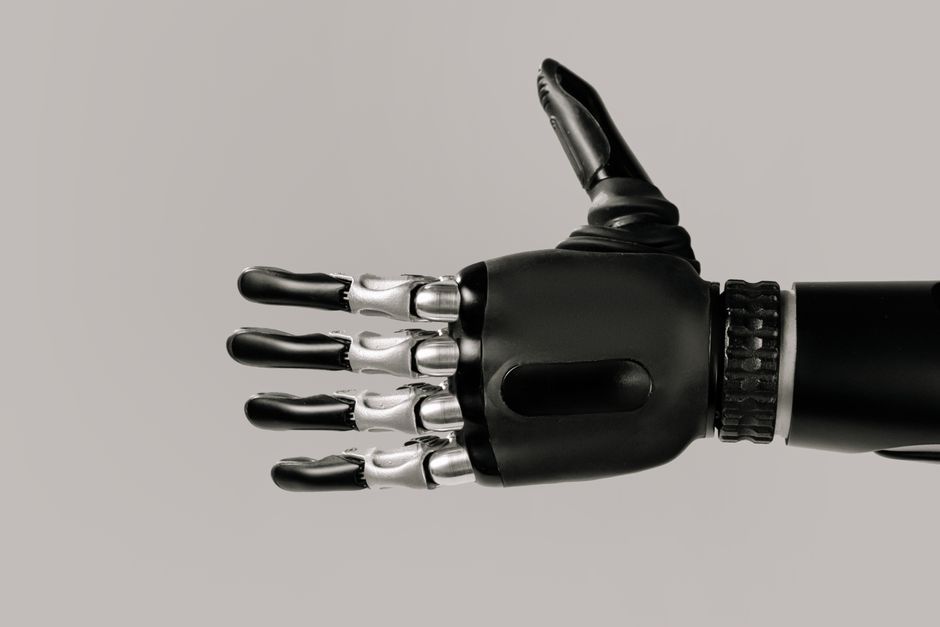
Stock photo for illustration only, not from the actual event
Training a hand to walk presents unique biomechanical challenges compared to quadrupedal robots. The five fingers feature distinct geometries and ranges of motion, while the palm naturally rests at an angle. Whenever a single finger lifts off the ground to take a step, the remaining digits must continuously balance the entire weight of the robot.
To overcome this structural asymmetry, the research team implemented reinforcement learning. Locomotion policies were trained entirely in simulation before being deployed onto the physical hardware. Consequently, the ETH Zurich robotic hand successfully navigated 14 different indoor and outdoor terrains, including carpet, tile, metal grating, asphalt, grass, gravel, and weathered stone.
"The researchers imagine a future system in which a robot places the hand near a narrow opening or confined workspace, letting it crawl independently toward a control or object."
Soft Robotics Lab, ETH Zurich
During recovery trials, when the robot was deliberately laid on its side, it successfully righted itself in 21 out of 25 attempts. Furthermore, the hand demonstrated its dual functionality by transitioning from locomotion to task execution, such as pressing keyboard arrow keys to successfully complete moves in the puzzle game Sokoban.
This research redefines conventional robotic anatomy by merging locomotion and manipulation into a single compact unit. Traditional robotic setups often require a complex mobile base attached to an arm just to position an end effector. By giving hands their own mobility, future robotic systems could operate more efficiently in confined or hazardous spaces previously inaccessible to larger machinery.
Source: designboom
Found something wrong in this article? Report an issue with this article
Comments
Leave a Comment