

Supersonic Labs Releases Julia 1: A 144.3M-Parameter Open Decision Model
Supersonic Labs launches Julia 1, a 144.3M open decision model running locally via Python 3.11 on CPU or BF16 GPU and browser ONNX WebGPU.
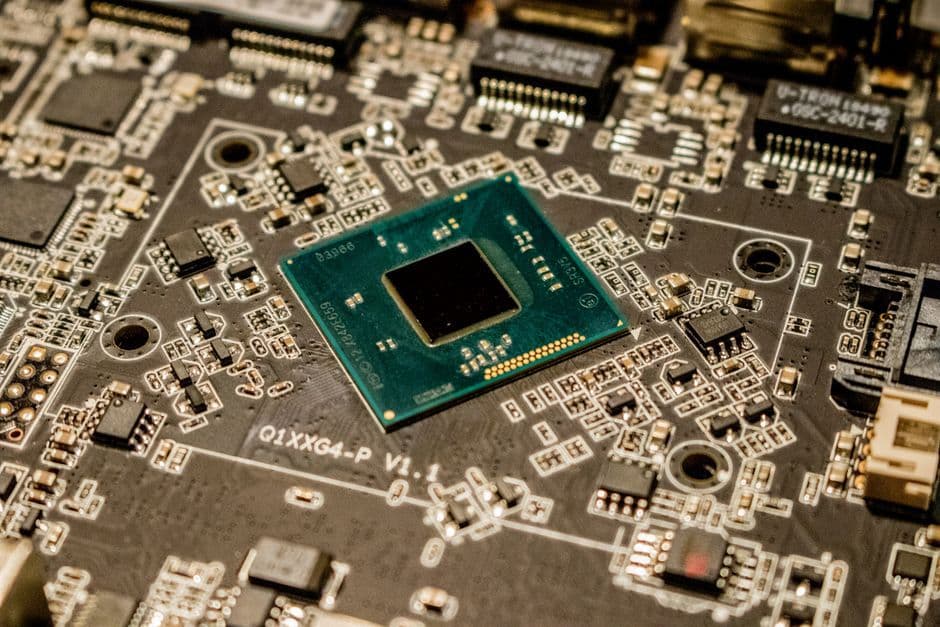
Stock photo for illustration only, not from the actual event
- Supersonic Labs releases Julia 1, an open 144.3M-parameter decision model.
- Built from mmBERT-small to run locally on CPU and GPU via Python 3.11+.
- Cloud GPU training spend was approximately 104.08 US dollars.
- Supports browser execution via ONNX WebGPU with Julia 2 currently in development.
Supersonic Labs has released Julia 1, an open decision model featuring 144.3 million parameters designed to process decisions locally on standard CPUs. The model weights are published on Hugging Face under the Apache 2.0 license, allowing developers to run them locally using Python 3.11 or higher on a CPU, a BF16-capable GPU, or build via ONNX to run inside a web browser using WebGPU. A hosted API has also been announced for future deployment.
Julia 1 originates from JHU CLSP's mmBERT-small, a 140-parameter multilingual ModernBERT encoder trained across more than 1,800 languages. Supersonic Labs retained the original encoder and tokenizer, integrated a decision head, and trained the model using decision-format examples. The lab clarifies that Julia 1 is not a fine-tuned Qwen model. While the runtime supports up to 8,192 combined tokens, published benchmark evaluations operated under a strict 1,024-token limit.
Regarding resource requirements and training economics, total cloud GPU expenditure for training and experiments amounted to approximately R$540, translating to about 104.08 US dollars. The FP32 weights occupy 550.5 MiB of storage. The proprietary training pipeline remains unreleased, while development is already underway for Julia 2, which will utilize the lab's proprietary foundation architecture.
"Introducing Julia-1: Our first classification model that runs on almost anything."
Supersonic Labs (@supersonicai)
Evaluations conducted on September 24, 2026, utilized an H200 BF16 setup with strict encoding protocols. The comparative baseline relied on TypeSafe's Jev framework using reference values from benchmark protocols. Classification pilots utilized merely 100 examples each, and a subsequent CPU run on September 25 reproduced most figures, scoring 72.55% on Typed Decisions and 60 out of 100 on Banking77 with 3 abstentions.
The release of Julia 1 highlights a growing industry trend toward lightweight, efficient edge AI models. By achieving practical decision-making capabilities with minimal training expenses and hardware constraints, such models democratize advanced machine learning deployment, enabling local execution on consumer hardware without heavy reliance on costly cloud infrastructure.

Stock photo for illustration only, not from the actual event
Per-device measurement metrics indicate robust versatility. On an Apple M4 chip, a single decision call achieved a median latency of 33.15 ms. On a Samsung SM-X510 tablet via ONNX Runtime, the median latency registered at 203 ms with a 393.1 MB peak RSS. Meanwhile, on an Intel Core i5-1235U processor, AG News decisions required a 107.83 ms median, whereas Banking77 took 3,713.54 ms due to an initial narrowing step across 72 labels. The model does not generate text, and Supersonic Labs advises maintaining human oversight for consequential decisions.
Source: MarkTechPost
Found something wrong in this article? Report an issue with this article
Comments
Leave a Comment