

AI 3D Character Creation Runs Entirely on CPU-Only VPS
Discover how a 3D game engine utilizes a 6-vCPU VPS to generate characters through four distinct paths without relying on any GPU hardware.

Stock photo for illustration only, not from the actual event
- Runs completely on a CPU-only VPS featuring 6 vCPUs and 11 GB of RAM without requiring a GPU.
- Merges CHARFORGE and 3D GAME ENGINE into a unified system to handle actors seamlessly.
- Supports four diverse paths for bringing actors into the game including sculpting, asset imports, procedural creatures, and photo reconstruction.
- Automatically stores up to 15 historical versions of each character with a 30-day trash recovery window.
The landscape of 3D character generation has shifted significantly as CHARFORGE and the 3D GAME ENGINE have combined into a single unified system. The most compelling aspect is not merely generating a face, but providing four completely different pathways to bring an actor into a game regardless of their origin.
The defining constraint of this architecture is that everything operates on a 6-vCPU, 11 GB RAM virtual private server without CUDA, rented GPU instances, or cloud inference bills. This hardware constraint shaped the entire design philosophy from day one.
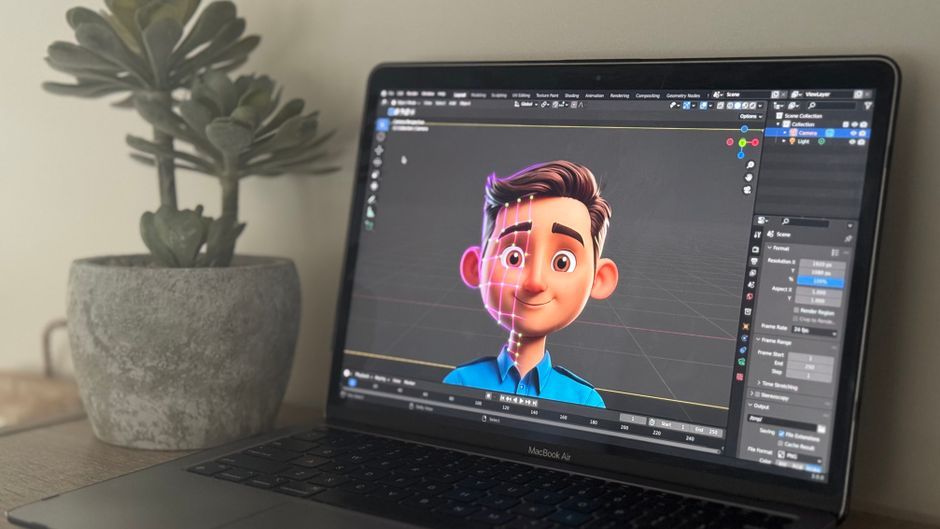
Stock photo for illustration only, not from the actual event
The single most important architectural shift treats an "actor" as an interface rather than a rigid data mesh. The system incorporates four core paths:
- Path 1: Sculpting a human from a 19,158-vertex base mesh with 163 bones, computed entirely via browser CPU JavaScript.
- Path 2: Importing pre-made assets like GLB, VRM, FBX, and OBJ files with automated name-based bone detection.
- Path 3: A creature lab generating robots, goblins, aliens, and beasts deterministically from parameters and seeds in real time.
- Path 4: CPU-driven realistic human generation via headless Blender with MPFB2 and single-photo 3D reconstruction using TripoSR.
Achieving complex 3D character generation entirely on standard CPU servers highlights a major breakthrough in cutting infrastructure costs. Indie game developers and small studios can harness advanced character tools without investing in expensive hardware, potentially paving the way for more cost-effective game development workflows.
For data management, every created character automatically lands in a MySQL database. Characters retain up to 15 historical versions throttled to one snapshot every 5 minutes, replacing instant deletion with a secure 30-day trash recovery window.
Source: Dev.to
Found something wrong in this article? Report an issue with this article
Comments
Leave a Comment