

Finding Edited Image Copies Across the Web Without Crawling
How Sealify detects copyrighted image copies by leveraging Google, Yandex, and Bing indexes, running locally on a single Mac mini.

Stock photo for illustration only, not from the actual event
- Sealify avoids building a custom web crawler to save energy and hardware resources.
- It uses reverse image search indexes from Google, Yandex, and Bing as the first stage.
- Verification runs locally on a personal Mac mini using a two-stage pipeline.
- Combining Google Lens and Yandex successfully uncovered verified copies across 396 domains.
Search engines have already mapped the visual web, and crawling it all over again duplicates massive amounts of work, hardware, energy, and water. This is the core philosophy behind Sealify, a tool built in 2023 that uses existing public indexes as the first phase of a copy-detection pipeline while handling all verification locally on a single Mac mini.
When creators publish photos or videos, copies inevitably surface on unfamiliar websites. These are rarely exact replicas; instead, they undergo cropping, resizing, recompression, color-grading, collage integration, language translation, or re-uploading with stripped audio. Traditionally, finding these copies is treated as a massive crawling problem requiring expensive infrastructure to fetch, fingerprint, and store large swathes of the internet repeatedly.
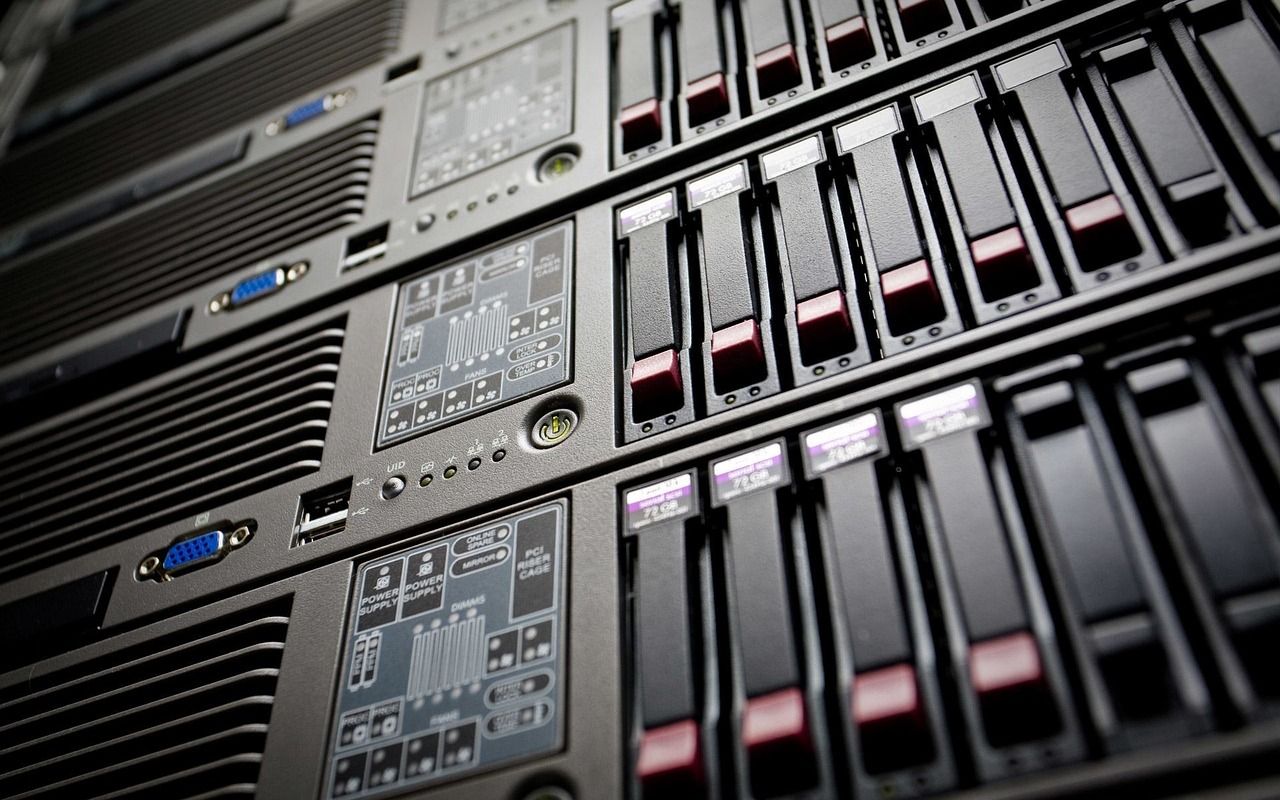
Stock photo for illustration only, not from the actual event
Server infrastructure requires physical hardware that must be mined, manufactured, and shipped, consuming electricity every hour it operates. Data centers accounted for roughly 1.5% of global electricity in 2024, and U.S. data centers alone consumed about 66 billion liters of fresh water in 2023 for cooling. Furthermore, discarded hardware contributes to a mounting e-waste crisis, with the world generating 62 million tonnes of e-waste in 2022, of which less than a quarter was properly documented as recycled.
To combat this, Sealify refuses to crawl the web. Instead, it queries existing indexes, downloads only the necessary thumbnails for a single query, and dedicates its compute power entirely to verification. Utilizing a retrieve-then-verify pattern, the system relies on search engines for breadth while controlling precision through a local verification engine, keeping operational costs close to a handful of API calls plus local computing.
The decision not to recrawl the web highlights a growing emphasis on sustainable software engineering. In an era where AI workloads and data center footprints are expanding rapidly, reusing established public infrastructure rather than duplicating heavy data pipelines represents a responsible approach to reducing digital carbon footprints.
During operation, the scanner queries multiple search engines in parallel—including Google Lens, classic Google reverse image search, Yandex, and Bing—via a third-party search API. In a test run, Google Lens and Yandex combined returned verified copies across 396 domains, with only 8 domains overlapping, demonstrating that relying on a single engine would have missed roughly half of the copies.
Every candidate is deduplicated, and its thumbnail is downloaded for verification. Search engines answer what looks similar, but copy detection must determine if it is the exact same picture. False positives often stem from similar photos of the same actor or film posters sharing a similar mood, which the local verifier addresses by scoring each candidate twice across scene and facial features.
"A server is never just a line on a cloud bill. It is hardware that has to be mined, manufactured and shipped."
Levent Celiksan
Source: Dev.to
Found something wrong in this article? Report an issue with this article
Comments
Leave a Comment