

Hotel CEOs Debate AI Strategy at Skift Global Forum
Leaders from Hilton, Hyatt, Accor, Wyndham, and Banyan Group share insights on artificial intelligence in hospitality in New York City.
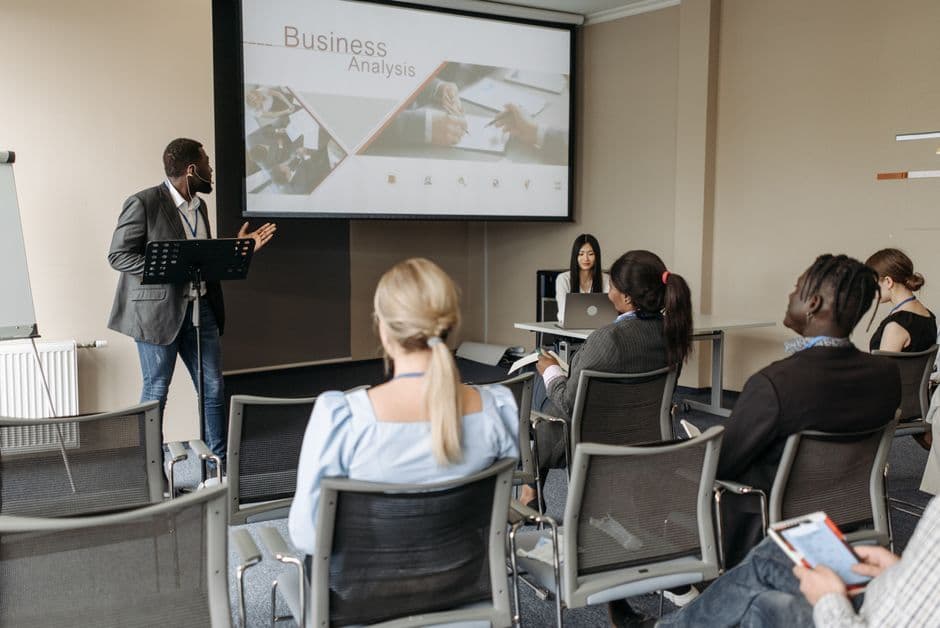
Stock photo for illustration only, not from the actual event
- Five major hotel CEOs agree AI must enhance hotel staff performance
- Hilton insists front desks remain, while Accor expects a third of jobs displaced
- Wyndham highlights successful voice agent deployment answering 100% of calls
- Banyan Group builds in-house AI team combining open-source models to cut costs
Top executives from five major global hotel brands—Hilton, Hyatt, Accor, Wyndham, and Banyan Group—gathered on stage at the Skift Global Forum in New York City in September 2026 to discuss the practical implementation of artificial intelligence in hospitality. All five leaders shared a unified core vision that artificial intelligence should serve to empower and elevate human hotel employees.
Despite this shared philosophy on staff enhancement, the chief executives held diverging views regarding the extent of job displacement, organizational guidance, and distribution strategies as travelers increasingly adopt AI-driven shopping platforms.
Hilton CEO Chris Nassetta firmly maintained that front desks will not disappear, even at limited-service properties. He emphasized that the hospitality sector fundamentally relies on people serving people, noting that future Hampton staff will possess deep guest insights and resolve issues with unprecedented speed.
Stock photo for illustration only, not from the actual event
"You're never taking all the people out. In the end, we're a business of people serving people."
Chris Nassetta
Conversely, Accor CEO Sébastien Bazin projected that roughly one-third of the workforce across Accor's network will be displaced by automation. He noted that ongoing discussions with labor unions regarding retraining are underway, given that Accor properties hire approximately 120,000 individuals annually, two-thirds of whom possess no prior degree or experience. Meanwhile, Wyndham CEO Geoff Ballotti presented concrete proof of automation ROI, explaining that a typical Wyndham property receives about 4,000 calls a year with roughly 25% normally dropped, but a Salesforce-built voice agent now answers all incoming calls, resulting in only 15% of guests requesting a human operator and higher booking conversion rates.
The integration of voice agents and automation tools into hotel operations marks a critical turning point for addressing traditional call center bottlenecks and missed reservation opportunities. Wyndham's successful deployment demonstrates that conversational AI has evolved past the pilot stage into a tangible revenue driver. However, the overarching challenge remains balancing strict operational cost efficiency with the irreplaceable human touch expected in premium hospitality environments.
Regarding distribution, Nassetta and Hyatt CEO Mark Hoplamazian both anticipate guests booking through AI assistants and intend to secure prominent brand visibility within those channels. Representing a different approach, Banyan Group deputy CEO Ho Ren Yung established an in-house AI team focused on discovery and booking, strategically mixing low-cost open-source models with high-end frontier models to maintain strict cost control.
Source: Skift
Found something wrong in this article? Report an issue with this article
Comments
Leave a Comment