

Peripheral Vision: Artwork That Exceeds the Eye
Exploring 20th-century artistic experiments by Mark Rothko, Herbert Bayer, Charles and Ray Eames, and Lina Bo Bardi that challenge conventional viewing.

Stock photo for illustration only, not from the actual event
- 20th-century artists experimented with artworks expanding beyond central vision.
- Viewing shifted from static observation to active physical movement.
- Techniques ranged from Rothko's massive color fields to the Eameses' seven screens.
There is a familiar way of looking at art, usually involving standing back and taking in the whole image at a museum. However, fascinating experiments across twentieth-century art and exhibition design have deliberately disrupted this standard posture.
Mark Rothko enlarged color fields beyond the viewer's central vision, Herbert Bayer mapped images around the eye, Charles and Ray Eames arrayed thousands of photographs across seven screens, and Lina Bo Bardi pulled paintings away from the wall. These diverse approaches all ask what art becomes when a single viewpoint can no longer contain it.
Peripheral vision marks the edge of attention where detail fades. Artworks extending into this territory transform looking into a physical act involving distance, turning, and spatial movement while the artwork remains completely still.
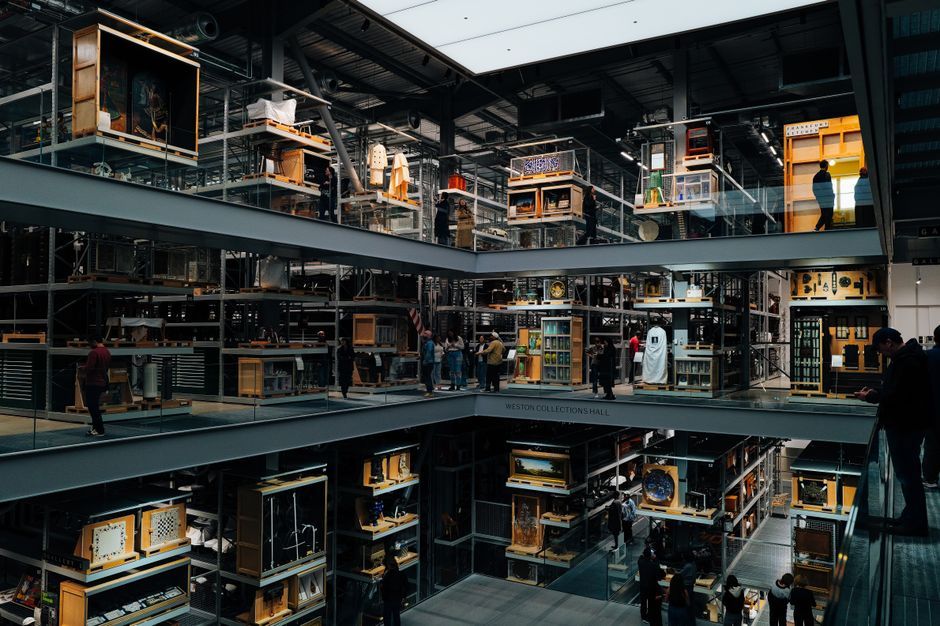
Stock photo for illustration only, not from the actual event
This concept of peripheral vision is crucial for understanding modern exhibition design. It transforms the audience from passive observers into active participants whose bodily movement dictates the artistic experience, bridging the gap between fine art and spatial architecture.
For instance, Mark Rothko specified that his large Seagram Murals should be encountered at close range. This massive scale creates an inversion where the painting grows enormous and the distance between object and viewer shrinks into an engulfing environment.
Earlier in the century, Herbert Bayer visualized this concept with his Diagram of the Field of Vision for the 1930 Deutscher Werkbund exhibition in Paris, placing an eye at the center of an expanding matrix of viewpoints to expose how displays dictate where audiences stand.
Source: designboom
Found something wrong in this article? Report an issue with this article
Comments
Leave a Comment