

Bangladesh Cyclone Model: Casualties Drop from 500k to 30
Exploring how Bangladesh, with lower income than Thailand, slashed cyclone fatalities from half a million to under 30 using grassroots volunteers and anticipatory action.
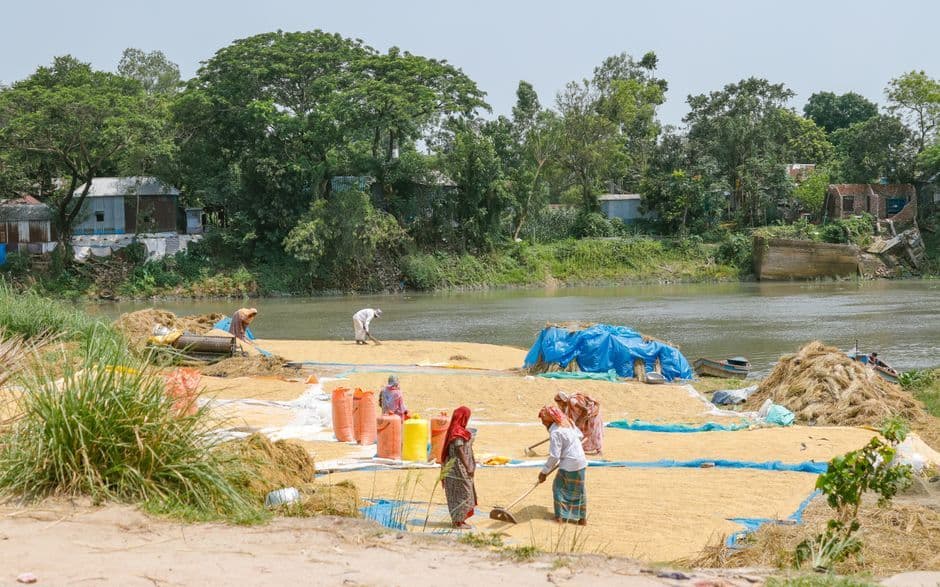
Stock photo for illustration only, not from the actual event
- Bangladesh has an average annual income of around 90,000 Baht, three times lower than Thailand.
- Cyclone fatalities dropped sharply from 500,000 in 1970 to under 30 in 2020.
- The Cyclone Preparedness Programme (CPP) deploys over 70,000 local volunteers to warn residents.
- Anticipatory Action digitally transfers relief funds four days prior to anticipated flooding.
Whenever severe flooding strikes Thailand, discussions on national water management solutions inevitably revolve around renowned international models such as the Netherlands with its massive sea barriers, Japan with its gigantic underground flood diversion tunnels, or Singapore with the Marina Barrage.
However, there remains another remarkable case study that is rarely highlighted, despite achieving staggering results that transformed the history of global disaster management and human survival.
Stock photo for illustration only, not from the actual event
Economic data from 2024 shows that Thailand's average annual income per capita stands at approximately 260,000 Baht, whereas citizens in Bangladesh earn roughly 90,000 Baht, meaning Thais possess about three times more financial resources.
Yet, when it comes to saving human lives from natural disasters, Bangladesh accomplished one of the most astonishing feats in history by reducing cyclone mortality rates over 100-fold across four decades without relying on exorbitant technology.
Looking back at 1970, the Bhola cyclone claimed an estimated 500,000 lives, marking one of the deadliest natural disasters in human history. Another major storm took nearly 150,000 lives in 1991, prompting the nation to completely overhaul its disaster response protocols.
The tangible results became evident in subsequent years. Cyclone Sidr in 2007 reduced fatalities to around 4,000, while Cyclone Amphan in 2020—one of the most severe storms in the Bay of Bengal—resulted in fewer than 30 deaths after authorities successfully evacuated over 2 million people ahead of landfall.
“How did a country with far fewer resources than us achieve this success?”
Comparative question on disaster management strategiesA critical challenge known as the Last Mile refers to the massive gap between centralized weather warnings and an individual's decision to evacuate. Bangladesh bridged this gap through the Cyclone Preparedness Programme (CPP), utilizing over 70,000 local volunteers equipped with megaphones and mobile sirens who walk through neighborhoods using familiar local dialects, with a mandatory 50% female volunteer quota to effectively assist vulnerable groups.
The Last Mile concept highlights how advanced meteorological technology becomes useless if warning data is not translated into actionable local communication. Human networks and social capital serve as vital mechanisms to bridge this gap effectively in remote communities.
Stock photo for illustration only, not from the actual event
Additionally, the country implemented Dual-use Architecture, constructing thousands of sturdy concrete buildings that serve as primary schools during normal days and convert into cyclone shelters during monsoons. Furthermore, Anticipatory Action initiatives disburse digital cash transfers directly to mobile wallets four days before peak flood levels, reducing whole-day fasting rates by 36% and preventing reliance on high-interest debt.
Source:
Techsauce
Found something wrong in this article? Report an issue with this article
Comments
Leave a Comment