

Hacktoberfest 2026: Developer Builds Local AI Stock Translator
A developer created Argus Friend Brief, a local AI research translator using Gemma to simplify stock data for 53 companies from the Argus dashboard.
Stock photo for illustration only, not from the actual event
- Built Argus Friend Brief for the Hacktoberfest Weekend Challenge
- Uses a local Gemma model via Ollama running on a laptop for 53 companies
- Every factual claim links to evidence with no financial advice given
- Features rigorous validation and language guards for safety
During the Hacktoberfest Weekend Challenge under the Build for a Friend category, a developer built Argus Friend Brief, a local AI research translator designed specifically for their dad.
Prior to this, the creator's dad used Argus, a family stock-research dashboard tracking 53 companies across AI infrastructure, semiconductors, power, cooling, networking, and emerging compute. Argus aggregates prices, technical metrics, peer valuations, news, SEC filings, and bull/bear theses into one single location.
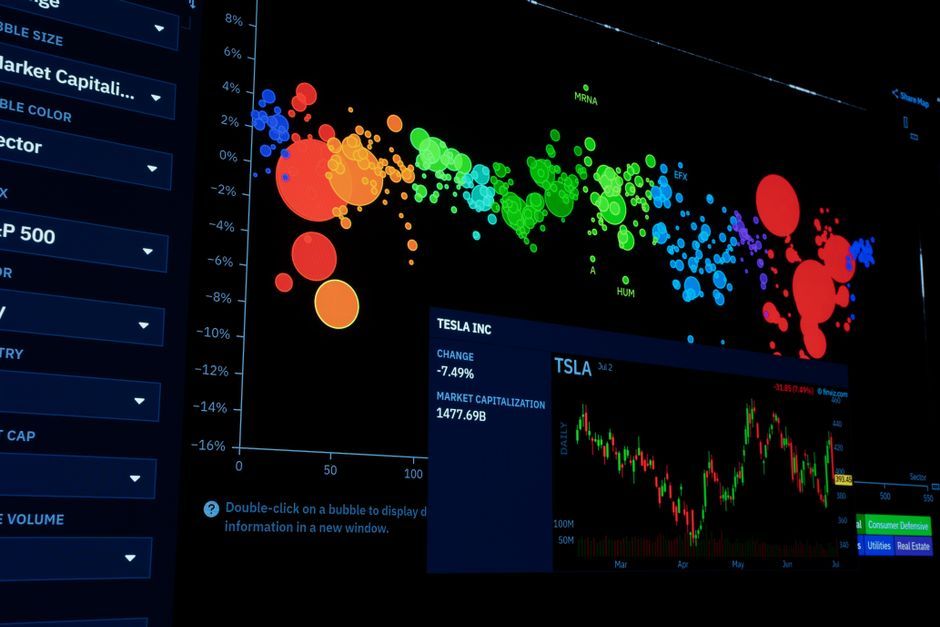
Stock photo for illustration only, not from the actual event
While Argus solved scattered data problems, it left the heavy lifting of connecting insights to the user. Argus Friend Brief takes a sanitized snapshot of that research and prompts a local Gemma model to explain a company in plain language across five key questions, with every factual claim tied back to exact evidence records. The tool strictly provides research support without offering buy, sell, or price-target advice.
The hosted demo features saved, citation-validated Gemma examples for NVDA, VRT, and CEG, allowing it to function without a cloud GPU. Users can clone the repository and run Ollama locally to generate fresh briefs for any of the 53 companies. The demo snapshots were refreshed following the October 2 market close, and the entire application runs locally on a laptop once the model is downloaded.
This helps me break down the research into terms that are much easier to digest, instead of having to navigate a bunch of technical dashboards.
The developer's dad
The workflow begins when an exporter opens the Argus SQLite database in read-only and immutable modes, gathering current and previous metrics, signals, fundamentals, peer valuations, recent news, and SEC filings while omitting personal watchlists and credentials. Each exported fact receives a compact evidence ID like NVDA.E001 alongside its label, value, date, and source.
Running small language models locally via tools like Ollama represents a growing trend among developer hobbyists, prioritizing user data privacy and removing reliance on costly cloud infrastructure. Restricting the model to structured JSON schemas and strict evidence catalogs helps mitigate AI hallucinations and ensures higher factual reliability.
Initial real-world tests exposed issues such as the model mistyping long timestamp citation IDs, which was resolved by shortening them into deterministic forms like NVDA.E001. Additionally, a language guard was introduced after the model mistakenly interpreted an internal opportunity score as an investment recommendation, clarifying that the score is strictly a research-ranking signal.
Source: Dev.to
Found something wrong in this article? Report an issue with this article
Comments
Leave a Comment