

Vibe-Coding Will Only Take You So Far: Fundamentals
While AI coding tools make syntax generation effortless, experts warn tech students that deep computer science fundamentals remain the ultimate separator.
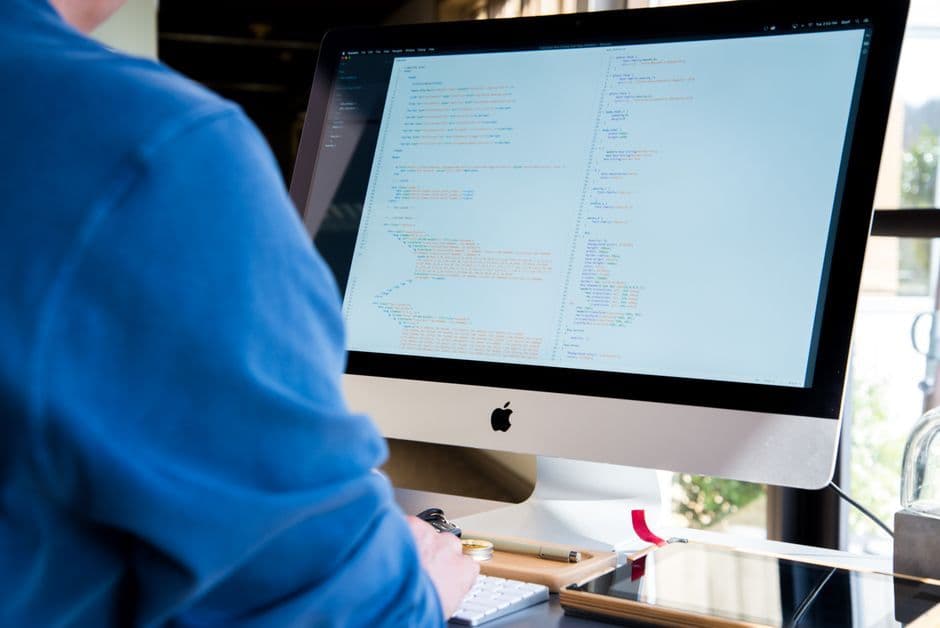
Stock photo for illustration only, not from the actual event
- AI tools like GitHub Copilot allow developers to generate code in minutes.
- Relying solely on AI creates a dangerous trap of ignoring software architecture.
- Discord's database migration from B-Trees to LSM-Trees proves the power of data structures.
- Network and operating system fundamentals are critical for scalable system design.
We are living in the era of vibe-coding. With tools like GitHub Copilot, Cursor, and Claude Code, writing syntax has never been easier, allowing developers to prompt an entire microservice into existence in minutes.
For university students and early career tech enthusiasts, this shift is both a blessing and a trap. The danger lies in assuming that because AI can write the desired code, understanding how software is built under the hood is no longer necessary. Students pursuing a career in tech should double down on rigorous subjects like Operating Systems, Networking, Design Patterns, and Data Structures and Algorithms (DSA).
The true value of these concepts is not merely passing a LeetCode interview screen, but understanding the invisible architecture of the software world that separates a mere coder from a true engineer.

Stock photo for illustration only, not from the actual event
From an analytical perspective, the rise of AI shifts developer roles from syntax writers to system architects. Deep foundational knowledge acts as the necessary safeguard to evaluate, debug, and guide AI-generated outputs, preventing catastrophic architectural failures in production environments.
Consider the real-world engineering challenge faced by Discord. In its early days, the platform stored message history in MongoDB, which relies on B-trees optimized for read-heavy workloads. However, Discord's massive, randomly distributed message volume exceeded RAM capacity, causing severe latency spikes as disk lookups slowed down performance.
Because their engineers deeply understood data structures, they identified the root cause in the storage engine and migrated to Cassandra and ScyllaDB, which utilize LSM-Trees optimized for write-heavy workloads. Such critical architectural decisions require human foundational knowledge that AI prompts alone cannot replicate.
Source: Dev.to
Found something wrong in this article? Report an issue with this article
Comments
Leave a Comment