

NVIDIA IsaacTeleop 2026: Converting XR Motion to Robot Actions
Explore NVIDIA IsaacTeleop, converting XR hand tracking and motion controllers into robot commands using pure Python and NumPy.

Stock photo for illustration only, not from the actual event
- NVIDIA introduces IsaacTeleop for motion retargeting
- Supports XR hand tracking and motion controller input
- Powered by a pure Python and NumPy retargeting engine
- Accurately translates human gestures into robot control commands
Robotics development has taken a significant leap forward with sophisticated teleoperation technologies. Innovations from leading technology creators enable seamless and precise transmission of human movement to mechanical hardware, bridging the gap between virtual reality inputs and physical robot execution.
The framework is engineered to resolve structural discrepancies between human kinematics and robotic joint configurations. By leveraging advanced mathematical computations and optimized command pipelines, the system allows robotic platforms to replicate complex biological gestures naturally.
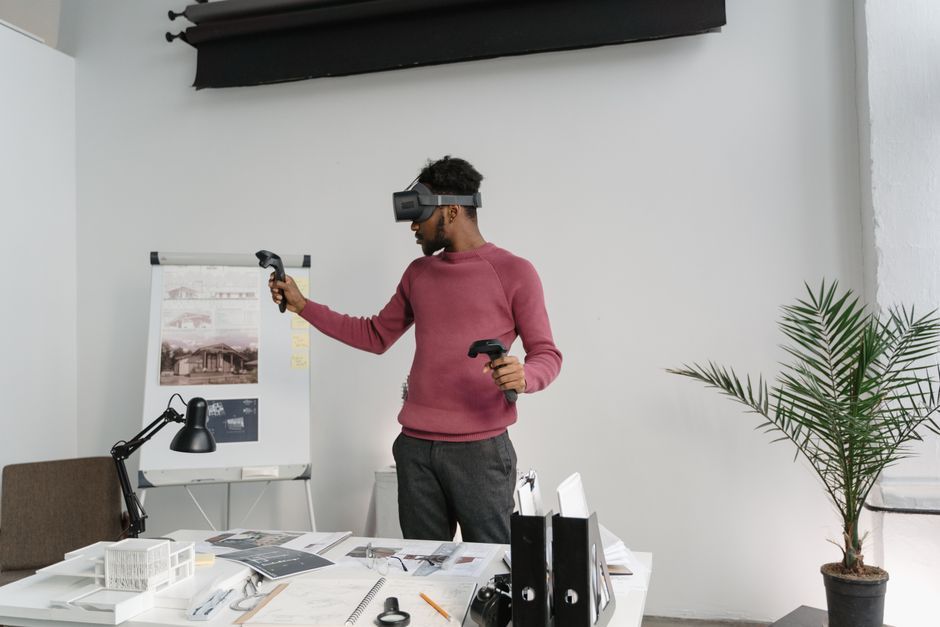
Stock photo for illustration only, not from the actual event
At the core of this technology is real-time data processing derived from spatial hand tracking devices and motion controllers. This capability empowers operators to command robotic arms or mobile units directly through their own physical movements, eliminating the complexities associated with traditional programming paradigms.
The implementation of pure Python and the NumPy library within the retargeting engine highlights a commitment to flexibility and developer accessibility. Utilizing NumPy for matrix and vector calculations ensures rapid coordinate transformations from human kinematic chains to robot joint angles, which is critical for achieving ultra-low latency in real-time control scenarios.
Key components of the architecture include:
- Capture pipelines for XR hand and controller positional data
- A graph-based retargeting engine built entirely in Python
- Structural mapping algorithms tailored for diverse robotic morphologies
Source: MarkTechPost
Found something wrong in this article? Report an issue with this article
Comments
Leave a Comment