

Green Party tensions exposed over Zionism conference vote
Israel bans Green leader Zack Polanski from entering the country after party conference motion declares Zionism to be racism.
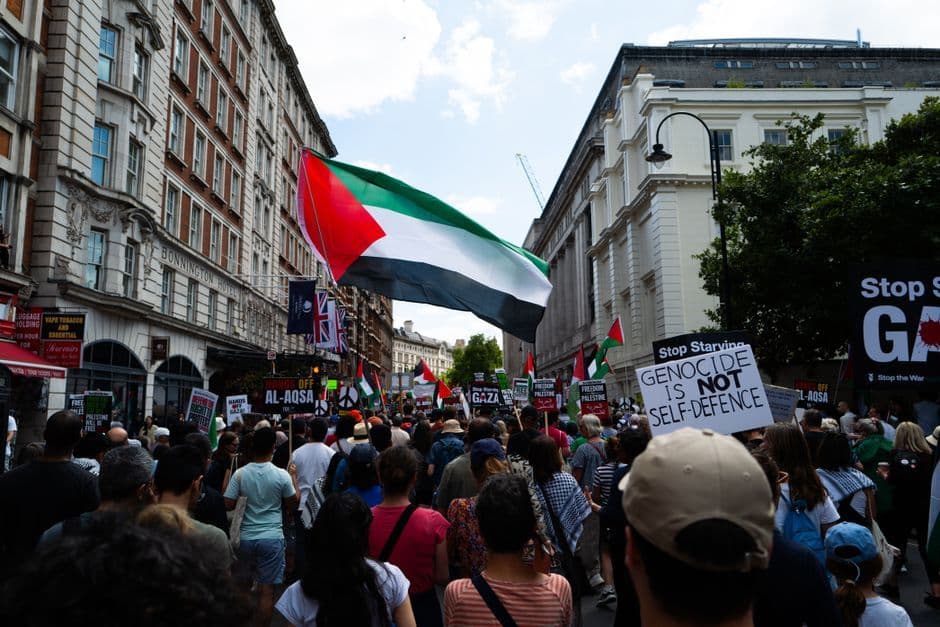
Stock photo for illustration only, not from the actual event
- Israel's foreign ministry bans Green Party leader Zack Polanski from entering the country.
- Party conference adopts a motion proposed by members declaring Zionism to be racism on Sunday.
- Four out of five Green MPs, including Adrian Ramsay, strongly oppose the motion.
- The party lacks a whipping system, allowing MPs and local councillors total voting freedom.
The Green Party of England and Wales is facing acute internal divisions after Israel's foreign ministry announced a ban preventing party leader Zack Polanski from entering the country.
The diplomatic friction stems from a motion proposed by grassroots members and formally adopted at the party conference on Sunday, which officially declared Zionism—the belief in the right to a Jewish homeland—to be a form of racism.
Beyond the immediate international fallout, the episode highlights profound structural tensions bubbling beneath the surface regarding how the party operates and where power truly lies.
Stock photo for illustration only, not from the actual event
While many Greens celebrate their robust internal democracy, this particular instance has placed leading elected officials in an awkward bind, forcing them to defend policies overwhelmingly rejected by the parliamentary caucus.
Polanski, who is not an MP, attempted to secure amendments to the motion, but conference delegates rejected his proposals, leading him to abstain from the final debate and vote. Among the party's five MPs, four vocally opposed the measure.
This clash illustrates the classic tension faced by grassroots-driven political movements attempting to translate activist sentiment into mainstream parliamentary viability. Elected representatives must navigate complex geopolitical realities and national scrutiny, which frequently conflicts with the uncompromising ideological resolutions passed at annual party conferences.
Pragmatically, Green MPs retain the parliamentary freedom to espouse conflicting positions because the party operates without a traditional whipping system. This autonomy extends downward to local councillors across nearly 40 municipal authorities where the Greens hold power following the May local elections.
Looking ahead, the fallout could complicate broader political alignments, particularly concerning potential electoral reform. As the government explores proportional representation systems, a larger Green bloc in parliament could emerge as a natural coalition partner, though internal ideological friction threatens to disrupt future progressive alliances.
Source: BBC Politics
Found something wrong in this article? Report an issue with this article
Comments
Leave a Comment