

NVIDIA Cosmos3-DROID 2026: Streaming Robotics Pipeline
Learn how to build an end-to-end streaming robotics learning pipeline using the NVIDIA Cosmos3-DROID dataset without local downloads.
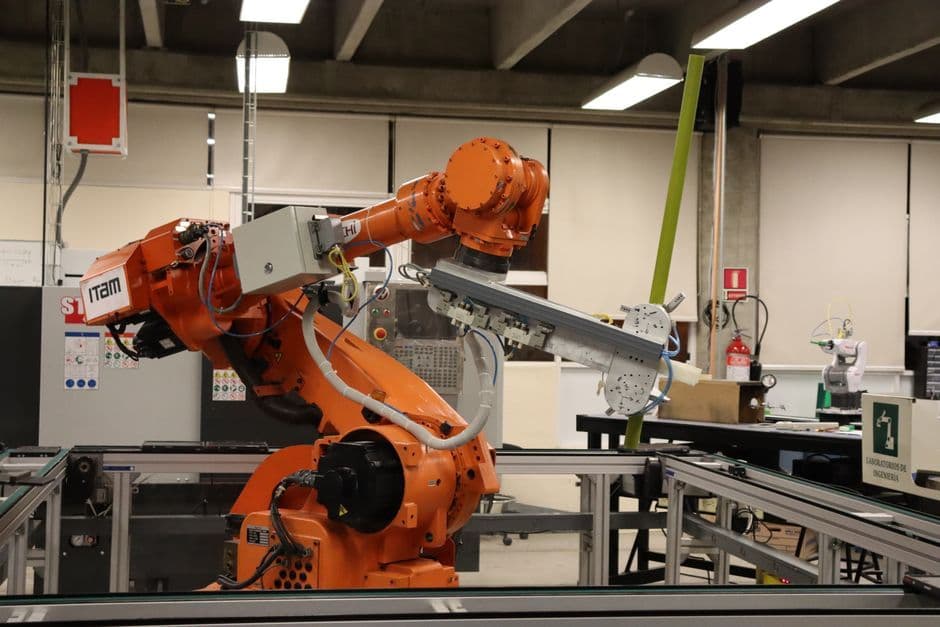
Stock photo for illustration only, not from the actual event
- Build an end-to-end streaming robotics learning pipeline
- Leverage the NVIDIA Cosmos3-DROID dataset without local downloads
- Utilize byte-range Parquet reads, behavior cloning, and temporal ensembling
Modern robotics development often faces challenges regarding massive dataset sizes that require substantial local storage. Adopting a streaming approach plays a crucial role in alleviating this burden. An insightful guide from MarkTechPost details how to construct a comprehensive data pipeline for robot learning utilizing the NVIDIA Cosmos3-DROID dataset.
The standout feature of this approach is the ability to stream data directly without needing to download the entire dataset onto a local machine, saving significant time and hardware resources. This is particularly advantageous for training large-scale AI models for robotics applications
Stock photo for illustration only, not from the actual event
Implementing byte-range Parquet reads alongside behavior cloning and temporal ensembling allows systems to fetch only the necessary data segments over the network in real time. This minimizes I/O bottlenecks and enhances prediction stability, ensuring smoother and more accurate physical execution for robotic agents.
The entire framework is engineered to empower developers to deploy scalable learning workflows efficiently, leveraging modern data engineering techniques for robotics.
The entire workflow is structured to enable developers to implement these methodologies directly, utilizing robust infrastructure designed for large-scale data processing.
Source: MarkTechPost
Found something wrong in this article? Report an issue with this article
Comments
Leave a Comment