

Chemistry Nobel awarded for solving life asymmetry mystery
Henri B. Kagan and Kenso Soai win the Nobel Prize in Chemistry for cracking the century-old mystery of biological molecule chirality.

Stock photo for illustration only, not from the actual event
- French scientist Henri B. Kagan and Japan's Kenso Soai win Nobel Prize in Chemistry
- Solved the century-old mystery of molecular asymmetry in living organisms
- Discovered how to selectively produce the desired version of chiral molecules
- Crucial breakthrough for pharmaceutical development and drug safety
The Nobel Prize in Chemistry has been awarded to French researcher Henri B. Kagan and Kenso Soai from Japan for delivering a definitive solution to a long-standing chemical puzzle regarding the asymmetry inherent in life.
The two researchers successfully unveiled how nature exclusively manufactures the precise version of a molecule required, rather than producing an equal mixture of its mirror-image counterparts as typically occurs in standard laboratory settings.
When examining amino acid molecules, which form the fundamental building blocks of proteins, they exist in two distinct configurations that serve as mirror images of each other. Yet, living organisms on Earth operate using only one specific form, prompting the decades-old question of why life favors just one of these mirror-image molecules.
In organic chemistry, this phenomenon is known as chirality, where molecules possess distinct left- and right-handed forms much like human hands. The selective use of a single-handedness is vital for biological systems because administering the wrong molecular mirror image in medicine can transform a therapeutic drug into a harmful substance. The laureates' breakthrough establishes a reliable foundation for precise chemical synthesis.
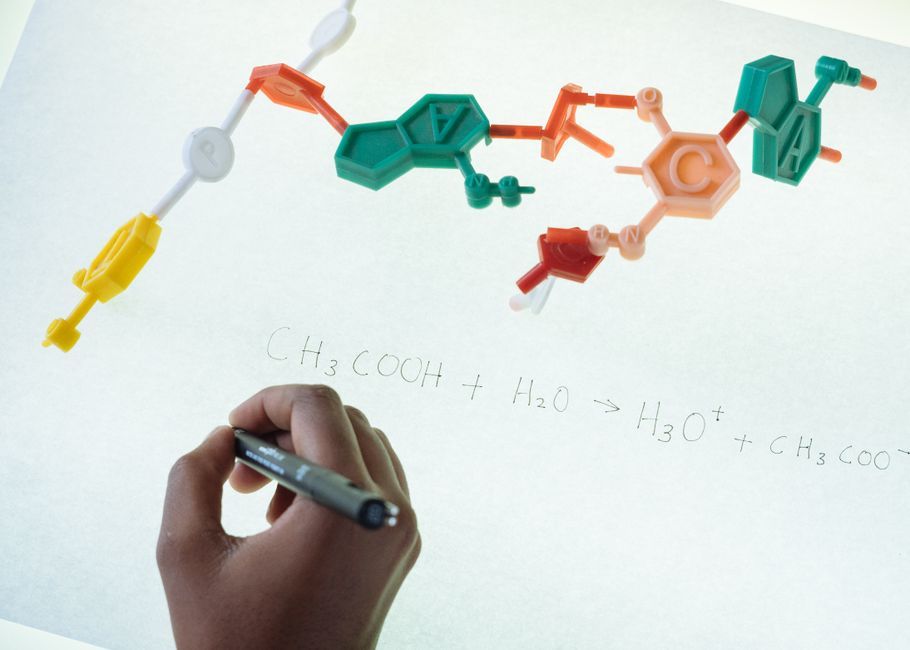
Stock photo for illustration only, not from the actual event
In organic chemistry, this property is termed chirality, meaning chiral molecules feature both right- and left-handed structures. While nature almost exclusively generates the specific version required for biological functions, standard laboratory chemical reactions typically yield a 50/50 mixture of both left- and right-handed molecules.
This distinction carries massive significance within pharmaceutical manufacturing because each molecular version behaves entirely differently upon interacting with the human body. One variation may provide disease-fighting capabilities, whereas the alternative version could prove completely ineffective or even induce toxic harm.
"Henri Kagan and Kenso Soai have provided a solution to a chemical mystery that is over a century old: how homochirality - the selective production of the correct version of a molecule - can emerge spontaneously. The chemical reactions they have developed are spectacular."
Heiner Linke, chair of the Nobel Committee for ChemistryBy resolving the fundamental mystery of chirality, Henri Kagan and Kenso Soai devised methods to engineer chemical reactions capable of generating much higher yields of the desired molecular version, paving the way for safer and more effective drug manufacturing.
Source:
BBC Science & Environment
Found something wrong in this article? Report an issue with this article
Comments
Leave a Comment